Author: issa

  • David Graeber: The Real Libertalia

    David Graeber: The Real Libertalia

    “The first Greeks were all pirates.”

    — Montesquieu, The Spirit of the Laws

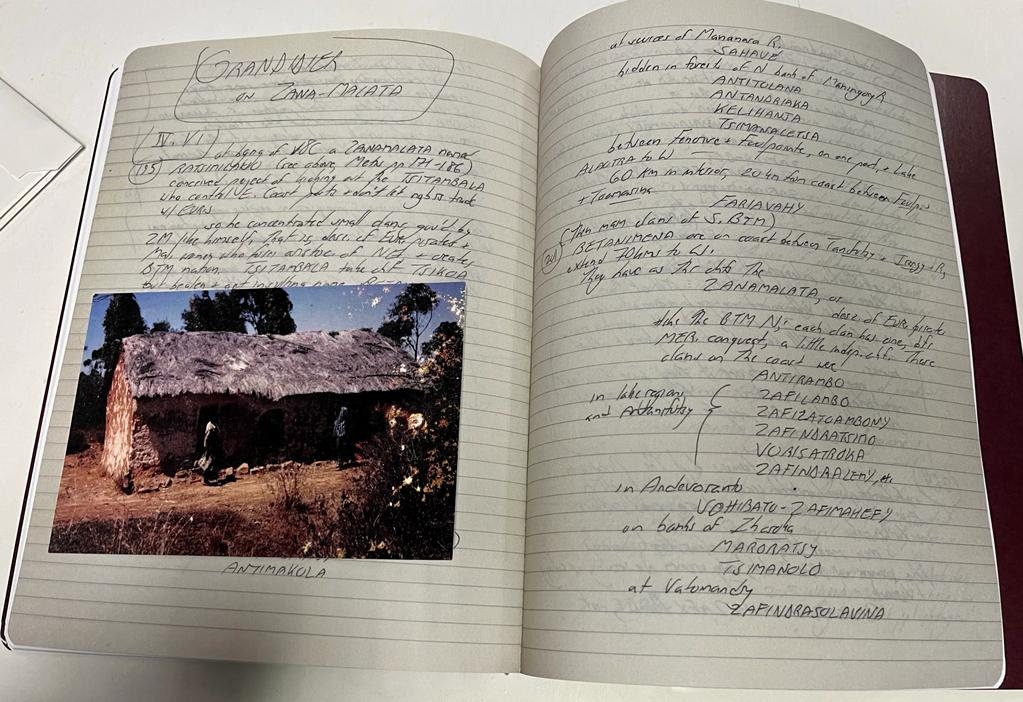
    David Graeber’s notebooks from Madagascar

    This is a book about pirate kingdoms, real and imagined. It’s also about a time and place where it is very difficult to tell the difference between the two. For about a hundred years, from the end of the seventeenth century toward the close of the next, the east coast of Madagascar was scene to a shadow play of storied pirate kings, pirate atrocities, and pirate utopias, rumors of which shocked, inspired, and entertained the clients of cafés and pubs across the North Atlantic world. There is absolutely no way, from our current vantage, to disentangle these accounts and establish a definitive narrative of which were true and which were not.

    Some clearly weren’t. In the first decade of the eighteenth century, for instance, many in Europe believed that a great kingdom had been created in Madagascar by a certain Captain Henry Avery and ten thousand pirate henchmen, a kingdom that was on the verge of establishing itself as one of the world’s pre-eminent naval powers. In fact, this kingdom did not exist. It was a hoax. Most historians are now convinced the same could be said of the story of the great utopian experiment of Libertalia, a story also set in Madagascar, which appears in a chapter of a certain Captain Johnson’s A General History of the Pyrates in 1724. Johnson describes Libertalia as an egalitarian republic, in which slavery had been abolished and all things were shared in common and administered democratically, created by a retired French pirate captain named Misson under the philosophical influence of a defrocked Italian priest. But historians have found no other evidence that either a pirate captain named Misson or such a defrocked priest (his name is given as Caraccioli) actually existed—despite the fact that almost all the other pirates mentioned in the book can be documented from archival sources. Similarly, archaeologists have been unable to locate any evidence for the physical existence of Libertalia. As a result, the general consensus is that the whole story is simply made up. 

    Some are willing to allow it might have been a sailor’s legend that the author of History of the Pyrates just felt was too good not to include, even though he presumably knew the events in question never really happened. Most simply Captain Johnson (whoever he was) fabricated the entire incident. Few, however, seem to feel it matters much, one way or the other, because the only important question is assumed to be: ”

    “Was there ever really a utopian settlement of former pirates called Libertalia on the Malagasy coast?”

    To my mind, this is a rather trivial question. It would appear likely there was no Misson or Caraccioli, or a settlement with precisely that name; but there most certainly were pirate settlements on the Malagasy coast, and what’s more, they were the place for radical social experiments. Pirates did experiment with new forms of governance and property arrangements; what’s more, so did members of the surrounding Malagasy communities into which they married, many of whom had lived in their settlements, sailed in their ships, formed blood brotherhood pacts, and spent many hours in political conversation with them. One way the story of Captain Misson is indeed deceptive is that it arranges the story in such a way that the Malagasy are kept out of it, providing the pirates with shipwrecked foreign wives and reducing the surrounding people to hostile tribes who eventually overwhelm and kill them. But this just makes it easier for historians and anthropologists to do what they are inclined to do anyway in such circumstances: that is, to treat the political affairs of those identified as Europeans, and those identified as African or anyway non-white, as entirely separate domains of inquiry, separate worlds, which were unlikely to have any serious political, let alone intellectual, influence, one on the other.

    In fact, as we’ll see, the reality was much more complicated. But also much more interesting and hopeful.

    So: stories about Libertalia, or for that matter Avery’s pirate kingdom, were in no sense isolated fantasies. What’s more, their very existence and popularity was a historical phenomenon in its own right. In a certain sense these stories might even be said, to adopt Marx’s phrase, to be a material force in history. After all, the Golden Age of Piracy, as it’s now called, really lasted only forty or fifty years; it was quite some time ago; but people all over the world are still telling stories about pirates and pirate utopias—or for that matter, elaborating on them with the kinds of kaleidoscopic fantasies about magic, sex, and death that, as we’ll see, have always accompanied them. It’s hard to escape the conclusion that these stories endure because they embody a certain vision of human freedom, one that still feels relevant—but one, at the same time, that offers an alternative to the visions of freedom that were to be adopted in European salons over the course of the eighteenth century, and that still remain dominant today. The toothless or or peg-legged buccaneer hoisting a flag of defiance against the world, drinking and feasting to a stupor on stolen loot, fleeing at the first sign of serious opposition, leaving only tall tales and confusion in his wake, is, perhaps, just as much a figure of the Enlightenment as Voltaire or Adam Smith, but he also represents a profoundly proletarian vision of liberation, necessarily violent and ephemeral. Modern factory discipline was born on ships and on plantations. It was only later that budding industrialists adopted those techniques of turning humans into machines into cities like Manchester and Birmingham. One might call pirate legends, then, the most important form of poetic expression produced by that emerging North Atlantic proletariat whose exploitation laid the ground for the industrial revolution. As long as those forms of discipline, or their more subtle and insidious modern incarnations, govern our working lives, we will always fantasize about buccaneers.

    This is not, however, primarily a book about the romantic appeal of piracy. It is a work of history, informed by anthropology; an attempt to establish what actually happened on the northeast coast of Madagascar at the end of the seventeenth century and the beginning of the eighteenth when several thousand pirates made that place their home, and to make a case that in a broader sense Libertalia did exist, and that it could indeed be considered, in a sense, the first Enlightenment political experiment. And that many of the men and women who brought this experiment into being spoke Malagasy.

    Excerpt from: David Graeber, Pirate Enlightenment, or the Real Libertalia

  • Momo

    Momo

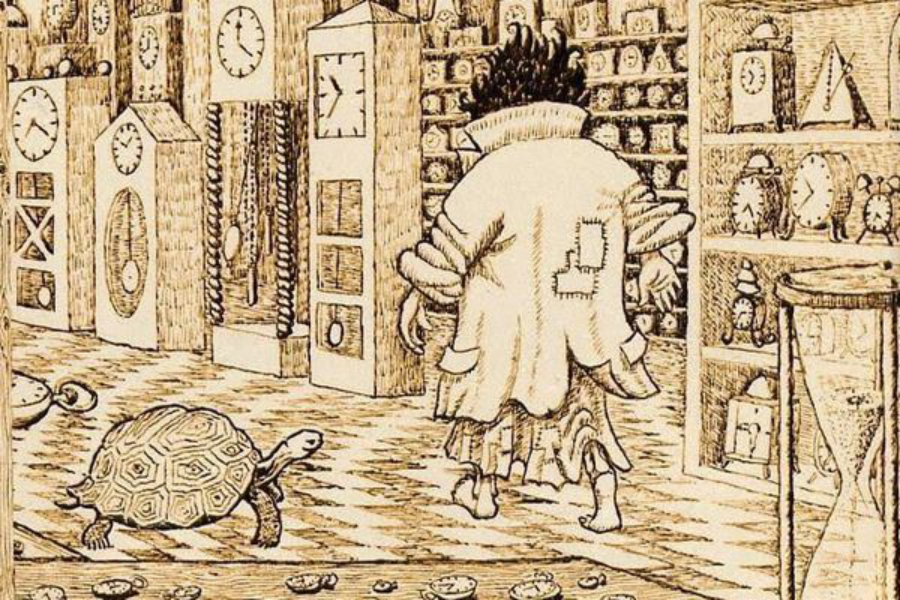
    (or the strange story of the time-thieves and the child who brought the stolen time back to the people)

    Calendars and clocks exist to measure time, but that signifies little because we all know that an hour can seem as eternity or pass in a flash, according to how we spend it.

    ― Michael Ende, Momo

    Michael Ende, the German fantasy and fiction writer best known for his novel Neverending Story wrote a less well-known but equally beautiful children’s book called Momo a few years earlier, in 1973. Chances are you came across and read it as a kid, and if not, we would recommend it wholeheartedly.

    This story is about a special little girl with a remarkable skill: she listens, really listens, and by doing that, she is able to help people. Everyone in her neighbourhood recognizes her and rushes to her, an illiterate and parentless girl in a shabby coat. Her world changes when the strange Men in Grey arrive, convincing everyone to start saving time in their Timesavings Bank. Soon the world turns as grey as they are, and it is left to Momo to save it.

    This reminds us all of something—that’s right, the Dalmatian philosophy of pómalo. As one of the book’s characters, a sweeper named Beppo, says:

    “It’s like this. Sometimes, when you’ve a very long street ahead of you, you think how terribly long it is and feel sure you’ll never get it swept.

    He gazed silently into space before continuing. ‘And then you start to hurry,’ he went on. ‘You work faster and faster, and every time you look up there seems to be just as much left to sweep as before, and you try even harder, and you panic, and in the end you’re out of breath and have to stop – and still the street stretches away in front of you. That’s not the way to do it.’

    He pondered a while. Then he said, ‘You must never think of the whole street at once, understand? You must only concentrate on the next step, the next breath, the next stroke of the broom, and the next, and the next. Nothing else.’

    Again he paused for thought before adding, ‘That way you enjoy your work, which is important, because then you make a good job of it. And that’s how it ought to be.’

    There was another long silence. At last he went on, ‘And all at once, before you know it, you find you’ve swept the whole street clean, bit by bit. What’s more, you aren’t out of breath.’ He nodded to himself. ‘That’s important, too,’ he concluded.”

  • Illich: Silence is a Commons

    Illich: Silence is a Commons

    Computers are doing to communication what fences did to pastures and cars did to streets.

    This article is from Illich’s remarks at the “Asahi Symposium Science and Man – The computer-managed Society,” Tokyo, Japan, March 21, 1982.

    Minna-san, gladly I accept the honour of addressing this forum on Science and Man. The theme that Mr. Tsuru proposes, “The Computer-Managed Society,” sounds an alarm. Clearly you foresee that machines which ape people are tending to encroach on every aspect of people’s lives, and that such machines force people to behave like machines. The new electronic devices do indeed have the power to force people to “communicate” with them and with each other on the terms of the machine. Whatever structurally does not fit the logic of machines is effectively filtered from a culture dominated by their use.

    The machine-like behaviour of people chained to electronics constitutes a degradation of their well-being and of their dignity which, for most people in the long run, becomes intolerable. Observations of the sickening effect of programmed environments show that people in them become indolent, impotent, narcissistic and apolitical. The political process breaks down, because people cease to be able to govern themselves; they demand to be managed.

    I congratulate Asahi Shimbun on its efforts to foster a new democratic consensus in Japan, by which your more than seven million readers become aware of the need to limit the encroachment of machines on the style of their own behaviour. It is important that precisely Japan initiate such action. Japan is looked upon as the capital of electronics; it would be marvellous if it became for the entire world the model of a new politics of self-limitation in the field of communication, which, in my opinion, is henceforth necessary if a people wants to remain self-governing.

    Electronic management as a political issue can be approached in several ways. I propose, at the beginning of this public consultation, to approach the issue as one of political ecology. Ecology, during the last ten years, has acquired a new meaning. It is still the name for a branch of professional biology, but the term now increasingly serves as the label under which a broad, politically organized general public analyzes and influences technical decisions. I want to focus on the new electronic management devices as a technical change of the human environment which, to be benign, must remain under political (and not exclusively expert) control. I have chosen this focus for my introduction, because I thus continue my conversation with those three Japanese colleagues to whom I owe what I know about your country – Professors Yoshikazu Sakamoto, Joshiro Tamanoi and Jun Ui.

    In the 13 minutes still left to me on this rostrum I will clarify a distinction that I consider fundamental to political ecology. I shall distinguish the environment as commons from the environment as resource. On our ability to make this particular distinction depends not only the construction of a sound theoretical ecology, but also – and more importantly – effective ecological jurisprudence Minna-san, how I wish, at this point, that I were a pupil trained by your Zen poet, the great Basho. Then perhaps in a bare 17 syllables I could express the distinction between the commons within which people’s subsistence activities are embedded, and resources that serve for the economic production of those commodities on which modem survival depends. If I were a poet, perhaps I would make this distinction so beautifully and incisively that it would penetrate your hearts and remain unforgettable. Unfortunately I am not a Japanese poet. I must speak to you in English, a language that during the last 100 years has lost the ability to make this distinction, and – in addition – I must speak through translation. Only because I may count on the translating genius of Mr. Muramatsu do I dare to recover Old English meanings with a talk in Japan.

    “Commons” is an Old English word. According to my Japanese friends, it is quite close to the meaning that iriai still has in Japanese “Commons,” like iriai, is a word which, in preindustrial times, was used to designate certain aspects of the environment. People called commons those parts of the environment for which customary law exacted specific forms of community respect. People called commons that part of the environment which lay beyond their own thresholds and outside of their own possessions, to which, however, they had recognized claims of usage, not to produce commodities but to provide for the subsistence of their households. The customary law which humanized the environment by establishing the commons was usually unwritten. It was unwritten law not only because people did not care to write it down, but because what it protected was a reality much too complex to fit into paragraphs. The law of the commons regulates the right of way, the right to fish and to hunt, to graze, and to collect wood or medicinal plants in the forest.

    An oak tree might be in the commons. Its shade, in summer, is reserved for the shepherd and his flock; its acorns are reserved for the pigs of the neighbouring peasants; its dry branches serve as fuel for the widows of the village; some of its fresh twigs in springtime are cut as ornaments for the church – and at sunset it might be the place for the village assembly. When people spoke about commons, iriai, they designated an aspect of the environment that was limited, that was necessary for the community’s survival, that was necessary for different groups in different ways, but which, in a strictly economic sense, was not perceived as scarce.

    When today, in Europe, with university students I use the term “commons” (in German Almende or Gemeinheit, in Italian gli usi civici) my listeners immediately think of the eighteenth century. They think of those pastures in England on which villagers each kept a few sheep, and they think of the “enclosure of the pastures” which transformed the grassland from commons into a resource on which commercial flocks could be raised. Primarily, however, my students think of the innovation of poverty which came with enclosure: of the absolute impoverishment of the peasants, who were driven from the land and into wage labour, and they think of the commercial enrichment of the lords.

    In their immediate reaction, my students think of the rise of a new capitalist order. Facing that painful newness, they forget that enclosure also stands for something more basic. The enclosure of the commons inaugurates a new ecological order: Enclosure did not just physically transfer the control over grasslands from the peasants to the lord. Enclosure marked a radical change in the attitudes of society towards the environment. Before, in any juridical system, most of the environment had been considered as commons from which most people could draw most of their sustenance without needing to take recourse to the market. After enclosure, the environment became primarily a resource at the service of “enterprises” which, by organizing wage-labor, transformed nature into the goods and services on which the satisfaction of basic needs by consumers depends. This transformation is in the blind spot of political economy.

    This change of attitudes can be illustrated better if we think about roads rather than about grasslands. What a difference there was between the new and the old parts of Mexico City only 20 years ago. In the old parts of the city the streets were true commons. Some people sat on the road to sell vegetables and charcoal. Others put their chairs on the road to drink coffee or tequila. Others held their meetings on the road to decide on the new headman for the neighbourhood or to determine the price of a donkey. Others drove their donkeys through the crowd, walking next to the heavily loaded beast of burden; others sat in the saddle. Children played in the gutter, and still people walking could use the road to get from one place to another.

    Such roads were not built for people. Like any true commons, the street itself was the result of people living there and making that space liveable. The dwellings that lined the roads were not private homes in the modern sense – garages for the overnight deposit of workers. The threshold still separated two living spaces, one intimate and one common. But neither homes in this intimate sense nor streets as commons survived economic development.

    In the new sections of Mexico City, streets are no more for people. They are now roadways for automobiles, for buses, for taxis, cars, and trucks. People are barely tolerated on the streets unless they are on their way to a bus stop. If people now sat down or stopped on the street, they would become obstacles for traffic, and traffic would be dangerous to them. The road has been degraded from a commons to a simple resource for the circulation of vehicles. People can circulate no more on their own. Traffic has displaced their mobility. They can circulate only when they are strapped down and are moved.

    The appropriation of the grassland by the lords was challenged, but the more fundamental transformation of grassland (or of roads) from commons to resource has happened, until recently, without being subjected to criticism. The appropriation of the environment by the few was clearly recognized as an intolerable abuse By contrast, the even more degrading transformation of people into members of an industrial labour force and into consumers wastaken, until recently, for granted. For almost a hundred years the majority of political parties has challenged the accumulation of environmental resources in private hands. However, the issue was argued in terms of the private utilization of these resources, not the distinction of commons. Thus anticapitalist politics so far have bolstered the legitimacy of transforming commons into resources.

    Only recently, at the base of society, a new kind of “popular intellectual” is beginning to recognize what has been happening. Enclosure has denied the people the right to that kind of environment on which – throughout all of history – the moral economy of survival had been based. Enclosure, once accepted, redefines community. Enclosure underlines the local autonomy of community. Enclosure of the commons is thus as much in the interest of professionals and of state bureaucrats as it is in the interest of capitalists. Enclosure allows the bureaucrats to define local community as impotent – “ei-ei schau-schau!!!” – to provide for its own survival. People become economic individuals that depend for their survival on commodities that are produced for them. Fundamentally, most citizens’ movements represent a rebellion against this environmentally induced redefinition of people as consumers.

    Minna-san, you wanted to hear me speak on electronics, not grassland and roads. But I am a historian; I wanted to speak first about the pastoral commons as I know them from the past in order then to say something about the present, much wider threat to the commons by electronics.

    This man who speaks to you was born 55 years ago in Vienna. One month after his birth he was put on a train, and then on a ship and brought to the Island of Brac. Here, in a village on the Dalmatian coast, his grandfather wanted to bless him. My grandfather lived in the house in which his family had lived since the time when Muromachi ruled in Kyoto. Since then on the Dalmatian Coast many rulers had come and gone – the doges of Venice, the sultans of Istanbul, the corsairs of Almissa, the emperors of Austria, and the kings of Yugoslavia. But these many changes in the uniform and language of the governors had changed little in daily life during these 500 years. The very same olive-wood rafters still supported the roof of my grandfather’s house. Water was still gathered from the same stone slabs on the roof. The wine was pressed in the same vats, the fish caught from the same kind of boat, and the oil came from trees planted when Edo was in its youth.

    My grandfather had received news twice a month. The news now arrived by steamer in three days; and formerly, by sloop, it had taken five days to arrive. When I was born, for the people who lived off the main routes, history still flowed slowly, imperceptibly. Most of the environment was still in the commons. People lived in houses they had built; moved on streets that had been trampled by the feet of their animals; were autonomous in the procurement and disposal of their water; could depend on their own voices when they wanted to speak up. All this changed with my arrival in Brac.

    On the same boat on which I arrived in 1926, the first loudspeaker was landed on the island. Few people there had ever heard of such a thing. Up to that day, all men and women had spoken with more or less equally powerful voices. Henceforth this would change. Henceforth the access to the microphone would determine whose voice shall be magnified. Silence now ceased to be in the commons; it became a resource for which loudspeakers compete. Language itself was transformed thereby from a local commons into a national resource for communication. As enclosure by the lords increased national productivity by denying the individual peasant to keep a few sheep, so the encroachment of the loudspeaker has destroyed that silence which so far had given each man and woman his or her proper and equal voice. Unless you have access to a loudspeaker, you now are silenced.

    I hope that the parallel now becomes clear. Just as the commons of space are vulnerable, and can be destroyed by the motorization of traffic, so the commons of speech are vulnerable, and can easily be destroyed by the encroachment of modem means of communication.

    The issue which I propose for discussion should therefore be clear: how to counter the encroachment of new, electronic devices and systems upon commons that are more subtle and more intimate to our being than either grassland or roads – commons that are at least as valuable as silence. Silence, according to western and eastern tradition alike, is necessary for the emergence of persons. It is taken from us by machines that ape people. We could easily be made increasingly dependent on machines for speaking and for thinking, as we are already dependent on machines for moving.

    Such a transformation of the environment from a commons to a productive resource constitutes the most fundamental form of environmental degradation. This degradation has a long history, which coincides with the history of capitalism but can in no way just be reduced to it. Unfortunately the importance of this transformation has been overlooked or belittled by political ecology so far. It needs to be recognized if we are to organize defense movements of what remains of the commons. This defense constitutes the crucial public task for political action during the eighties. The task must be undertaken urgently because commons can exist without police, but resources cannot. Just as traffic does, computers call for police, and for ever more of them, and in ever more subtle forms.

    By definition, resources call for defense by police. Once they are defended, their recovery as commons becomes increasingly difficult. This is a special reason for urgency.


    The CoEvolution Quarterly, Winter 1983
  • Conversation with Hito Steyerl

    Conversation with Hito Steyerl

    Hito Steyerl is a German filmmaker, moving image artist and innovator whose practice engages with the evolving role of technology in the systems of globalisation, surveillance and migration.
    Steyerl is one of the co-founders of ISSA and currently teaches New Media Art at the Berlin University of the Arts.
    The following conversation was conducted by David Adler for “The Internationalist” published by the Progressive International in December 2022.

    Hito Steyerl

    David: I would love to know what’s occupying you right now, Hito. What are you working on? What is motivating you?

    Hito: In recent years, I have tried to explore technology and the politics associated with it. I’m still trying to think about the consequences of Blockchain technologies, artificial intelligence, and platform capitalism — plus their interactions with one another.

    David: How would you say that the relationship between technology and politics is evolving?

    Hito: Obviously technology has been extremely relevant to politics because, over the past (at least) two decades, digital platforms have privatised public discourse to a large degree, with known consequences.

    Since public discourse and data have become private property owned by monopolist corporations, they have polarised public opinion by monetizing toxicity. Moreover, this has pushed aside other attempts to use technology for communication such as earlier P2P networks. In recent months, I have been exploring these themes and extending them to account for how Web3 is colonising digital space in similar ways to the earlier Web2.

    David: Can you explain a bit more about this concept of colonising digital space? What do we mean when we refer to that process? Is it what you had said before about the privatisation of public infrastructures, or is it something more geographically specific?

    Hito: Both aspects are true. There is a sort of colonisation or privatisation or appropriation of virtual space, by different blockchain standards which, for now, are still competing with one another.

    But also there are geopolitical aspects to it. My collaborators and I have been exploring, for example, the geopolitics of Bitcoin mining or crypto mining in Eastern Europe and also in Central Asia. To say it very simply, political conflict drives destabilisation — including in relation to electrical power and the grid. Cryptocolonialism feeds on extracting power and thus it is a subsection of larger debates around extractivism.

    These circumstances are then being exploited to facilitate large-scale crypto mining, which is not only harmful to the environment but is also happening on the back of political conflict and destabilisation. This concerns, for example, the border region between Serbia and Kosovo, or between Georgia and Abkhazia. This also concerns several regions of Kazakhstan, for example.

    David: So, in some ways, you could say that these technologies are new, but the geographies of extraction are very familiar?

    Hito: Yes, the power source that’s being tapped or exploited is conflict. Cryptocolonialism is a term that had been coined before blockchain and the invention of Bitcoin, by Michael Herzfeld. But it is more relevant now than ever, also to account for other non-standard, indirect situations of colonisation.

    David: The concept of ‘crypto colonialism’ captures both the novelty of the ‘crypto’ side and the more classic dynamics of colonialism it follows. What is, in your view, genuinely novel about this concept of crypto colonialism?

    Hito: Cryptoeconomies feed on power imbalances, they exploit precarity and the momentum of instability. Even though they proclaim decentralisation they converge towards centralisation in terms of decision-making power and assets. This also comes with a neocolonial philosophical front called Effective Altruism, a fork of utilitarianism that purports to optimize doing ‘good’ using whack math. But what is it? It’s a financialised calculation of the most effective way to do philanthropy. The donor is imagined as an ultra-rich person from the West, and the imagined beneficiary is mostly a poor person from the Global South who is supposed to get, for example, a bednet to protect them from malaria without asking for it. The whole relationship is imagined as a data-driven depoliticised top-down consumer choice for oligarchs — this is the crypto version of internationalism.

    There was this excellent suggestion by my colleague Paul Feigelfeld on Mastodon liberating the wasted energy stuck in NFT´s (Non-Fungible Tokens) and meme coins to solve the energy crisis. Until recently one needed a lot of power/electricity to mint these crypto ‘assets’. I would love to perform an act of negative entropy and magically transfer the power stuck in NFT´s and shitcoins to Kobane or Qamishlo or Kharkiv or Kyiv, where autocrats are waging war on infrastructure, heating, electricity etc. If you look at these power/energy relations, questions of data and the internet, platform extractivism is a subcategory of questions of extractivism proper — fossil extractivism, extraction of labour and attention — those are linked with questions of power, emissions, energy wars and related issues like the climate crisis.

    David: A case study suggests that technology mirrors politics, rather than driving it. We’ve had centuries of colonialism, extraction, of outsourcing to vulnerable populations; today, these new technologies come in with that promise of liberation but end up reproducing those same dynamics.

    Is that inevitable? Is there a way in which these technologies are bound to reproduce existing power dynamics and asymmetries? Was there radical promise to the internet at one point? Or was that always an empty promise because it was always bound to be co-opted and captured by these existing dynamics? Or should we still try to grapple with a more egalitarian digital proletarian vision? What does the internationalist vision look like?

    Hito: The internationalist vision is simple: to expropriate corporations and whales and establish data platforms as cooperative structures. Period. It is the opposite of Effective Altruism and other whack optimization cults. Internationalism today means wholesale deoptimisation.

    If you look at these power and energy relations, questions of data and the internet, platform extractivism is a subcategory of questions of extractivism proper – fossil extractivism, extraction of labour and attention – those are linked with questions of power, emissions, energy wars and related issues like the climate crisis.

    David: Speaking about the Web3 project in particular: Would you say that it is already going to fall victim to the same dynamics of privatisation and colonial capture and extraction? Do you still see this project of Web3 as having some progressive potential?

    Hito: Web3 is marketed as a decentralised technology. And the advantage of decentralised technology is that there is no central power, and no one is able to pull the strings. Well, what’s happened is that within Web3, powers have been centralised to a substantial degree already. The collapse of the FTX exchange is just one example.

    Another example: power in crypto ventures is measured in possession of tokens. You get some say in the governance of these projects if you are a shareholder and own coins or other shares in a certain project. If you own something, then you’re able to participate in the discourse; you’re not able to participate in decision-making just by the fact of your existence. It’s an almost pre-revolutionary concept, harking back to before the French Revolution. And ownership in cryptocurrencies is more and more shrinking to fewer big owners, who actually control the prices. These are all factors that make it difficult to think of Web3 as something that is going to evolve in a progressive manner. Of course, nothing is ever excluded and there have been some collateral benefits.

    David: Give us an example of how we might understand the concept of collateral benefits.

    Hito: A small example is redistributing benefits in NFTs. There has been, for decades, this idea of some kind of resale clause for artists which could be implemented via smart contracts. This is very specialised. This is why I say collateral benefits because it’s not really essential. Discussions around DAOs (Decentralized Autonomous Organisations) and governance protocols were a collateral benefit but drowned out by megawatts of casino propaganda, North Korean raids on gaming platforms, creepy Madonna avatars and the overall gamification of austerity.

    David: Do you have a sense of where it’s all heading? Do you have a sense of whether these speculative projects are just going to flame out and we’ll be left with more basic infrastructural questions?

    Hito: Right now we are in the middle of a major crash. Crypto winter will be probably over at some point, with some semblance of so-called regulation installed but in the meantime there will be further centralisation. What’s more interesting to me is in relation to an internationalist left. Can one overcome the tendencies of identitarian fragmentation that keeps people from being in solidarity with one another? How can this be done? I mainly speak of technology so I am dealing with these questions from this angle. But if you want to abstract them, and ask yourself, what are going to be the important questions in the next five years, both on- and offline? It’s going to be the questions of power structures, fair remuneration, economic inequality and other forms of oppression, the lack of a public sphere and self-governance. It’s these same issues, whether we see them from a tech angle or not.

    David: There’s certainly one school of thought that is very concerned about polarisation. That school suggests that polarisation is a vector of profit-making by certain corporations – the engagement, the clicks, the rage. But there’s another school of thought that says polarisation is the essence of politics – and when we have low degrees of polarisation, that’s the era of fake consensus. That second school argues we must rip the band-aid off to see a more honest portrait of our society and its composition. What is class conflict but polarisation realised? Which school of thought are you?

    Hito: Sadly, the second school fails to recognize that today’s polarisation is not ‘progressive’ but just mining intensity for profit. Polarisation is happening in terms of an ethnic, nationalist, or otherwise identity-related horizontal axis. This does not help create solidarity. This type of polarisation is the one that drives clickbait and is profitable for big platforms. Other forms of polarisation that would account for economic inequality on a vertical axe are less profitable.

    Basically, this type of polarisation happens when people are forced or nudged by technology to identify as products and as very specialised products, with a lot of different attributes so they can be targeted by targeted advertisements, and so on.

    David: So in the end, we are still the product. We’re becoming easier and easier to sell to in this new technological landscape.

    Hito: Well, let’s just say that our precise location on the shelves of the shop is defined every day in a much more granular way.

  • Ejnar Dyggve

    Ejnar Dyggve

    Ejnar Dyggve

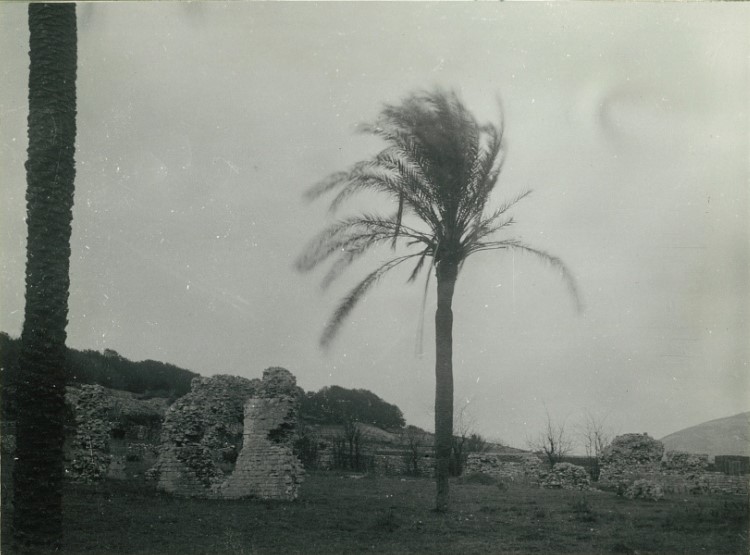
    In the early 20th century, a Danish architect, archaeologist, and art historian visited the island of Vis. Ejnar Aksel Petersen Dyggve (1887–1961) spent 40 years of his life studying Dalmatian historical monuments and sites. His contribution is still appreciated and valued, and the same research material that was given to the city of Split was later digitalized. Look through the gallery to see some of the very first photographs ever taken of the archaelogical site of Issa. 

    Source: Ejnar Dyggve

  • Permaculture

    Permaculture

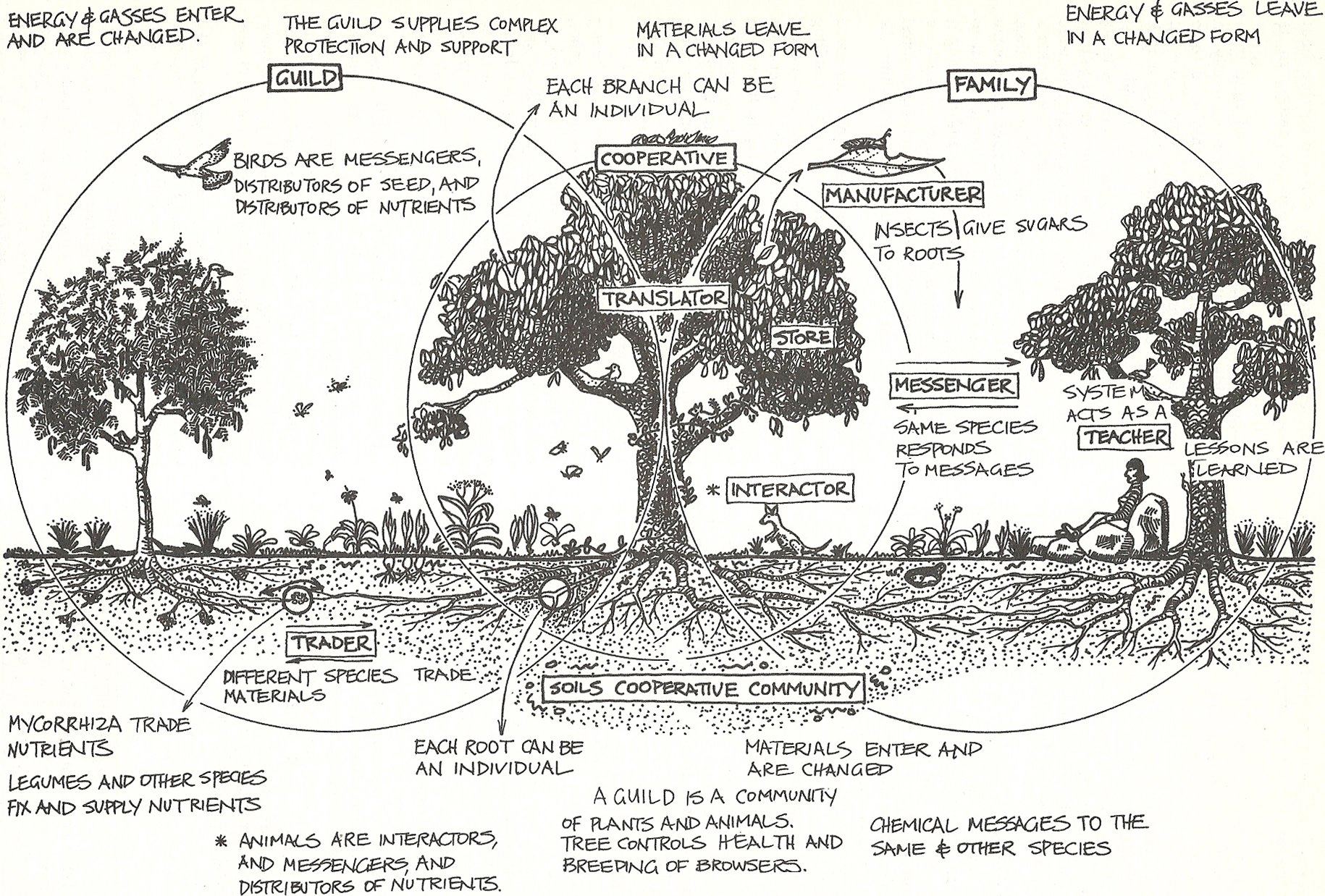
    ISSA aims to be a place for exploration of sustainable living, as we would love to distance ourselves as far as possible from unsustainable, extractive, and pollutive methods that are endangering life on our planet.

    As the blurb for Terry Leah’s Politics of Permaculture states:

    “Permaculture is an environmental movement that makes us reevaluate what it means to be sustainable. Through innovative agriculture and settlement design, the movement creates new communities that are harmonious with nature. It has grown from humble origins on a farm in 1970s Australia and flourished into a worldwide movement that confronts industrial capitalism. (…) Leahy explains the ways permaculture is understood and practiced in different contexts. In the face of extreme environmental degradation and catastrophic climate change, we urgently need a new way of living.”

    The entire book can be found on this link: Politics of Permaculture

  • Dry Stone Walling

    Dry Stone Walling

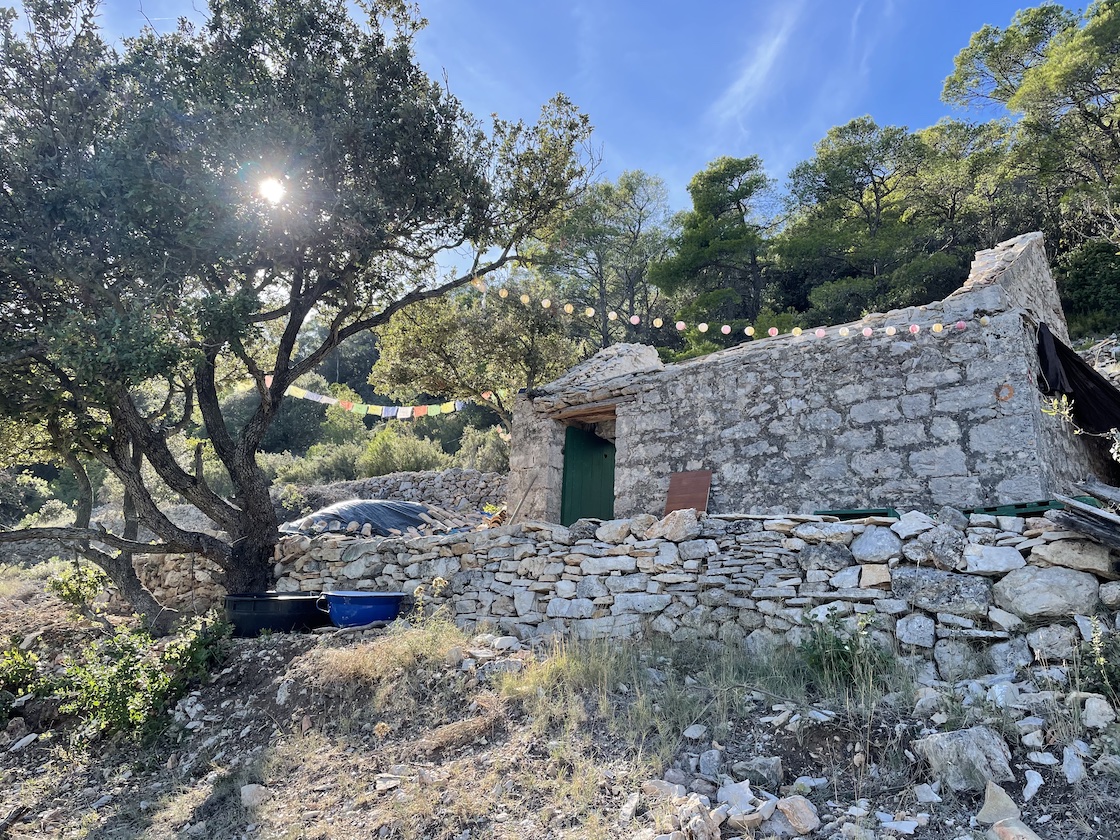
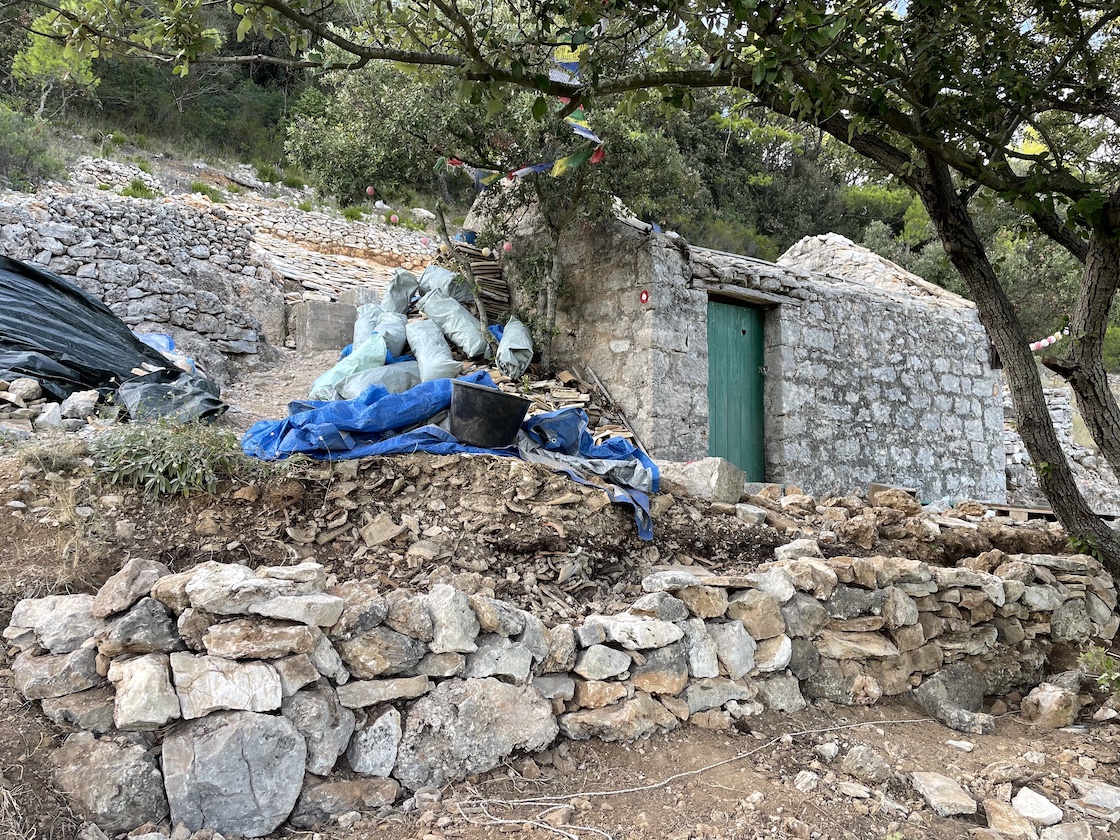
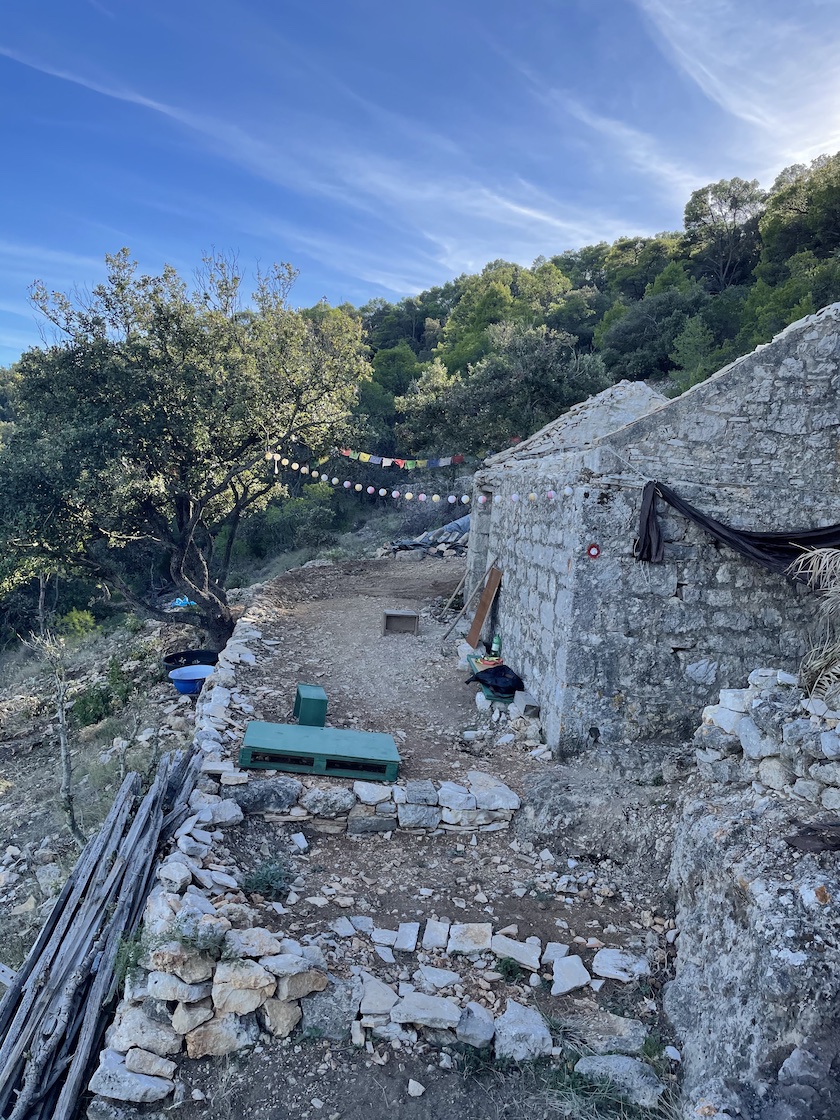
    The last time we were dry stone walling was when we rebuilt the old stone wall in front of the house – the future School.

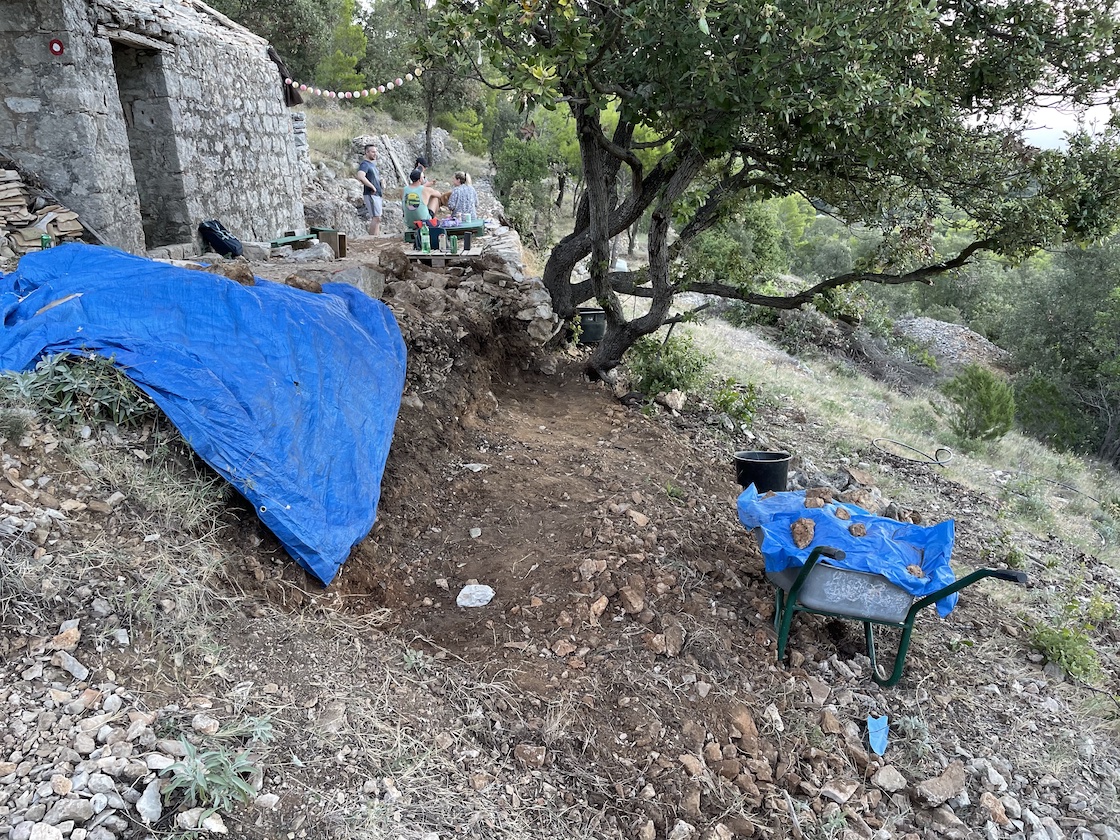
    At the end of the summer of 2022, we were moving to the left corner:

    What certainly helped was that at the previous radna akcija (“work action”), when ISSA hosted a group from the Green Academy, the hard preparatory work of digging and sorting the stones happened.

    Check out the gallery and see for yourselves:

  • Isonomia: Thoughts on equality

    Isonomia: Thoughts on equality

    In his ground-breaking work, published in English only in 2017 under the title Isonomia and the Origins of Philosophy, the Japanese philosopher Kojin Karatani convincingly shows that taking Athenian democracy as a model will never allow us to solve the problems modern democracy is facing. Being the composite of liberalism plus democracy, it is not able to resolve its basic contradiction, one between equality and freedom: “If one aims for freedom, inequalities arise. If one aims for equality, freedom is compromised. Liberal democracy cannot transcend this contradiction.” .[1]

     So instead of making constant references to Athenian democracy as the desired model of democracy in the 21st century, it is more important to recognize in Athens the very prototype of these problems.

    While Athenian democracy sought to equalize people via the redistribution of wealth, it was at the same time rooted in the homogeneity of its members. Not only did it exclude heterogeneity, but it was realized by relying on the internal exploitation (of slaves and resident foreigners, the so called metic) and external exploitation of others (the colonization and subjugation of other poleis). At the same time, Athenian democracy was already inseparable from the sort of nationalism that resembles Benedict Anderson’s famous definition of the modern nation as “imagined community”.[2]

    In order to fully understand the spectre of “illiberal democracy”, instead of turning to Athenian democracy, perhaps we should look to Ionian isonomia (ἰσονομία “equality of political rights, from the Greek isos, “equal”, and nomos, “law”), and to the philosophy of the so-called Pre-Socratic philosophers, who are still usually dismissed as those who were dealing only with “natural philosophy”. It is assumed that ethical and political questions were not something they were seriously thinking through and dealing with – a phase that, according to the traditional history of philosophy, only emerged with Socrates.

    This however, according to Karatani, is a mistake. The origin of Greek political philosophy (and “democracy” with it) rather has to be seen from Ionia. And Socrates, by the way, wasn’t the first one to deal with ethical questions. His thought is rather to be seen as a “transition” from Pre-Socratic to Athenian philosophy, owing many of its ideas and values to the Ionian philosophers themselves.

    But why was the political system of Ionia (called isonomia) a more equal and free system than the Athenian democracy? First of all, the Ionians did not place great importance on ties with their place of origin, which led to a culture free from deep attachment to the traditions of a tribal society that characterized the mainland. Instead of just belonging to the polis, the Ionians considered themselves as belonging to the cosmopolis. And it is precisely this kind of political philosophy that is already to be found in the Pre-Socratic Ionian philosophers. For instance, already for Democritus, true ethics cannot come from within the polis but rather only from the cosmopolis.

    The cities of Ionia were formed by colonists, who did not bring with them the tradition of the clans. The settlers were freed from the bonds and restraints of kinship. As a result, what was restored in the poleis of Ionia was the nomadic existence that preceded tribal societies, that now took the form of foreign trade and manufacturing, but not only as a matter of exchanging goods but equally of knowledge and culture.

    For instance, Thales, who is considered the first philosopher, worked as a civil engineer in Egypt, and many other philosophers of the so-called Pre-Socratic era were influenced either by Asia or Africa (Babylonian astronomy, mathematics and so on).

    Unlike the Ionian isonomia, the greek polis was based on social strata that ascended from the household (oikos) to the clan (genos), from the brotherhood or kinship (phratry) to that of the tribe (phylai). Athens was no longer a clan society, but the tribal traditions were still alive and well. Even with the transformation of the people into a demos, this didn’t prompt the formation of the kind of polis which would be based on autonomous social contracts between individuals. On the contrary, even in the age of Pericles, often regarded as the zenith of Athens, citizenship was determined by kinship, and foreigners (people from the other poleis) were excluded. Moreover, Athenian direct democracy was directly dependent upon the ruling and plundering of the other poleis. It was precisely this imperialistic expansion that was the precondition for Athenian democracy which was also closely tied to the development of the slave system. At the same time, civil society in Athens was driven by a deep class conflict, namely, the majority of citizens were poor.


    [1] Kojin Karatani, Isonomia and the Origins of Philosophy, Duke University Press, 2017

    [2] See Benedict Anderson, Imagined Communities: Reflections on the Origin and Spread of Nationalism, Verso, 2006.

  • Srećko Horvat Talks of ISSA

    Srećko Horvat Talks of ISSA

    In late July 2022, a crew of Hungarian journalists and filmmakers came to visit us to speak about the history and future of emancipatory struggles and social experiments.

    You can watch or listen the entire conversation here:

  • Why DIY

    Why DIY

    The system has always had its gatekeepers. Especially efficient—quiet, tame, and decently seated in tweed jackets with elbow patches—were the ones operating in the realm of the ideological apparatus of the state, mass media, and the vast, vastly ideologized cultural field. What were we taught in our schools and universities, what was served for us to read in the papers and listen to on TV news, which books were printed by major publishers, and why those? All of the above, as well as many more, were and still are active and always inviting fields for the exploration and demonstration of various forms of censorship. Official or unofficial, between the lines or explicit, harsh, or mild, imposed by the state, capital, private interests, religious structures, or the legion of akin.

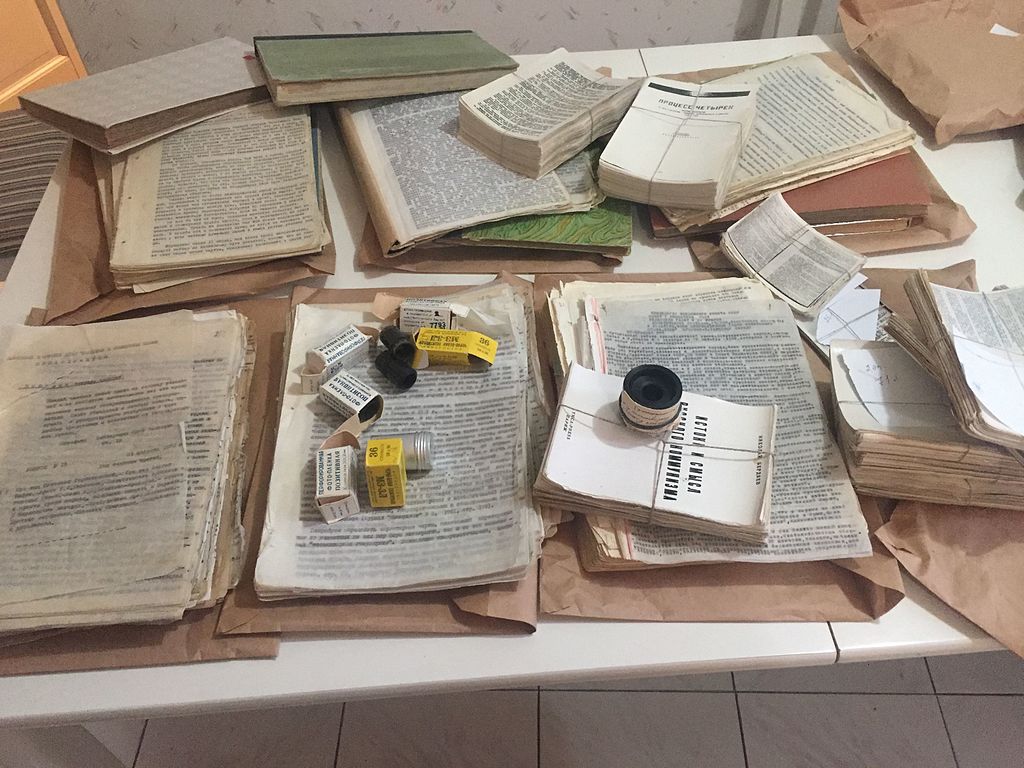
    There were always, of course, ways to bypass the gatekeepers. From alternative education and university takeovers to hand-printed and distributed fanzines and pirate radio stations, to the vast possibilities of the internet, to self-publishing: whether in historical forms like anarchist and partisan literature or samizdat, or as independent publishing groups, collectives, and coops.

    The hardcore-punk scene of the 1990s and its self-publishing methods—from fanzines and music to books and films—played a critical role in the parallel education of an entire generation of future activists and social practitioners who would otherwise have been stuck in the mud of post-war Yugoslavia’s hyper-nationalist and belligerent public discourse. Alternative media, such as the anti-war action magazine Arkzin, carried the torch on a very respectable level throughout the decade, alongside the legendary Feral Tribune and strongholds of alternative culture, such as the biweekly Zarez. The origins of ISSA know-how, at least in its Balkan base, can be traced back to these or similar practices. We’re dedicated to exploring and practising them further—in then-hardly foreseen conditions, technologies, methods, directions, fields, and reach-out situations—but with the very same ethos. We strive to bypass the gatekeepers and head towards the allegedly impossible.