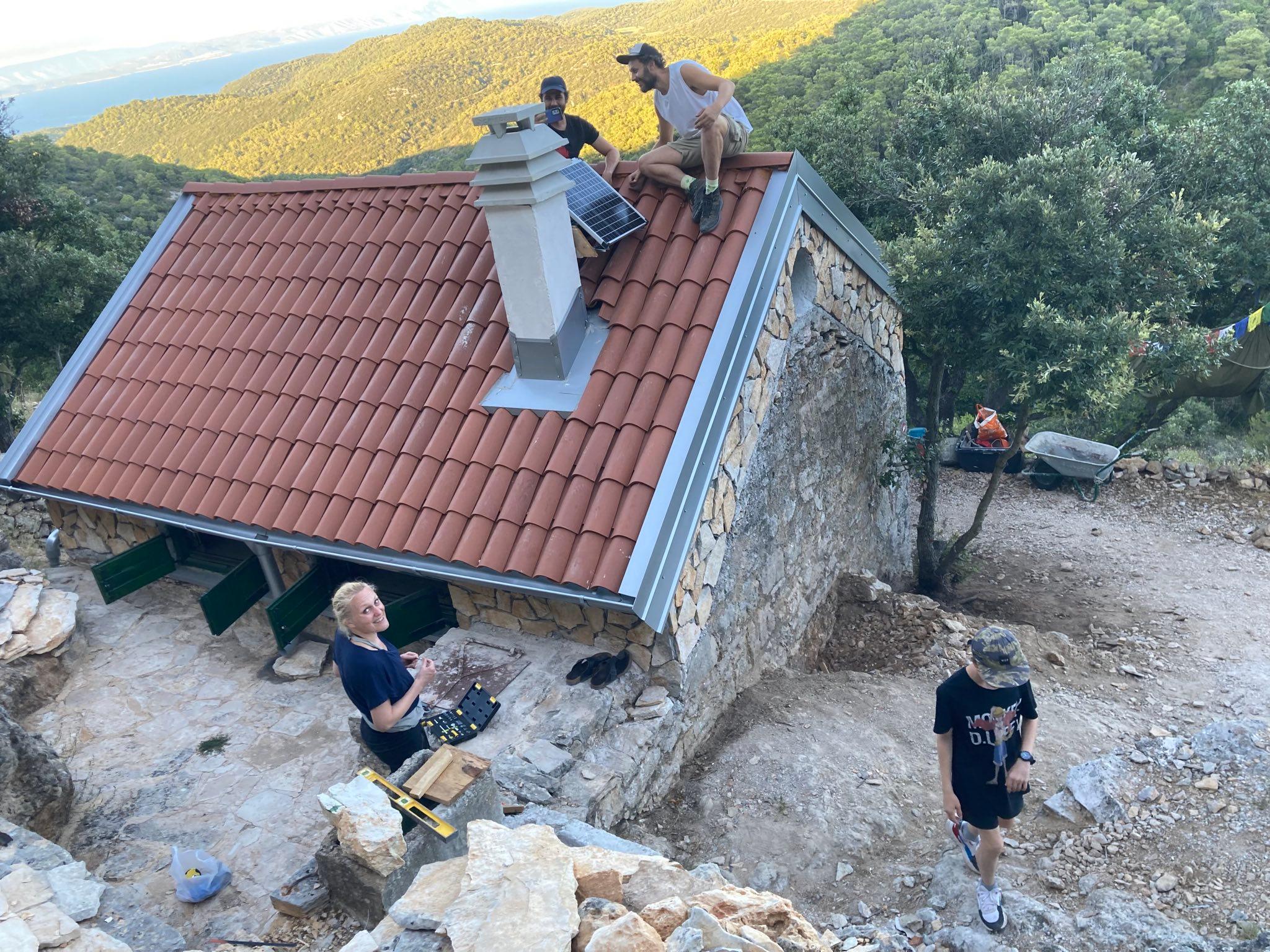
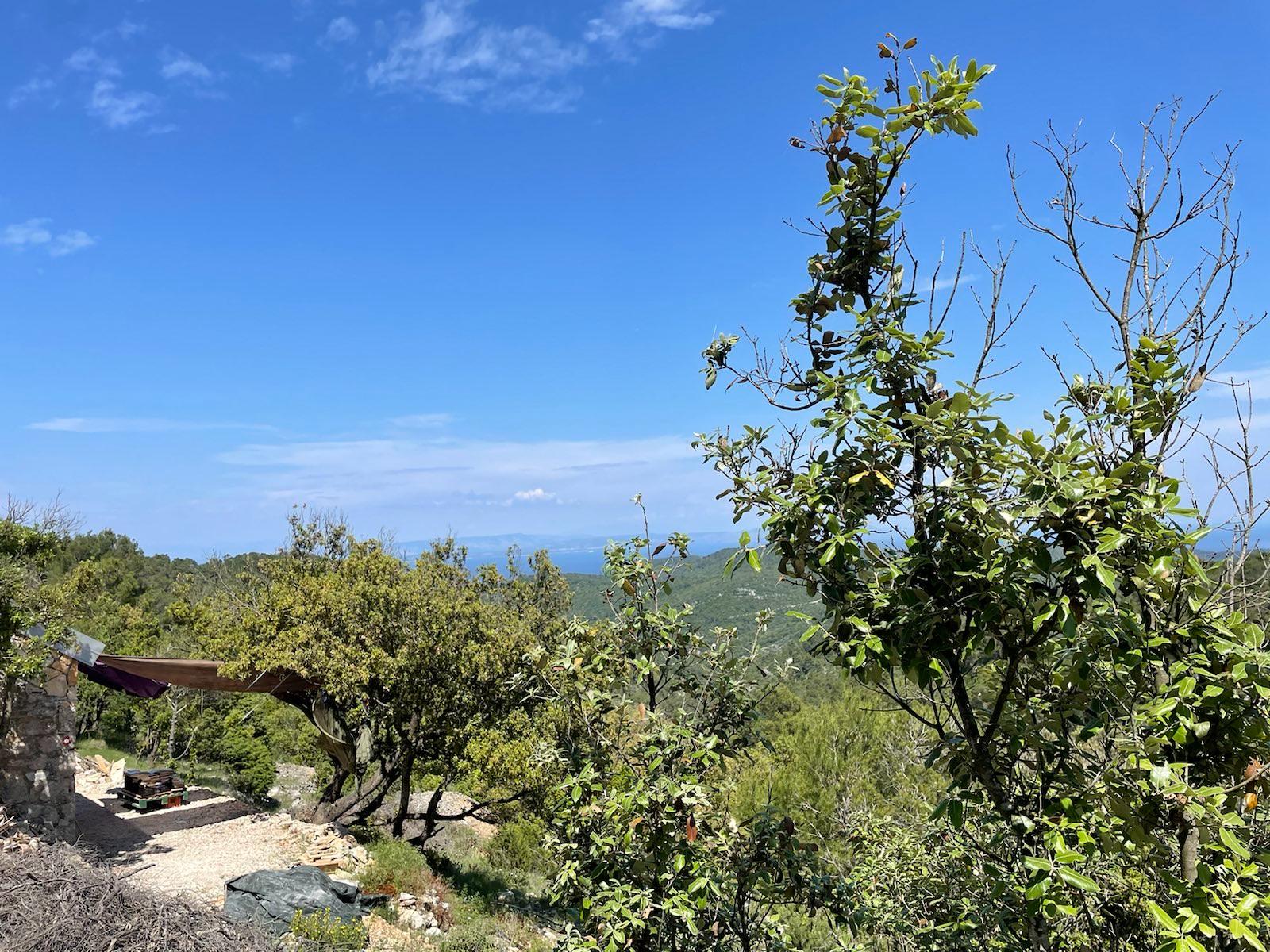
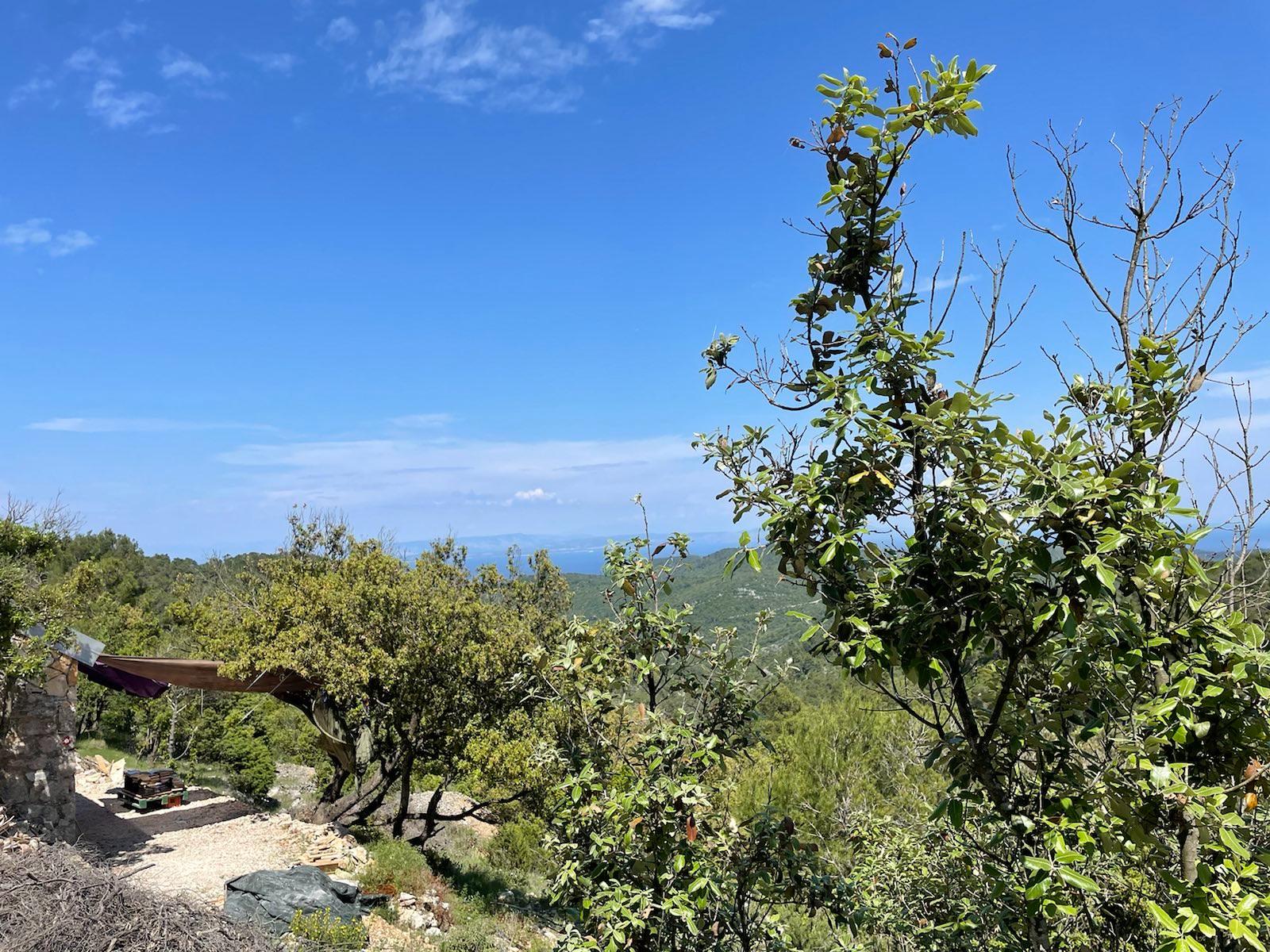
The newest addition to ISSA school is a solar panel, generously donated and installed by Selena Savić and Gordan Savičić (with a little help from !Mediengruppe Bitnik). We installed the panel on the roof, facing due south, at an all-year optimal angle. The panel now feeds a battery, which stores the energy and extends the availability of power into the night. The solar panel is a great addition to the off-grid school: It gives us basic power capacities for charging devices from laptops to soldering irons, amps and lighting.
Pirate Radio ISSA
Once we had the solar unit up and running we went on to play with FM radio broadcasting. Using different set-ups, Gordan Savičić, Selena Savić and !Mediengruppe Bitnik experimented with ranges and antennas, testing them in the actual terrain of the school. Both the antennas and the boosters will require more research and we look forward to continuing the experimentation soon! The radio project will kick off in September where we will explore the technical aspects of broadcasting, from low-power mini FM broadcasters we can soldier ourselves to more advanced set-ups that can also transmit via RDS, the Radio Data System, a communications protocol that allows the embedding of small amounts of digital information (like information on current track played or station identification) in conventional FM radio broadcasts.
Selena Savić is a researcher and a trained architect. Her research interests revolve around the mixture of computational processes with the built environment, exploring ways to communicate communication processes. She edited two books (Ghosts of Transparency, 2019 and Unpleasant Design, 2013) and she writes about computational modeling, feminist hacking, and post-human networks in the context of design and architecture.
Gordan Savičić is a critical thinker, technologist, artist and designer whose work investigates the relationship between people, networks and interfaces. He has a background in media art, research and teaching, and his main areas of interest include digital and urban interventions as well as open-source technologies. He was part of Moddr, Weise7 and co-authored the Critical Engineering Manifesto.
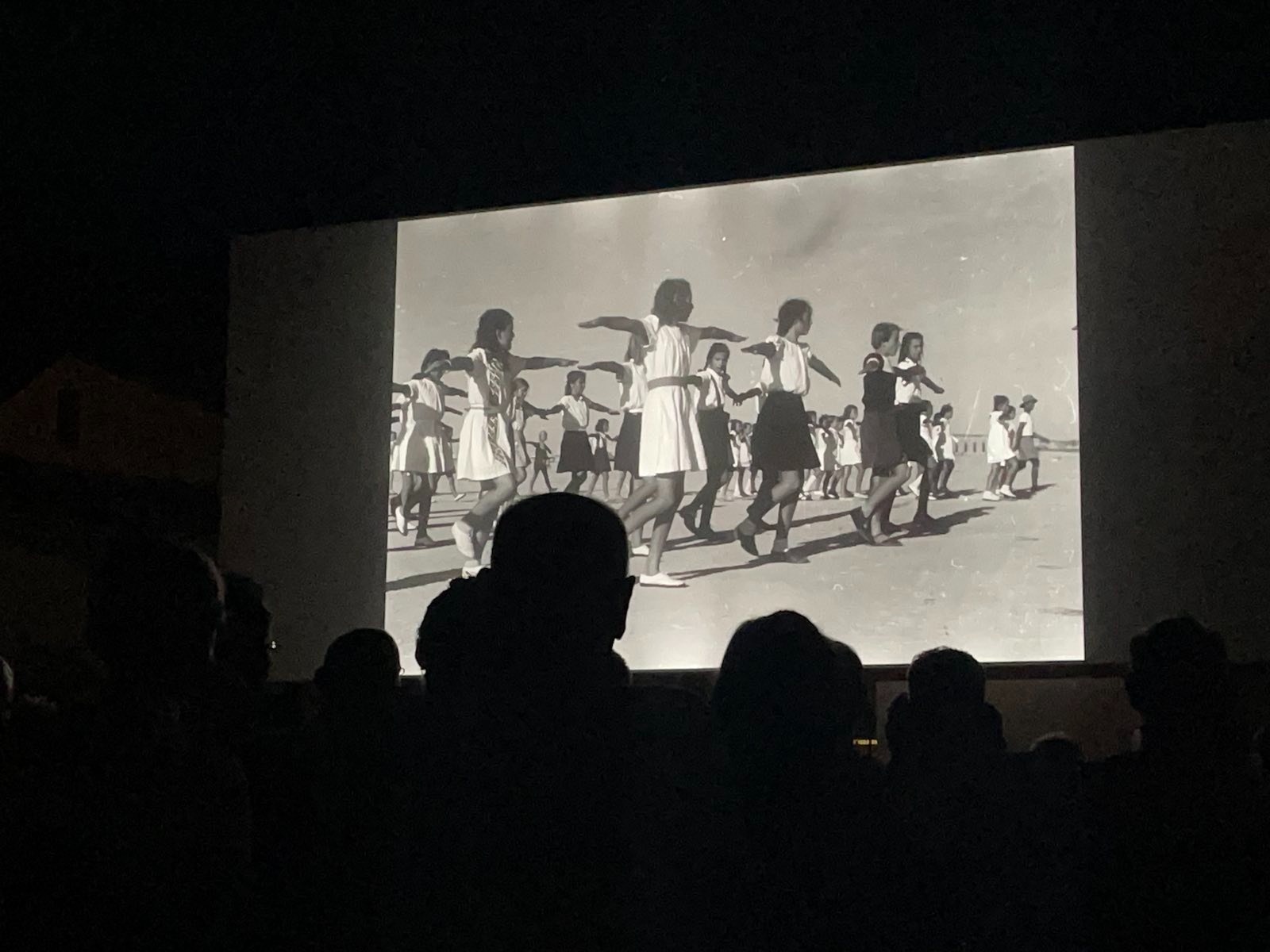
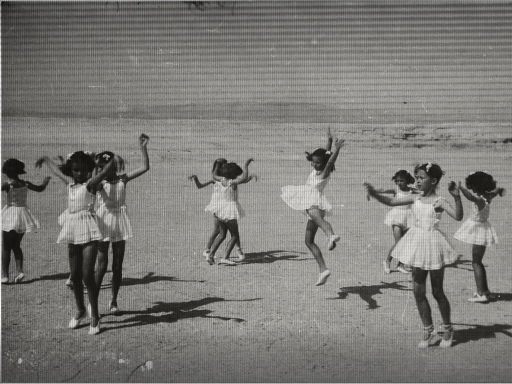
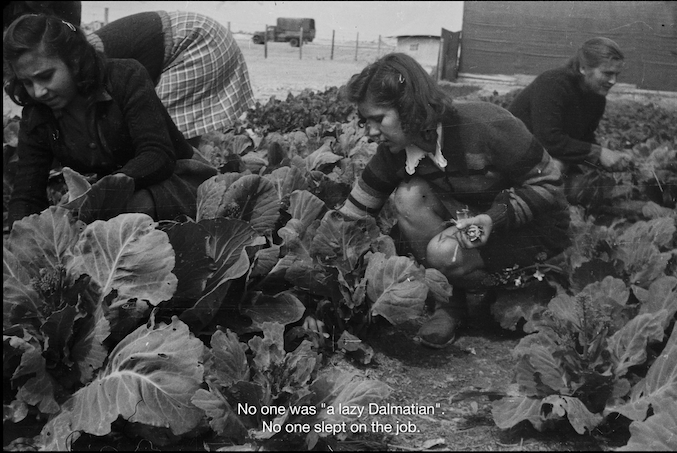
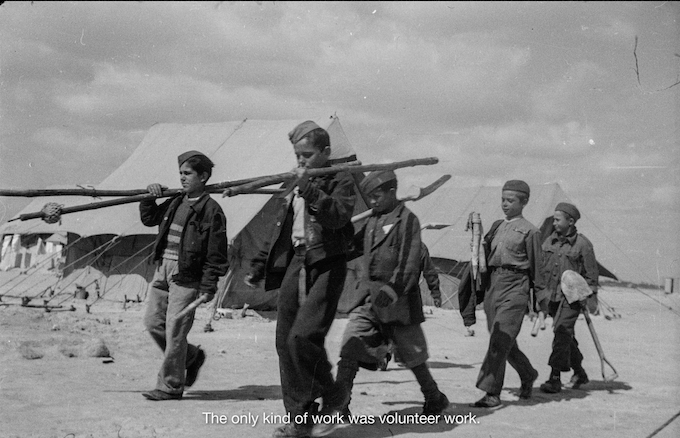
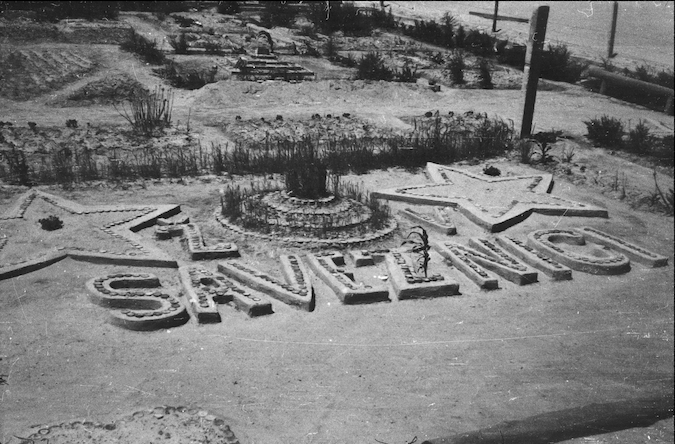
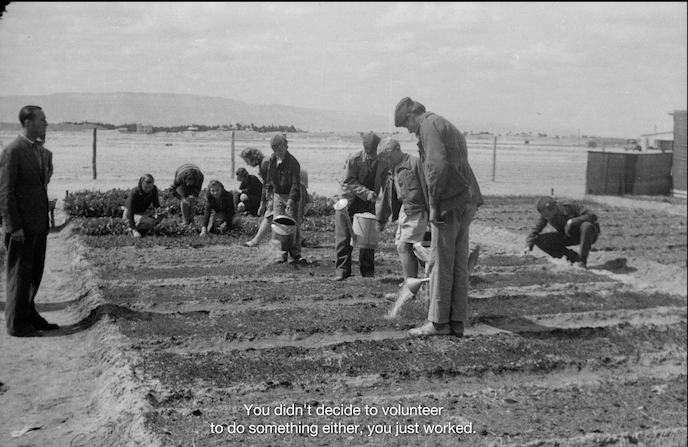
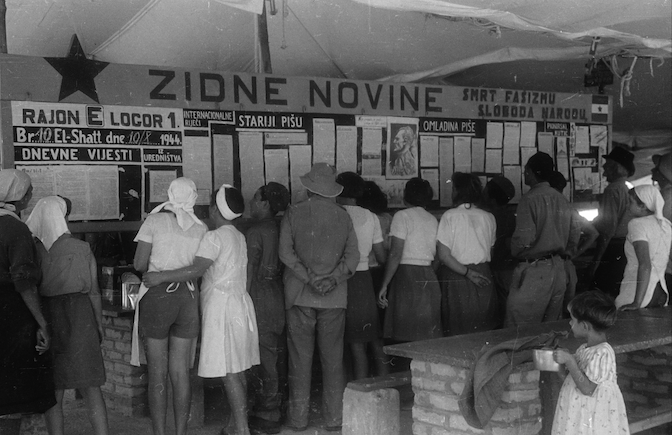
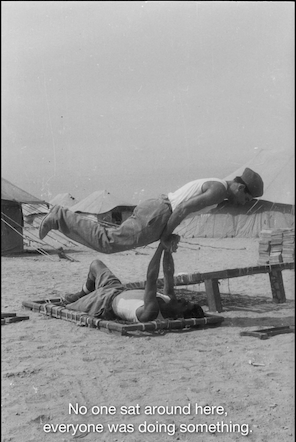
In 1944, World War II refugees, mostly women, children and the elderly, travelled from Europe to Africa to live in tents in the middle of the Egyptian desert. They form a kind of experimental communist model village to show the Allies what the new Yugoslavia will look like when the war is over. The documentary is about the self-organised and self-governed community utopia (click to see the: trailer)
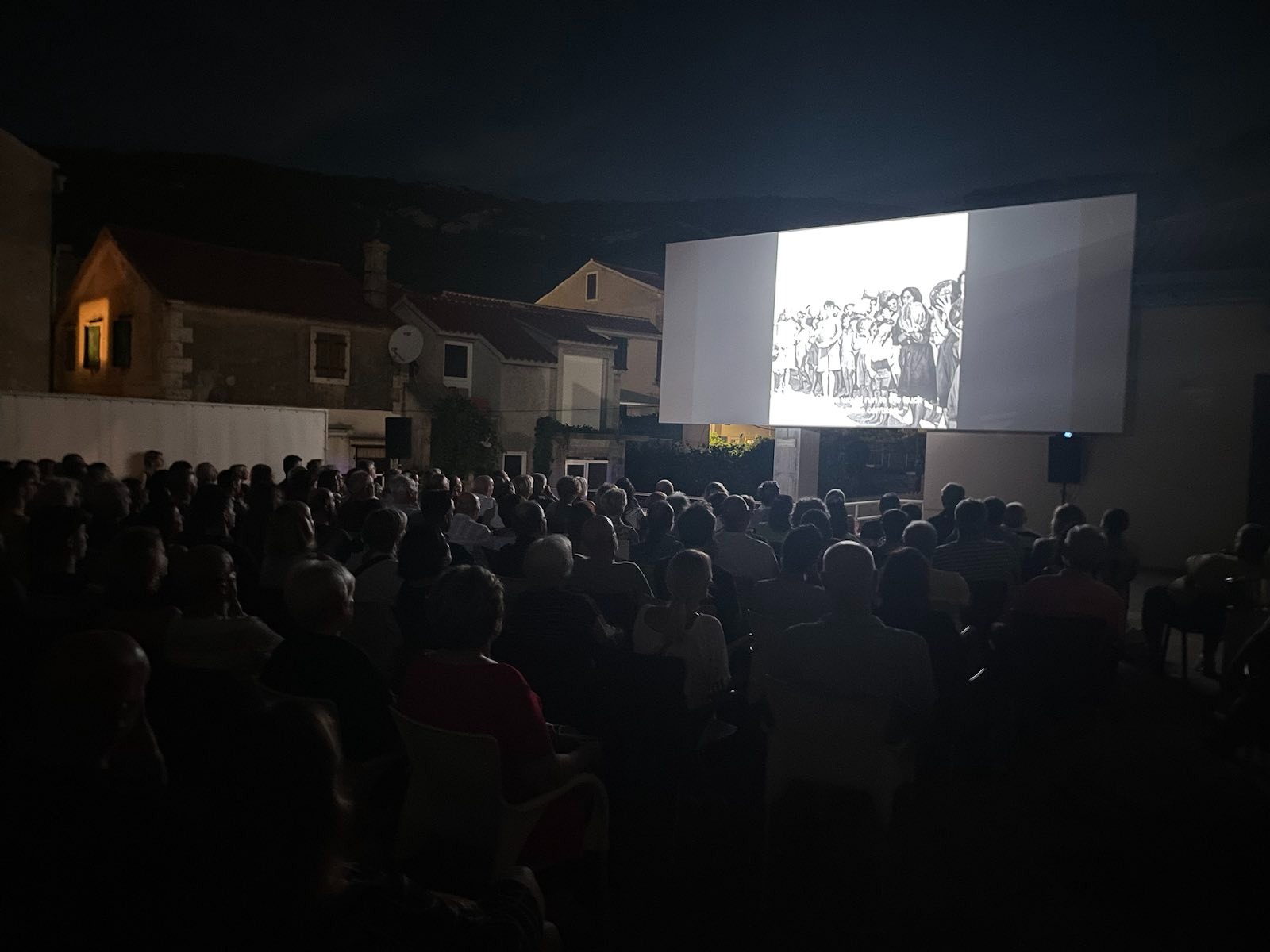
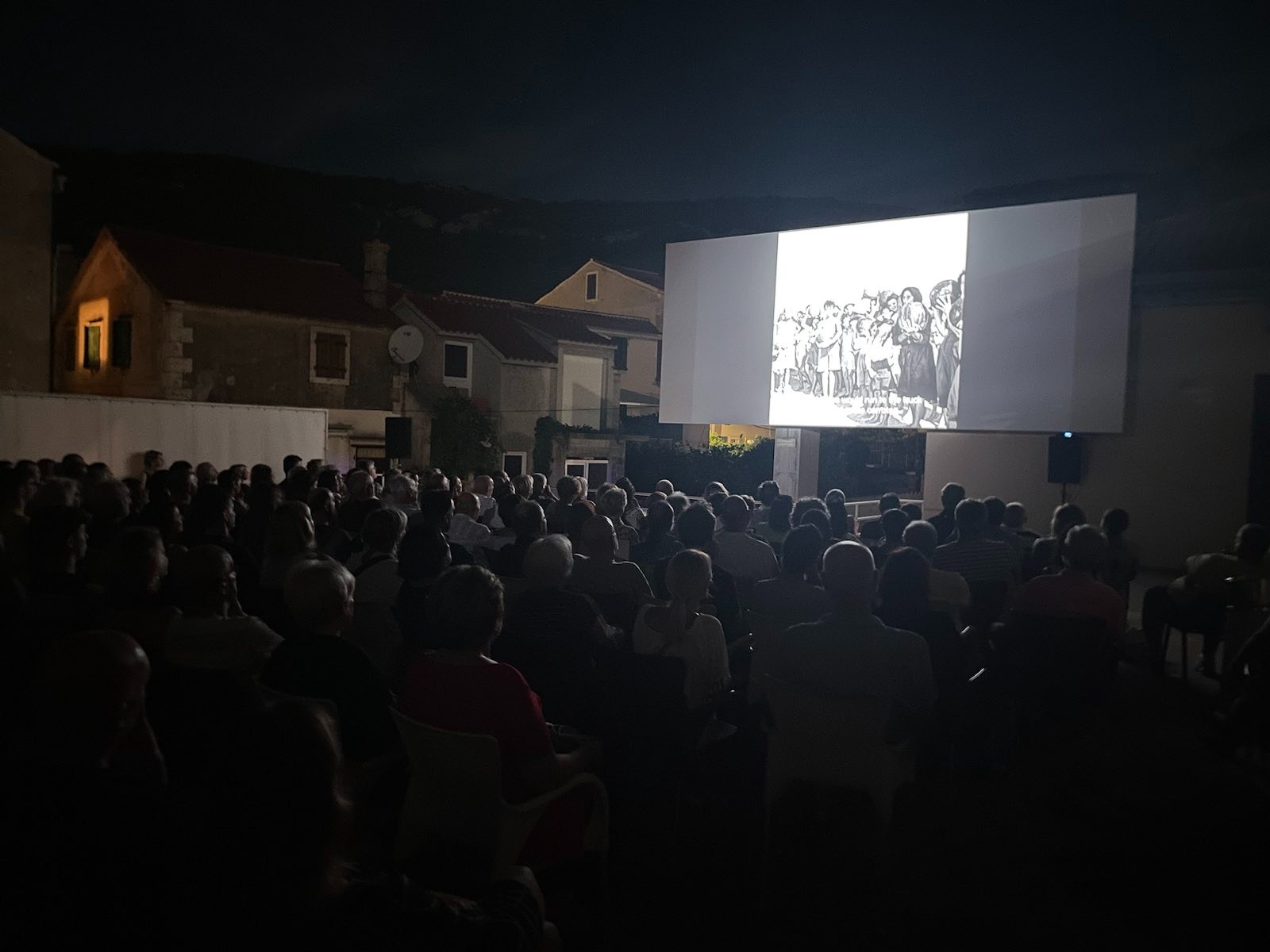
Komiža’s open-air cinema set the stage for the inaugural event of the School of Autonomy. The screening of the thought-provoking film “El Shatt – A Blueprint for Utopia” paved the way for a compelling dialogue involving director Ivan Ramljak and individuals who directly experienced the Yugoslav camp in Egypt during World War II, known as El Shatt. This particular subject strikes a deep chord within the people of Vis, given that a substantial number of them can trace their lineage back to the camp’s inhabitants, and a noteworthy few even drew their first breath there.
As depicted in these images, the venue was filled to capacity, and the panel discussion following the film was vibrant and engaging. Read more
It was in that moment that I experienced a true sense of freedom… Those were indeed times of greater optimism. Happiness and solidarity were more prevalent, unlike the present day. Back then, we possessed fewer material belongings and found joy in sharing, whereas now, despite having an abundance, we often display selfish tendencies…
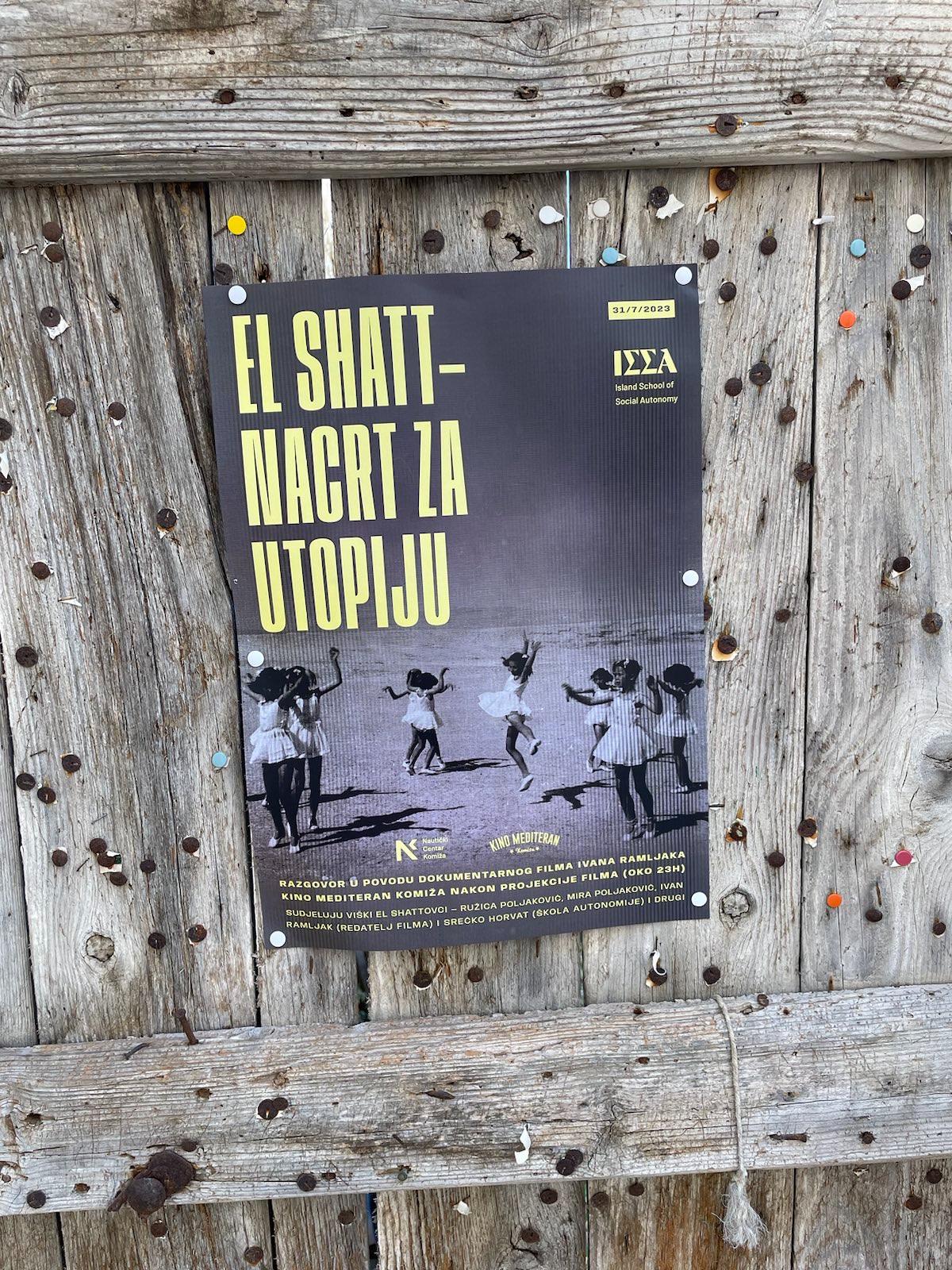
On Monday (31/7/2023) ISSA is organizing a discussion with the director of documentary film “El Shatt – A bluepring for Utopia” Ivan Ramljak and the still living refugees from El Shatt Ružica Poljaković & Mira Poljaković, to be held in Komiža at the summer cinema Kino Mediteran.
More about the movie:
Hundreds of frozen and starved people floating on boats in the middle of the Mediterranean Sea fleeing from the war… Familiar scenes that we are used to seeing in recent times. But the year is 1944, and the refugees are travelling from Europe to Africa. After Italian capitulation, and before the arrival of German army, 28.000 Dalmatian Croats left their home villages and towns to live for two years under the tents in the middle of Egyptian desert, in a kind of a communist model village that was formed to show the Allies how the new Yugoslavia will look like when the war ends. This is a story about them.
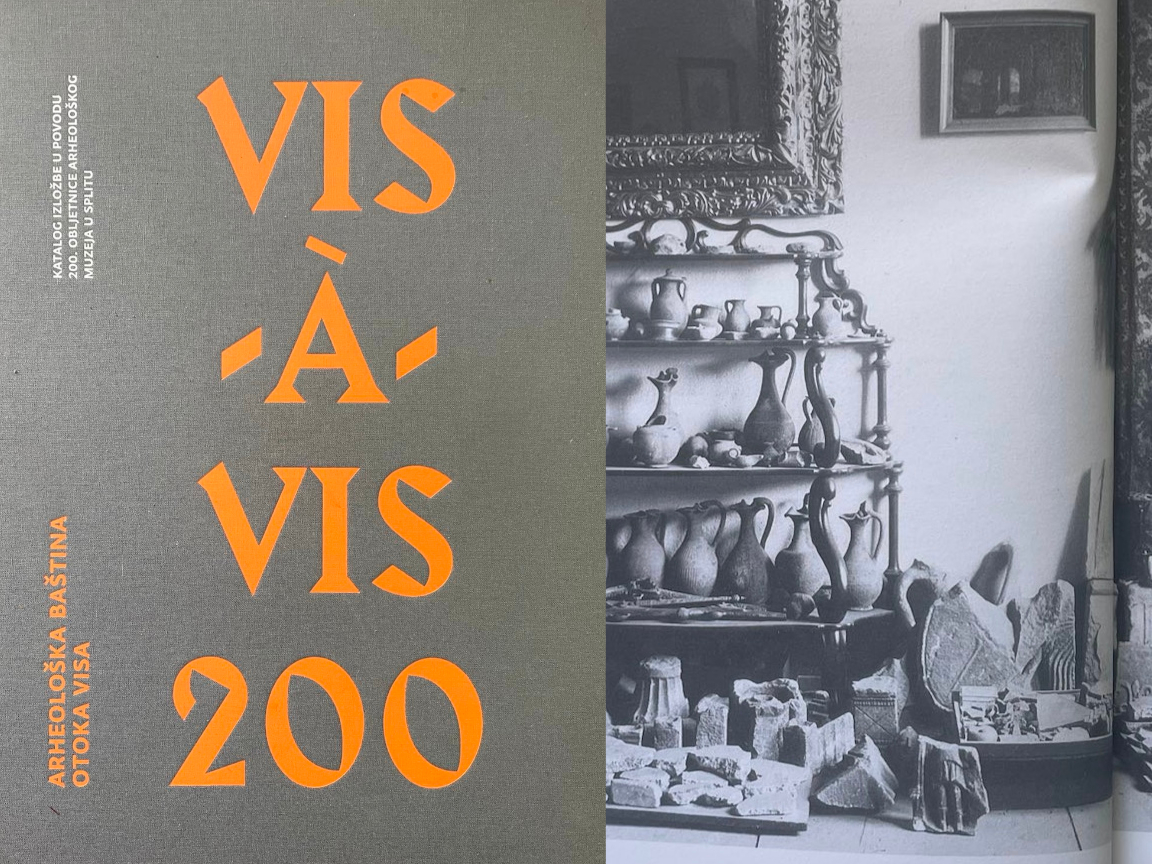
Below, you will find excerpts from the catalogue of the exhibition Vis-à-Vis 200 – The Archaeological Heritage of the Island of Vis. The exhibition showcased a diverse range of artifacts, such as inscriptions, sculptures, ceramics, jewelry, weapons, and more, offering a fascinating glimpse into the island’s earliest traces of life from prehistoric times to the early Middle Ages. The exhibition particularly focused on the dynamic development of the Greek polis of Issa during the Hellenistic period. Take a moment to browse the gallery below and discover it for yourself!
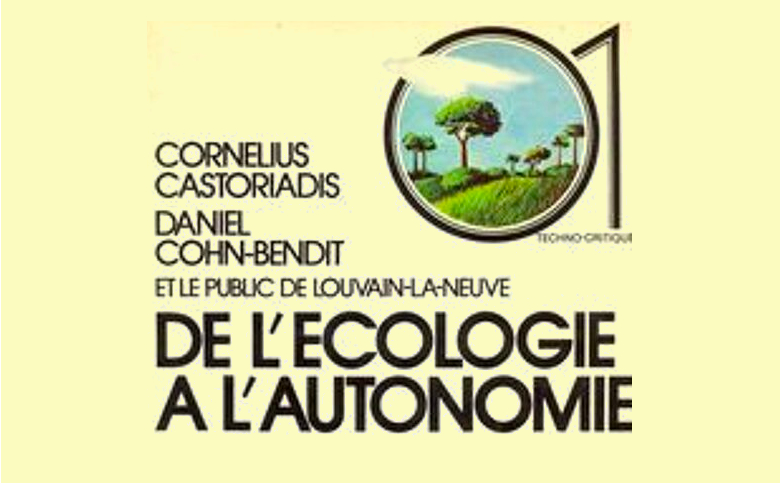
The following reflection on the ecological movement and concept of autonomy by the Greek-French philosopher Cornelius Castoriadis comes from a meeting on “The Antinuclear Struggle, Ecology and Politics” held on 27 February 1980 at Louvain-Ia-Neuve, Belgium. The other principal speaker was Daniel Cohn-Bendit, the former May 1968 Paris student leader and later German Greens Pany member. Cornelius Castoriadis has been one of the most important and innovative philosophers of the second half of the 20th century who formulated a new political theory rooted in the concept of “autonomy”. Castoriadis gave a brief but potent definition of autonomy during an interview, where he explained: “You know, in the word autonomy, two roots exist. Αυτός (me, myself) and νόμος (law). But most people think of the root αυτός and forget the root νόμος. Autonomous is he who gives to himself a law. Of course, I wouldn’t call autonomous a person that fulfills his wishes without any control …This also applies to society. Social and collective life cannot exist without an organization and without a minimum of social rules and purposes … The autonomous society is a society that knows that there is no transcendence, no transcendent source of institutions and laws, no life after death (a thing that the ancient Greeks, who did not believe in life after death, knew). The members of this society know for sure that, what is going to happen, has to be done by them, and then offered to themselves and to the society as a whole. It’s a society that knows the art of making institutions and laws for itself. This sort of ‘self employment’ guarantees the project of autonomy and defends the interests of society, since it allows its members to exist as autonomous individuals within its framework”
Cornelius Castoriadis (1922 Constantinople – 1997 Paris)
I am happy to be here and to see you. And I am very surprised by the number of participants, very pleasantly surprised and happy. But at the same time, this increases my fear of disappointing you, in as much as when I spoke with Dany before coming here he told me that he did not know what he was going to say, that he would improvise. Well, he has a habit of doing that and as one knows, historically, he comes out quite well. [Laughter.] As for myself, I would have liked to have devoted more time than I was able to preparing what I wish to say to you.
But perhaps, in the last analysis, this would not have made a difference since the four or five things I have to say, you will see, end in the interroga tory mode and they would have ended that way in any case. And I believe that the point of an evening like this is precisely to get you to speak, either on the questions that for you are already open or – and this would be a considerable gain – on new questions that would arise in the course of the debate, perhaps with the help of those who have been charged with introducing it.
Today, everyone knows, everyone thinks they know – this was not the case a short time ago – that science and technique are in their very essence inserted, inscribed, rooted in a given institution of society. Likewise, everyone knows that the science and the technique of today have nothing transhistorical about them, have no value that lies beyond question; these belong, on the contrary, to the social-historical institution that is capitalism as it was born in the West a few centuries ago.
That is a general truth. People know that each society creates its technique and its type of knowledge, as well as its type of transmission of knowledge.
People know, too, that capitalist society not only has gone very far toward the creation and the development of a type of technology that distinguishes it from all others but – and this also distinguishes it from all others that it has placed these activities at the centre of its social life and granted them an importance they did not have previously or elsewhere.
Likewise, everyone knows today, or everyone thinks they know, that the alleged neutrality, the alleged instrumentality of technique and even of scientific knowledge are illusions. In truth, even this expression is in adequate, and it masks the essential aspect of the question. The presentation of science and of technique as neutral means or as instruments pure and simple is not a mere ‘illusion’: it is an integral part ofthe contemporary in stitution of society – that is, it partakes of the dominant social imaginary of our age.
This dominant social imaginary can be encapsulated in one sentence: The central aim of social life is the unlimited expansion of rational mastery. Of course, when one looks from close up – and it is not necessary to go very, very close to see it this mastery is a pseudomastery, this rationality a pseudorationality. That does not stop it from being the core of the social imaginary significations now holding society together. And this is not only the case in the countries of so-called private or Western capitalism. It is equally the case in the allegedly socialist countries, in the countries of the East, where the same instruments, the same factories, the same organiza tional procedures and knowledge procedures are equally put in the service of this same social imaginary signification, namely, the unlimited expansion of an allegedly rational alleged mastery.
Here I shall open a parenthesis, for in no way can we discuss these matters in abstraction from the serious things now going on around the world. We see much more clearly today, with Afghanistan – more exactly, I shall say: People can see; as for myself, I claim to have seen it for going on thirty-five years – that the coexistence and the antagonism of these two subsystems, each of which claims to have a monopoly on the way in which ‘rational mastery’ over everything shall be attained, are now reaching the point where we run the risk of total rational mastery by the one true master, as Hegel would say, that is, by death.
You know that the domination of this imaginary begins first via the form of the unlimited expansion of the forces of production – of ‘wealth’, of ‘capital’. This expansion rapidly becomes the extension and the develop ment of the knowledge necessary for increased production, that is to say, of technology and science. Finally, the tendency toward ‘rationally’ re organizing and reconstructing all spheres of social life – production, administration, education, culture, etc. – transforms the whole institution of society and penetrates ever further into all activities.
But you also know that, despite its pretensions, this institution of society is torn by a host of internal contradictions, that its history is shot through with large-scale social conflicts. In our view, these conflicts basically express the fact that contemporary society is divided asymmetrically and antagonis tically between dominators and dominated, and that this division is expressed, notably, in the facts of exploitation and oppression. From this point of view we ought to say that, defacto, the immense majority of people who live in present-day society ought to be opposed to the established form of the institution of society. But it is equally difficult for us to believe that if such were the case, this society could last for long or even could have lasted until today. A very important question therefore arises. How does this society succeed in maintaining itself and holding itself together when it ‘ought’ to arouse the opposition of the great majority of its members? There is a response to this question that we must eliminate once and for all from our minds, the one characteristic of the old mentality of the Left. This is the idea that the system is held together only through the repression and manipulation of people, in an external and superficial sense of the term manipulation.
This idea is totally false and, what is graver still, it is pernicious because it masks the depth of the social and political problem. If we truly want to struggle against the system and, also, if we want to see the problems which, for example, today confront a movement like the ecology movement, we have to comprehend an elementary truth that will seem very disagreeable to certain people : The system holds together because it succeeds in creating people’s adherence to the way things are [ce qui est] . It succeeds in creating, somehow or other, for the majority of people and over the great majority of the moments of their life, their adherence to the effective, instituted, concrete way of life of this society. If we want to engage in an activity that is not vain and futile, it is from a recognition ofthis fundamental fact that we must begin our efforts.
This adherence is, of course, contradictory. It goes hand in hand with moments of revolt against the system. But it nevertheless is a form of adherence, and it is not mere passivity. Just look around you and you can easily see it. Moreover, if people didn’t effectively adhere to the system, everything would collapse in the next six hours. To take just one example: that marvel of ‘organization’ and ‘rationality’ that is the capitalist factory – or, more generally, every capitalist business enterprise, in the West as in the East – would then produce nothing at all, it would quickly collapse under the weight of its absurd regulations and of the internal antinomies characteristic of its pseudorationality if the labouring population did not make it function half the time against the regulations – and quite beyond what could ever be explained by coercion or by the effect of ‘material stimulants’ .
This adherence depends on extremely complex processes, which there can be no question of analysing here. These processes constitute what I call the social fabrication of the individual and of individuals of us all – in and through instituted capitalist society, such as it exists.
I shall simply mention two aspects of this fabrication process. One concerns the instillation in people, from their most tender infancy, of a relationship to authority, of a certain type of relationship to a certain type of authority. And the other, the instillation in people of a set of ‘needs’, to the ‘satisfaction’ of which they will then be harnessed their whole life long.
First, authority. When one looks at contemporary society and one compares it to previous societies, one notes one important difference: today, authority is presented as desacralized; no more are there kings by the grace of God.
DANIEL COHN-BENDIT: You are in Belgium.
CASTORIADIS: I am not forgetting that I am in Belgium. But I do not believe that the king ofthe Belgians is considered a king by the grace ofGod. I think that this must be a principle of Belgian constitutional law, that if there is a king of the Belgians, it is because the Belgian people have sovereignly decided to have a king – no? [Laughter.]
One would think, then, that authority today is desacralized. But in reality it is not. What, in former times, sacralized-authority was religion: as Saint Paul said in Romans, ‘There is no power but ofGod.’ Today, something else has taken the place of religion and of God, something that is not for us ‘sacred’ but which has succeeded, somehow or other, in setting itself up as the prac tical equivalent of the sacred, a sort of substitute for religion, a flat and deflated religion. And this is the idea, the representation, the imaginary signification of knowledge and of technique.
I do not mean thereby, of course, that those who exercise power ‘know’ . But they pretend to know and it is in the name of this alleged knowledge – specialized, s,cientific, technical knowledge – that they justify their power in the eyes of the populace. And if they are able to do so, it is because the popu lation believes this, it is because the populace has been trained to believe this.
Thus, in France one is saddled with a president of the Republic who claims to be an economic specialist. This ‘specialist’, when he was Minister ofFinance, held forth in the Chamber ofDeputies with a three-hour speech in which he laid out statistics rounded to four decimal places. This means he would have flunked first-year economics, since when it comes to prices and production a four-decimal statistic is strictly meaningless: at best, in these areas, one can speak about roughly 10 per cent. That did not stop President Giscard, who is not an economist, from unearthing a dinosaur of conomic knowledge by the name of Raymond Barre[laughter and applause], whom he publicly baptized as ‘the best economist in France’. The result is that the mess the French economy is in at present is much greater than it was three years ago and also than what it would have been had a cleaning lady been prime minister. [Laughter.]
There is a practical conclusion to be drawn from this. There is a field of struggle, especially for people like us here who are more or less involved in intellectual or scientific activities. It is a matter of showing, in the first place, that in the present age power is not knowledge, that not only does it not know everything but even that it knows many fewer things than people in general know, and that there are profound and organic reasons for this. And in the second place, it is a matter of showing that this ‘knowledge’ claimed by power, even when it does exist, is at bottom of a quite particular, partial, and biased character.
But there is also a question I do not want to pass over in silence – although it is only one of the questions we will have to dwell on this evening. It is that – forgetting completely now about Messrs Giscard, Barre, and their fellow plotters – there is a genuine problem of knowledge, and even of technique, that really does challenge us in as much as this knowledge and even this technique go beyond [depassent] the present institution of society. Even if one grants – as I do – that the orientation, the ends, the mode of trans mission, and internal organization of scientific knowledge are anchored in the present-day social system and, even more, that they are, in a sense, consubstantial with it; even then it must be granted that here there is a creation of something that certainly outstrips [depasse] the contemporary era. This is also true, moreover, for previous eras of history. To take one easy example, Pythagoras’s theorem was discovered and demonstrated on Samos or wherever twenty-five centuries ago. Clearly, it was discovered in a context that in no way was ‘neutral’, this context being formed as it was by a set of imaginary schemata indissociably and profoundly tied to the Greek conception of the world, to the Greek imaginary institution of the world, as is the case for all Greek geometry. That does not prevent, twenty-five centuries later, Pythagoras’s theorem, or something that has the same name, not only from continuing to ‘be true’ (one can add as many quotation marks and question marks to this expression as one wishes), but also from appearing infinitely truer than Pythagoras himself could have thought it to be, since the present statement ofPythagoras’s theorem, such as you will find it in a contemporary analytical geometry textbook, con stitutes an immense generalization ofits original formulation. It is still called Pythagoras’s theorem, but now it states: In every pre-Hilbertian space, the square of the measure of the sum of two orthogonal vectors is equal to the sum of the squares of their measures. Or, to take another example, no society is possible without arithmetic – no matter how archaic, primitive, or savage this society might be. But where, then, does arithmetic stop? This, too, is part of the question of knowledge. It is too easy to evacuate this ques tion by saying, as a recent small-minded Parisian clown [microfarceur] said, that totalitarianism is the scientists in power, which evidently serves only to condone and to reinforce the dominant ideological mystification. As if Stalin, who directed the operations of the Russian Army during the Second World War on an ordinary globe, as Khrushchev revealed, was a ‘scientist in power’! But it is also too easy to evacuate the question, as is often done in our circles and by people close to us, by trying to jettison science and tech nique as such because they are said to be the pure products of the established system; one would thus end up eliminating any interrogations bearing on the world, on ourselves, on our knowledge.
I come now to the other dimension of the process whereby the individual is socially fabricated, that concerning ‘needs’. Quite evidently, the human being has no ‘natural needs’, in any definition of the term natural – save, perhaps, in a philosophical definition in which ‘nature’ would be something completely different from what you usually think of under this term: a ‘nature’ according to Aristotle, or Spinoza, something like a norm that is both ideal and real. Beyond the fact that we are not here tonight to discuss these kinds of philosophical questions, this acceptation ‘of the term nature does not interest us for a precise reason: it is unclear how one could agree socially on how to defme what would cor:respond to a ‘nature’ of that kind.
There are no natural needs. Every society creates a set of needs for its members and teaches them that life is not worth living, and cannot even be lived physically, unless those created needs are ‘satisfied’ somehow or other. What is capitalism’s specificity in this regard? In the first place, capitalism was able to arise, maintain itself, develop, and become stabilized (despite and along with the intense working-class struggles tearing through its history) only by putting ‘economic’ needs at the centre of everything. A Muslim, or a Hindu, will put aside some money his whole life long in order to make a pilgrimage to Mecca or to some temple; for him, that is a ‘need’ . I t is not one for a n individual fabricated b y capitalist culture: this pilgrimage is a superstition or a whim. But for this same individual it is not a supersti tion or a whim, but an absolute ‘need’, to have a car or to change one’s car every three years, or to have a colour television set as soon as one exists.
In the second place, therefore, capitalism succeeds in creating a humanity for which, more or less and somehow or other, these ‘needs’ are almost all that count in life. In the third place – and this is one of the points radically separating us from a view such as the one Marx could have of capitalist society – these needs that capitalism creates, somehow-or-other-and-most of-the-time it satisfies them. As one says in English, ‘It promises the goods and it delivers the goods’. The junk is there, the stores are overflowing with the stuff- and you have only to work in order to be able to buy some. You have only to be well-behaved and work, and you will earn more, you will clamber up, you will buy more, and there you are. And historical experience shows that, with a few exceptions, it works: production goes on, people work, things are bought, consumption continues, and it works all over again.
At this stage in the discussion, the question is not whether we are ‘criti cizing’ this set of needs from a personal point of view, tastewise, from the human, philosophical, biological, medical, or what have you point of view. The question bears upon the facts, about which one should not nourish any illusions. Briefly speaking, this society works because people yearn to have a car and because they can, in general, have one, and because they can buy petrol for this car. This is why one of the things that might knock down the social system in the West is not ‘pauperization’, whether absolute or rela tive, but, rather, for example, the fact that governments might not be able to furnish drivers with petrol.
We really must realize what this means. When we speak of the energy problem, nuclear power, and so on, what in fact is involved is the entire political and social functioning of society, and the whole contemporary way oflife. It is so both ‘objectively’ and from people’s point of view, and in this regard our criticisms of the brutality of a consumer society count for little.
This situation may easily be illustrated by means of the future – and already past and present – political speeches of citizen [and Communist Party leader Georges] Marchais, who explains ( 1 ) if you no longer have any petrol to drive around with, it is the fault of the trusts, the multinationals, and of the government that is in bed with them; and (2) if the Communist Party comes to power, it will give you petrol because it will not be subject to the multinationals and because our great ally, friend of the French people, and great oil producer the Soviet Union will provide us with petrol (little matter if things are starting to go very badly over there, too, in this regard as well). That, clearly, is one possible scenario, just as there exists a possible scenario from an apparently opposite quarter, that is to say, from a neo-Fascist demagogue who might emerge from an energy crisis and the attendant fallout.
The energy crisis has meaning as a crisis, and is a crisis, only in relation to the present model of society. It is this society that has need, each year, of 1 0 per cent more oil or energy in order to be able to keep running. This means that the energy crisis is, in a sense, a crisis of this society. Thus, it contains in germ – and here is a question to which it is for you, much more than for me, to respond – a challenge on people’s part to the whole system. But perhaps it contains, as well, in germinal form the possibility that people will follow the most aberrant, the most monstrous political currents. For, this society, such as it is, probably could not continue if the process of ever increased consumption did not keep droning on. It might be able to chal lenge itselfby saying: What we are doing is completely mad, the way we live is absurd. But it could also cling to the present-day way of life, saying to itself: This or that party has the solution; or, We only have to kick out the Jews, the Arabs, or whoever, in order to solve our problems.
This is the question that is posed, and I pose it now to you: Where are people now at, concerning the crisis of their way of life? And what might a lucid political activity be that would accelerate the raising of people’s consciousness concerning the absurdity ofthe system and would aid them in sorting things out among the various critiques of the system already now forming both on the Right and on the Left.
I now would like to broach, in immediate connection with the foregoing, the question of the ecology movement. It seems to me that one can observe, in the history of modern society, a sort of evolution in the field on which challenges, contestation, revolts, and revolutions take place. It also seems to me that one can shed some light on this evolution if one looks at the two dimensions of the institution of society I mentioned earlier: the instillation in individuals of a scheme of authority and the instillation in individuals of a scheme of needs. From the outset, the workers’ movement challenged the entire organization of society, but it did so in a way that, retrospectively, cannot help but appear to us to be somewhat abstract. What the workers’ movement attacked above all was the dimension of authority – that is to say, domination, which is its ‘objective’ side_. Even on this point it left in the shadows – as was almost inevitable at the time – some completely decisive aspects of the problem of authority and domination, therefore also political problems concerning the reconstruction of an autonomous society. Some of these aspects were put into question later on, and especially, more recently, by the women’s movement and the youth movement, both ofwhich attacked the schemata, the figures, and the relations of authority as these existed in other spheres of social life.
What the ecology movement has put into question, on its side, is the other dimension: the scheme and structure of needs, the way of life, of society. And this constitutes a capital breakthrough [depassement] in comparison with what can be seen as the unilateral character of previous movements. What is at issue in the ecology movement is the entire conception, the entire position of the relations between humanity and the world, and ultimately the central and eternal question: What is human life? What are we living for?
To this question there already exists, as we know, an answer: it is the capitalist response. Allow me here to open a parenthesis, proceeding rapidly in reverse. The most beautiful and concise formulation of the spirit of capitalism I know ofis Descartes’s well-known programmatic statement: We are to attain knowledge and truth in order to ‘make ourselves masters and possessors of nature’. It is in this statement of the great rationalist philoso pher that one sees most clearly the illusion, the madness, the absurdity of capitalism (as well as of a certain philosophy and a certain theology that precedes it). What does it mean to ‘make ourselves the masters and posses sors of nature’? Note, too, that both capitalism and the work of Marx and ofMarxism are founded upon this meaningless idea.
Now, what becomes apparent, perhaps in fits and starts, through the ecology movement is that we certainly do not want to be masters and posses sors of nature. First of all, because we have understood that this does not mean anything, it has no meaning – except to enslave society to an absurd project and to the structures of domination embodying that project. And next, because we want another relationship with nature and with the world – which means, too, another way of life and other needs .
The question, however, is this: What way of life, and what needs? What do we want? And who can answer to these questions, how, and on what basis? By answer I mean not in a state of absolute knowledge but, rather, in full knowledge of the relevant facts and lucidly.
In my view, the ecology movement has appeared as one ofthe movements that tend toward the autonomy of society. Each time I have spoken of it, either orally or in writing, I have included it in the series of those movements I just mentioned. In the ecology movement it is a matter, in the first place, of autonomy in relation to a technico-productive system that is alleged to be inevitable or optimal, the technico-productive system present in society today. But it is absolutely certain that, by the questions it raises, the ecology movement goes far beyond this question of the technico-productive system, since it engages potentially the entire political problem and the entire social problem. I shall explain myself here and end on this point.
That the ecology movement engages the entire political problem and the entire social problem can immediately be seen by starting with an apparently limited question. I hope you will excuse me if I tell you things you must already have heard dozens of times, and if I say them abruptly. The anti nuclear struggle: Yes, very good, bravo. But does that mean at the same time an antielectricity struggle? If yes, then one must say so, right away, loud and clear. And one must also say: We are against electricity and we know all the implications ofwhat we are saying: no sound system in a hall like this one – but that’s already happened [laughter]; no telephones; no surgery rooms (after all, Illich says medicine only increases the mortality rate); no radio, pirated or otherwise; no tape recorders; no Keith.Jarrett records like the one I just heard in your club, and so on. It must be realized that there is practi cally no object of modern-day life that in one way or another, directly or indirectly, does not imply electricity. This total rejection is perhaps accept able – but one must know it and say it.
Or else, the only logical thing would be to propose other sources of energy, stating and showing that it is not necessary to deprive oneself of electricity if one rules out nuclear power plants, provided that the entire system of energy production be reformed in such a way that only renewable sources of energy would be allowed. As I am sure you know many more things than I do about renewable energy sources, I won’t bother to extend my remarks on this question considered in its own right. But the question of renewable energy sources goes far beyond the question of renewable energy sources. First, it implies the totality ofproduction. And then (or, rather, at the same time), it implies the totality of social organization. The only attempt I personally know of to take the question in its entirety into account is the Alter project Philippe Courrege is working on in France with a tiny group of volunteer workers. I say seriously because Courrege saw straight away that it is not only a question of ensuring the production of renewable sources of energy; he saw that this implies the totality ofproduction and, consequently, he proceeded to construct a small complete ‘system’ (or, rather, a broad range of such systems, each depending upon the final objectives one sets for oneself), a closed matrix covering the totality of ‘inputs’ and ‘ outputs’ of a small, fairly much autarkic region. But I also say seriously because Courrege
also saw, and said, that what on the ‘technical’ or ‘economic’ level is, if not a simple solution, at least a feasible one raises immense political and social (he says ‘societal’) problems: the definition ofthe final objective ofproduc tion, the community’s acceptance of a steady state, the management of the whole, and so on. Here I can say I feel I am on familiar ground – not that I, of course, have the solution, but because these are the questions on which I have been reflecting and working for thirtY years and they become both more precise and more clear when one gives concrete underpinning to the idea of self-governed social units living in large part upon locally renewable resources. But there remains the ‘negative’ aspect, so to speak, which the Alter project also shows: if one wants to touch upon the problem of energy, one has to touch upon everything. Now, all that is neither theory nor literary posturing. As is known, governments are saying even now that without nuclear power plants there will be no more electricity in a few years. Certainly, if nothing else happens – and as, since 1 973, these governments have done nothing but blow hot air on the energy problem without doing anything real about it – we really will end with something happening like the breakdown of the power grid last year in France.
Now, on the other hand, projects that deal with renewable energy resources can,in part be co-opted towards ends that could not even be labelled reformist – that is, toward the end of plugging up the holes in the existing system. And beyond this question of co-option, this leads to another question: Does an antinuclear, energy-oriented ecological ‘reformism’ have any meaning and can it be lucidly supported? I mean here by ‘reformism’ the support given to partial measures we consider viable and meaningful (that is to say, those not cancelled out by the very fact that they are inserted into an overall system that, itself, is not changed); for example, the laws against the pollution of waterways – laws that leave everything else in place: multinational companies, the State, the Communist Party, the king, etc. A certain traditional position responded in the negative to this question. It was said: We are fighting for the Revolution, and one of the by products of the Revolution will be the nonpollution of rivers (as well as the emancipation of women, the reform of education, etc.) . We know that this response is absurd and mystificatory, and fortunately women and students have stopped waiting for the Revolution to demand and obtain real changes in their condition. I think that the same thing holds for the ecology strug gle: there is, for example and among a thousand other issues, a grave question of the pollution of waterways, and the struggle against this state of affairs makes complete sense, provided one·knows what one is doing, pro vided one is lucid. This means that one knows that at present one is struggling for this or that partial objective because it has a certain value, and that one knows, too, that the measure of which one is demanding the intro duction or the implementation will, so long as the present system exists, necessarily have an ambiguous signification and can even be diverted from its initial objective. You know that Social Security was, in many countries,
a conquest wrested by the working class in the midst of struggle. But you know, too, that there are Marxists who explain – and after all, it is not totally false from a certain point ofview – that Social Security makes the capitalist system function because it serves the upkeep of the labour force. Well, so what? Should one demand the abolition of Social Security on the basis of that argument?
I shall close in broaching the problem that to me seems the most profound, the most critical – critical in the initial sense of the word crisis: the moment and process of decision. To speak of an autonomous society, of the autonomy of society, not only with regard to this or that particular dominant stratum but with regard to its own institution, needs, techniques, etc., pre supposes both the capacity and the will of human beings to govern themselves in the strongest sense ofthis term. For a very long time, in fact from the beginning of the period I was engaged in Socialisme ou Barbarie with my comrades, it was basically in these terms that for me the question of the possibility of a radical, revolutionary trans formation of society was formulated: Do human beings have the capacity and especially the will to govern themselves? (I say especially wz11 to gov ern themselves, for in my view ‘capacity’ does not really pose a problem.) Do they truly want to be their own masters? For, after all, if they really wanted it, nothing could stop them: this has been known since Rosa Luxemburg, since La BOt!tie, even since the Greeks. But little by little another aspect of this question – the question of the possibility of a radical transformation of society – began to appear to me, and to preoccupy me more and more. It is that another society, an autonomous society, does not imply only self-management, self-government, self-institution. It implies another culture, in the most profound sense of this term. It implies another way of life, other needs, other orientations for human life. You will agree with me if I say that a socialism of traffic jams is an absurd contradiction in terms and that the socialist solution to this problem would not be to eliminate traffic jams by quadrupling the width of the Champs Elysees. What are these cities, then? What do the people who fill them truly desire to do? How the devil does it happen that they ‘prefer’ to have their cars and spend hours each day in traffic jams, rather than something else?
To pose the problem of a new society is to pose the problem of an extra ordinary cultural creation. And the question that is posed, and that I pose to you, is the following: Do we have, before us, some precursory and pre monitory signs of this cultural creation? We who reject, at least in words, the capitalist way of life and what it involves – and it involves every thing, absolutely everything that exists today – do we see coming to life around us another way of life that heralds, that prefigures something new, something that would give some substantive content to the idea of self management, self-government, autonomy, self-institution? In other words, can the idea of self-government take on its full force, attain its full appeal, if it is not also borne by other desires, by other ‘needs’ that cannot be satisfied within the contemporary social system?
The rest of us, probably, we who are here, can no doubt think of such needs, we feel them, and perhaps for us they count for a lot. For example, I don’t know, to be able to go when one wants to wander in the woods for two days. But the question does not lie there. At issue are not our wishes and needs, but those of the great mass of people. What is being asked is this: Is something of this sort, a rejection of the needs being nourished at present by the system and the appearance of other aims, beginning to dawn, to appear to be important to people living today?
And finally, what is being asked is this: Don’t we effectively encounter on this point, on this line, the limit to political thought and action? Like all thought and all action, this kind, too, must have a limit – and must endeav our to recognize it. Is not this limit, on this point, the following: that neither we ourselves nor anyone else can decide on a way of life for others? We are saying, we can say, we have the right to say that we are against the contemporary way of life – which, once again, implies nearly everything that exists and not only the construction of such and such a nuclear power plant, which is only one ofits implications to the nth degree. But to say that we are against such a way of life introduces, in a roundabout way, a tremendous problem, what can be called the problem of right in the most general sense, not simply formal rights, but right in terms of content. What is going to happen if others continue to want this other way of life? I inten tionally take an extreme and absurd example, since it is close to the starting point of our meeting. Suppose there were people who not only want electricity but specifically want electricity of nuclear origin? You offer them all the electricity in the world, but they don’t want it: they want it to be nuclear. All sorts of tastes exist in nature, after all. What would you say in such a case, what shall we say? We will say, I suppose, that there will be a majority decision (at least we hope it will be) that forbids people from sat isfying their taste for nuclear-powered electricity. Again, this is an absurd example – and one easy to resolve. But you can easily imagine thousands of others that are neither absurd nor easy to resolve, for what is posed in this issue of one’s way of life is ultimately the following question: How far can the ‘right’ (the legally and collectively assured effective possibility) of each individual, of each group, of each commune, of each nation to act as it wants, extend once we know – and we have always known it, but the ecology movement forcefully reminds us of it – that we are all embarked on the same planetary boat and that what each one of us does can have repercussions on everyone else? The question of self-government, of the autonomy of society, is also the question of the self-limitation of society. Self-limitation has two sides to it: limitation by the society of what it con siders to be the unacceptable wishes, tendencies, acts, and so on of this or that portion of its members, but also self-limitation of society itself in its rules and regulations, the legislative authority it exercises over its members. The positive and substantive problem ofright lies in the ability to conceive a society that is founded upon substantive universal rules (the prohibition of murder is not a ‘formal’ rule) and at the same time is compatible with
the greatest possible diversity of cultural creation and therefore also of ways of life and systems of needs (I am · not talking here about folklore for tourists) . And this synthesis, this conciliation is not something we can just pull out of our heads . It will come out of society itself, or it will not come out at all.
To recognize this limit to political thought and to political action is to prohibit oneself from redoing the work of the political philosophers of the past, substituting oneself for society and deciding, as Plato and even Aristotle did, that some musical scale is good for the education of the young, whereas some other one is bad and ought therefore to be banned from the city. This in no way implies that we are to renounce our own thinking, our own action, our own point of view, or that we are to accept blindly and religiously all that society and history can produce. Again, it is ultimately an abstract philosophical point of view that led Marx to decide (for it was he who decided) that what history will decide or has already decided is good. (History almost decided for the Gulag.) We maintain our responsibility, our judgement, our thought, and our action, but we also recognize the limit thereto. And to recognize this limit is to give full con tent to what at bottom·we are saying, namely, that first and foremost a revolutionary politics today entails recognition of people’s autonomy, that is to say, the recognition of society itself as the ultimate source of institu tional creation. [Applause.]
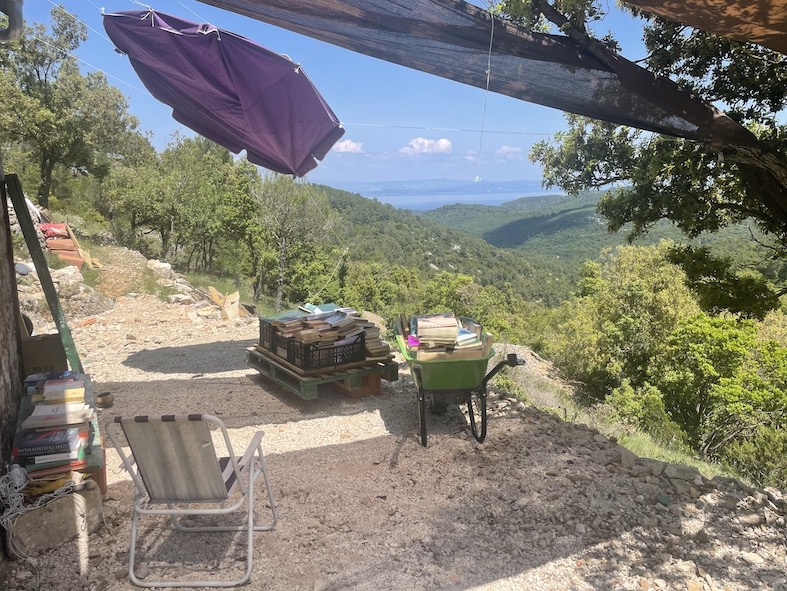
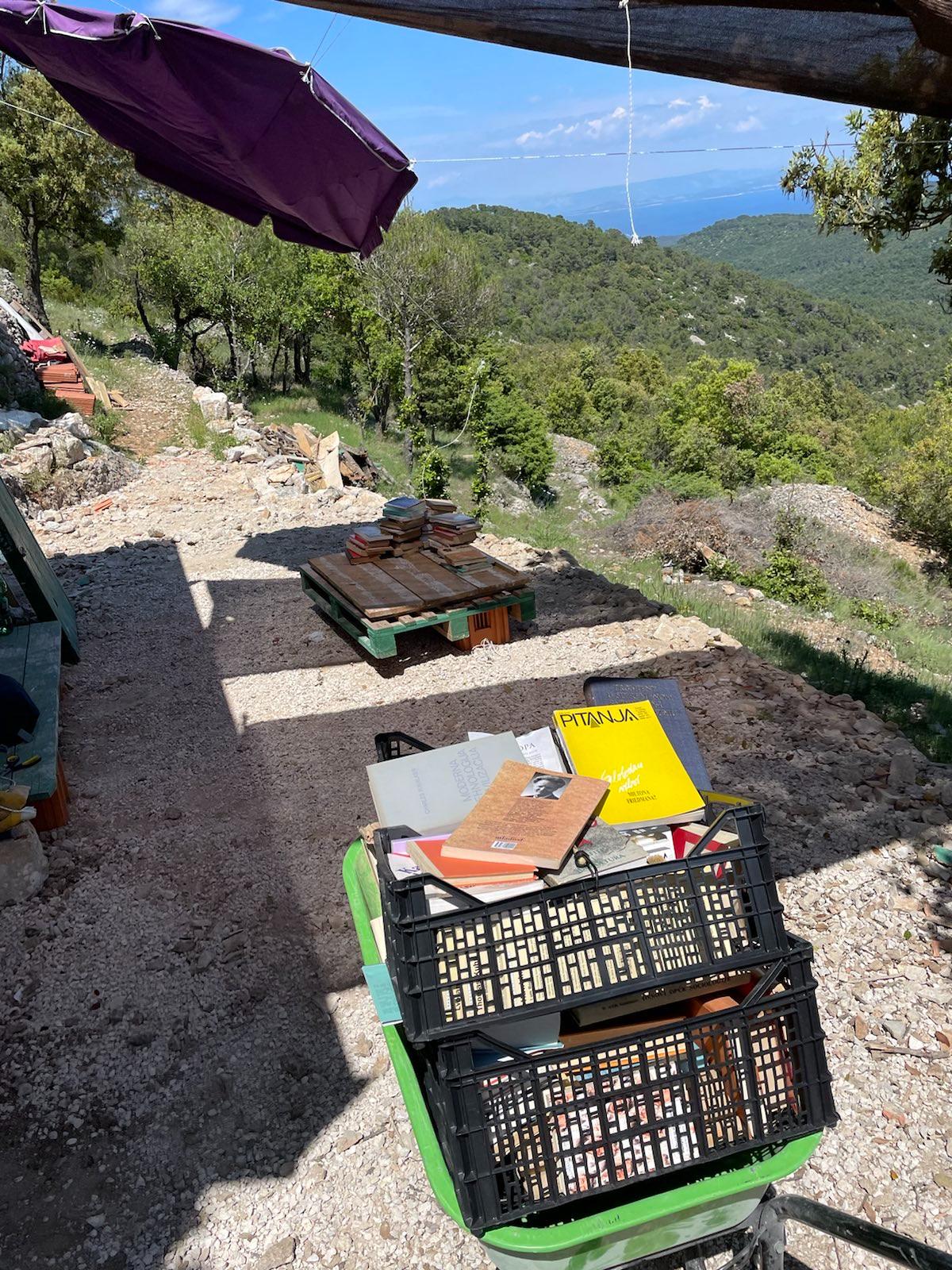
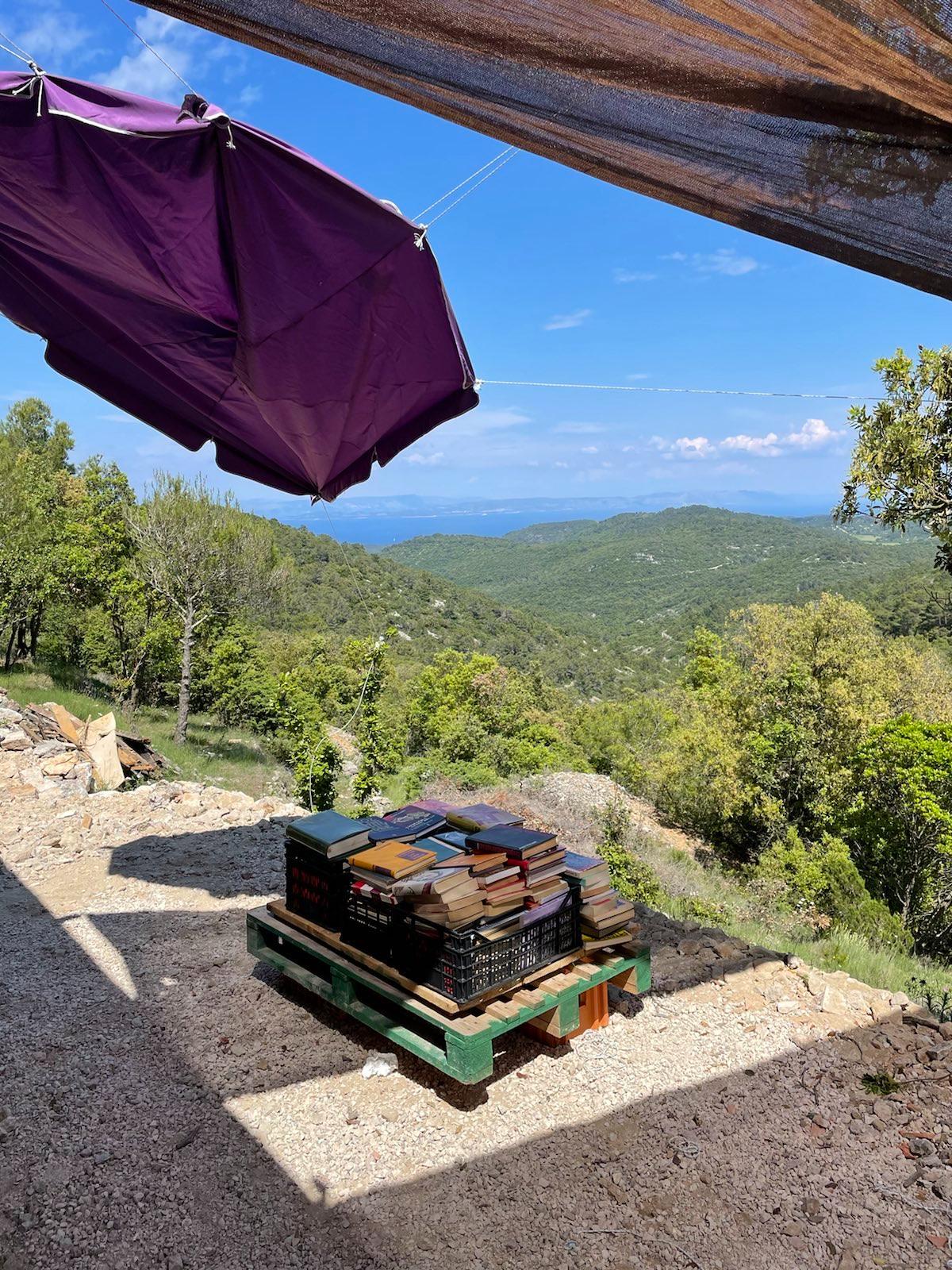
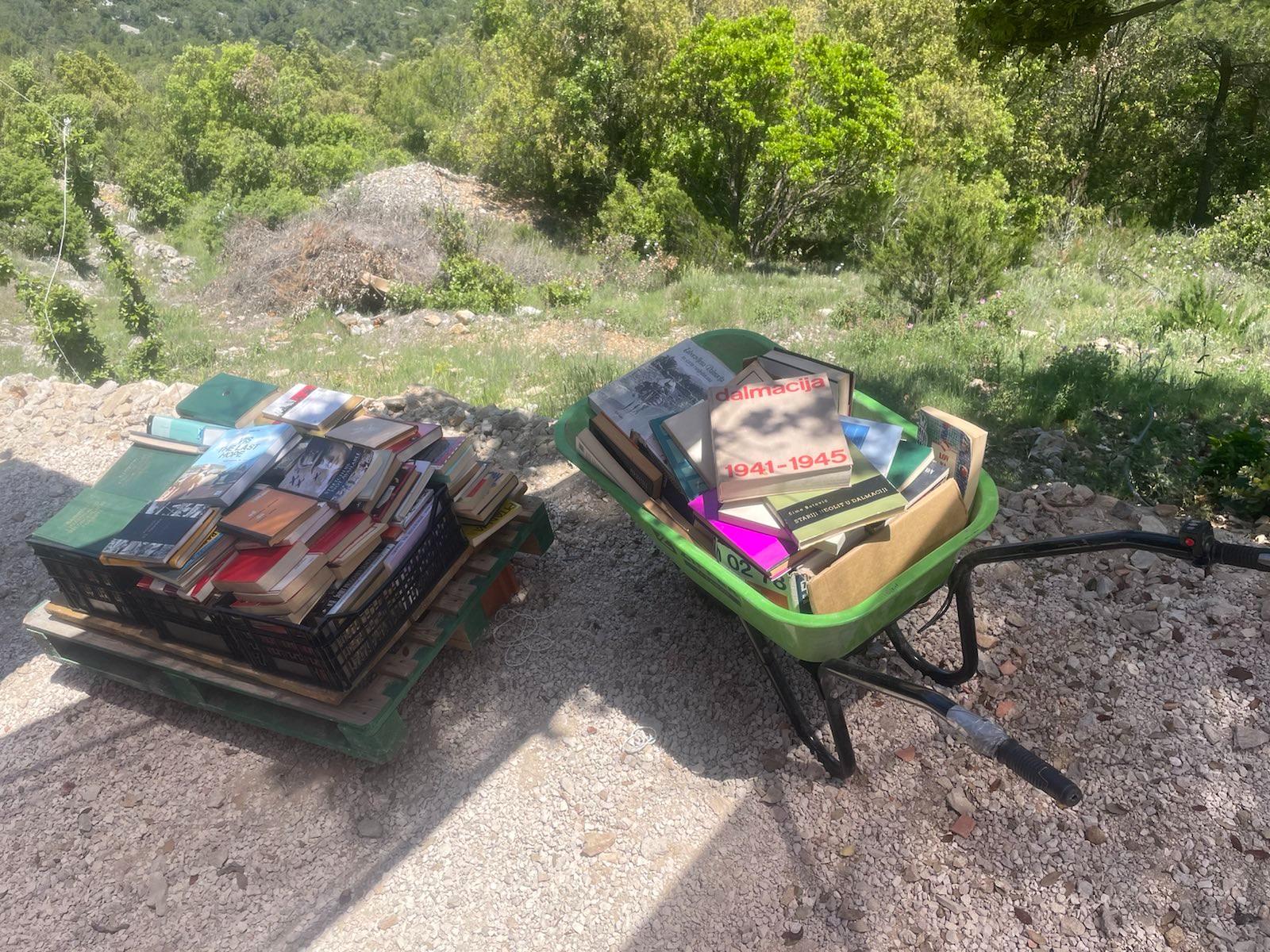
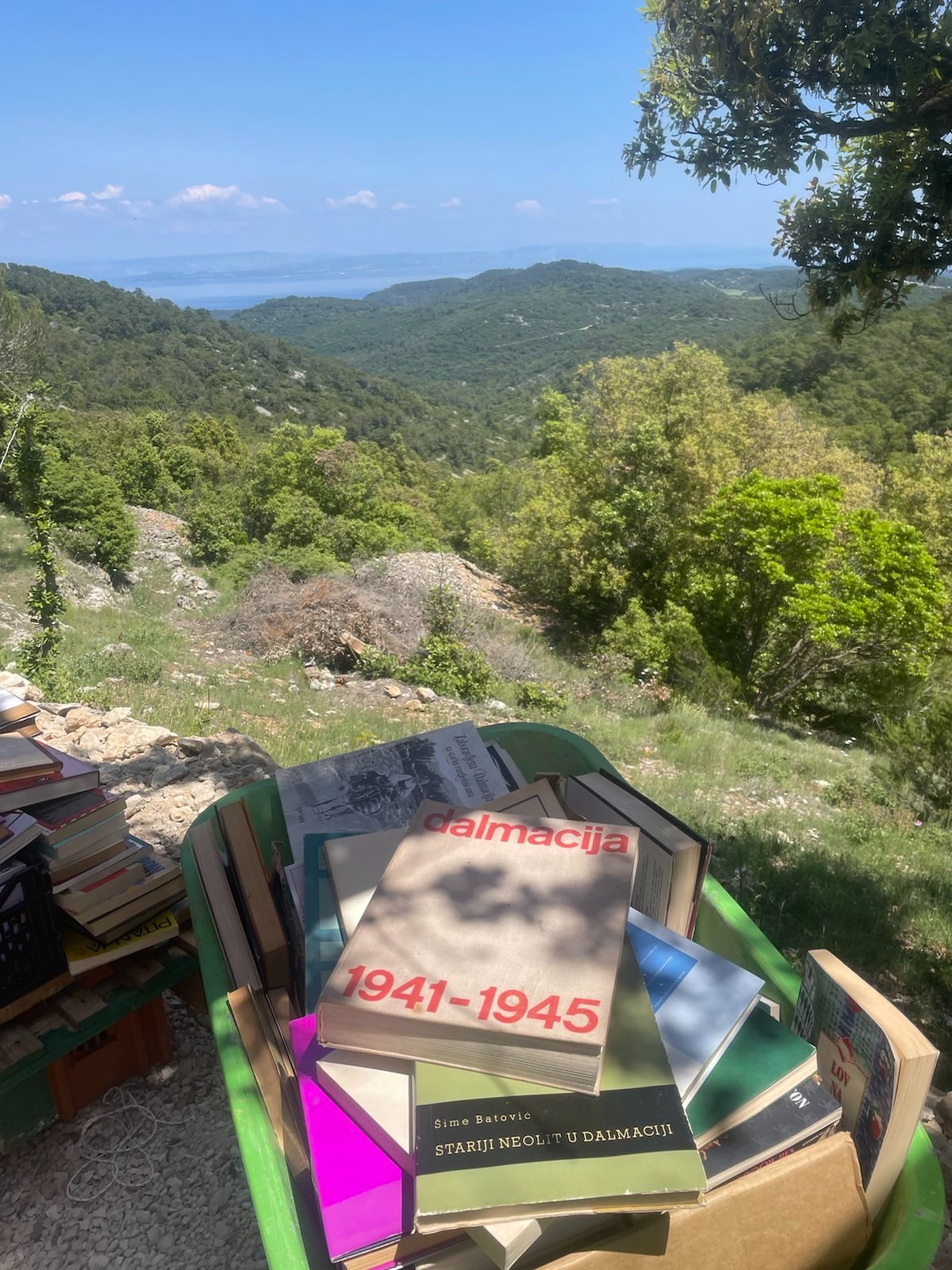
Today is a really special day. The granddaughter of the Croatian sociologist Boris Vušković (1933-2021) from Split donated his books that we then brought to ISSA and thoughtfully stored in our library to make them available to the public.
As a boy, Vušković survived the Second World War in Split. Two of his brothers joined the partisans, while the third was shot in 1942 together with Rade Kočar in Šibenik. Along with his father’s death in an Italian fascist prison, that experience permantly defined him. He taught sociology at the Faculty of Law and the Faculty of Economy at the University of Split. During the 70’s and 80’s of the last century, he was considered part of Split’s main intellectual troika, the so-called “Three V’s” (Vrcan Srđan, Visković Nikola, Vušković Boris).
We will make sure his books have a proper life here at ISSA.
This year marks the 80th anniversary since the courageous local population of Vis liberated the island from fascist occupation. This is a glance into their struggle from Srećko Horvat’s book “Poetry from the Future” (Penguin, 2019).
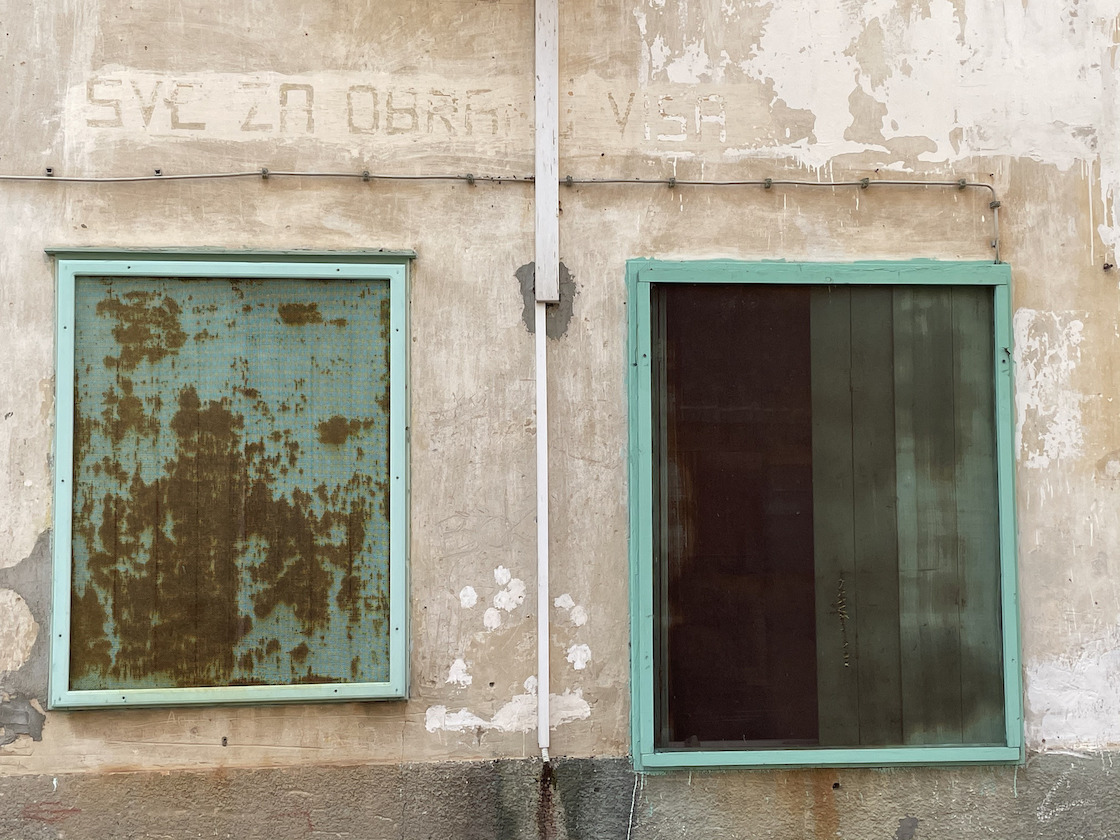
“Sve za obranu Visa” (“Everything for the defense of Vis”), graffiti in Komiža resisting 80 years
The First Sound from Occupied Europe
It is April 1944 and most of Europe is occupied. Look at the map. You will see France, Austria, the Netherlands,
Slovakia, Italy, Finland, Denmark, Belgium, Greece, Hungary, Poland and the Kingdom of Yugoslavia all under Nazi occupation, with pup- pet states installed in Croatia, Romania, Bulgaria and Norway. While German bombers are attacking London, the RAF is carpet-bombing Berlin. The end of the Second World War is nowhere in sight. The Allied front in Italy is stalled and Nazi propaganda claims that its operations on the Eastern front in Russia have been abbreviated for tactical reasons. The Allied invasion of Normandy is still two months away: an ambitious hope. De Gaulle forms a new regime in exile and Hitler and Mussolini meet at Salzburg.
In early 1944 concentration camps are still operating and exter- minating millions. French Jews are deported to Nazi Germany, the first Jews transported from Athens arrive at Auschwitz, and Adolf Eichmann travels to Hungary to oversee the deportation of much of that country’s Jewish population to the same concentration camp. In the occupied Netherlands, Anne Frank writes her diary, until her arrest by the Gestapo that August. Soviet forces reached Majdanek near Lublin, Poland, in July 1944; only in January the following year would they liberate Auschwitz.
In the midst of this apocalyptic nightmare, Mount Vesuvius erupted in Italy. This was also the year in which Casablanca won three Oscars at the sixteenth Academy Awards; and when Benjamin Green, seeking a way to protect soldiers from sunburn, invented sun- screen. Around the same time, Donald Trump’s father, Fred, was already working in real estate – building and selling houses, barracks
and apartments for US Navy personnel, later expanding into middle- income housing for the families of returning veterans. Donald would be born two years later, in 1946.
In these months of early 1944, just before the liberation of Paris when it would have its première, Jean-Paul Sartre’s dark existentialist play No Exit was being rehearsed in secrecy in the French capital. In the UK, Laurence Olivier was working on his Henry V, commis- sioned by Winston Churchill to boost British troops’ morale, while Hitchcock returned to the UK to make two short propaganda films in French for the British Ministry of Information (Bon Voyage and Aventure Malgache). On the other side of the channel, at the same time, Pablo Picasso wrote a play, Desire Caught by the Tail, which was performed in the home of surrealist writer Michel Leiris, with Albert Camus (who was the director), Jean-Paul Sartre, Simone de Beauvoir, Georges Bataille, Jacques Lacan and Picasso himself read- ing some of the parts. The party continued after the play because those who remained after midnight had to stay until dawn because of the curfew. According to the historical accounts of this party, Sartre sang ‘Les Papillons de nuit’ and ‘J’ai vendu mon âme au diable’. As Picasso’s crowd partied, Samuel Beckett, hiding from the Gestapo, joined the French Resistance, but continued to work on his last English-written novel, Watt, which he’d begun the previous year in Paris and which, he said, provided him with ‘a means of staying sane’.
It is early 1944 and most of Europe is occupied.
Now imagine. In the middle of all this, with yesterday in ruins and tomorrow uncertain, you are listening to the songs of Bing Crosby, Vera Lynn and Judy Garland on the BBC’s Overseas Service, when suddenly, completely unexpectedly, the melodies stop. The radio pre- senter, his voice tinny over the airwaves, announces, after five years of devastating war, what he calls ‘the first sound from occupied Europe’.
‘We present recordings from perhaps the most unusual voyage ever undertaken by a BBC war correspondent,’ he says. ‘They have just arrived from the Army Headquarters in Italy, but when and how they were made we cannot tell you, as we do not know that yet. The only thing we do know is that they were made by Denis Johnston, our correspondent in a country which the Germans claim is in their hands, in Yugoslavia.’
The announcer continues:
“Across the Adriatic Sea, throughout the once carefree hunting grounds for rich yachts along the Dalmatian coast and in the wild picturesque heights of Yugoslavia, one of the most heroic battles of this war is in progress today . . . These people know what they are fighting for. They have absolute faith that they are right and in their ultimate fate. And it is a great and unique experience in this world of cynicism and divided loyalty to be among them and to be able to help them.”
For reasons of secrecy, the reporter could not specify any location, name or rank. All the listeners know is that the broadcast is taking place somewhere in occupied Europe, in the Adriatic. All they can hear is the sound of liberation.
This sound from a possible future, an emancipated world that had not yet reached other parts of occupied Europe – from Paris to War- saw, Amsterdam to Vienna – was broadcast only once in April 1944. The recording was forgotten, left in a bunker for thirty years before being accidentally rediscovered in 1975 by two Sarajevo journalists. During the following two years, the pair painstakingly reconstructed the recording and its context: where it took place and when; who were the people singing and marching in the background, preparing Yugoslavia’s liberation. Who the broadcaster was.
At first, all the journalists had was the sound, the broadcast itself. Even in the BBC archives, the archivists knew only that the broad- cast had been made in March or April 1944. Finally, however, the journalists managed to find the people behind the recording’s voices and to reach the reporter, the Irishman Denis Johnston – a contem- porary of Yeats and Shaw – who was still living in Dublin, and who told them the recording was the ‘greatest professional challenge of his journalistic career’.
Johnston also told them where the broadcast was made: the island of Vis, in the Adriatic Sea.
Who knows how many struggles of the past have been and will be forgotten, from original sounds to experiences and memories. The two journalists from Sarajevo succeeded not only in reconstructing a fleeting and long-forgotten event. They did something much more.
What they did was best explained by the German philosopher Walter Benjamin in his 1940 Theses on the Philosophy of History, written in occupied Paris, with a gas mask hanging on the wall above his writing table:
To articulate what is past does not mean to recognize ‘how it really was’. It means to take control of a memory, as it flashes in a moment of danger.
This sound of a forgotten historic struggle which took place in the very heart of occupied Europe allows us not so much to understand how it really was, as to embrace the memory of that crucial historic moment when Europe trembled on the brink of liberation, to under- stand its unfulfilled potentialities – potentialities that are still relevant to our own present and crucially to building a better future. For us today, the most important lesson of the Yugoslav Partisan historical sequence lies in the fact that what started as a war, and turned into a world war, acquired the form of a revolution. Or to be more precise, the Partisans used the misfortune of occupation to mobilize the popula- tion in order to fight their way out of it. Instead of being victims of their historical circumstances, the Yugoslav people took control of them and turned them to their own advantage. From the mountains of Bosnia, Herzegovina and Montenegro, through the woods of Slo- venia, Croatia and Serbia, and finally on the island of Vis, fighting a guerrilla war against the outnumbered Nazis and fascists – including the local collaborators, the Ustaša and Četniks – the Partisans suc- ceeded not only in liberating the Yugoslav territory, but in establishing a new society based on the revolutionary struggle.
Today, when historical revisionism (the process of rewriting his- tory and turning fascism into a legitimate discourse) and ‘presentism’ (the deluge of instant and fake news, and the world of social net- works) are capturing every memory, we have to remind ourselves of Benjamin’s words:
The only writer of history with the gift of setting alight the sparks of hope in the past is the one who is convinced of this: that not even the dead will be safe from the enemy, if he is victorious.
Today the enemy – whether it be the reinvention of fascism across the globe or the ongoing devastation caused by global capitalism (from austerity to the destruction of our planet) – is obviously victori- ous. The dead cannot be resurrected, but their deaths and sacrifices can acquire new meaning: if we are able to inscribe new resonance to the dead, if we can save their lives from oblivion and, more import- antly, if we can liberate them from a current historical revisionist narrative and reality they themselves would not be ready to live with. The past (how it really was) is unfinished as long as we can fulfil its potential (how it really could be) in the future.
This is why this first sound picture from occupied Europe is so important. It is a glance not only into a short period of the past, it is a document of resistance, proof that there can be a resistance move- ment where, once again, there is occupation.
Occupation? Yes, occupation. The current occupation consists not only in the rise of fascist movements and authoritarian governments throughout the world; nor in the physical occupation of politics and space, with new walls and detention centres. It is also the psychical occupation of our emotions, desires and imagination, drowning in the melancholy and pessimism of the will. Our current occupation consists in the widespread sense – or even reality – that there is no alternative, and ultimately, that there is no future.
The Tourist “Occupation”
It is the start of summer 2017 and I am returning to the small island where this extraordinary broadcast took place.
Vis is one of the most remote inhabited islands in the Adriatic, and it takes more than two hours to reach it by ferry. Rising out of the sea, its scents of pine trees, carob, rosemary and oregano mingle with the smell of sea salt carried by the winds. As we drive through the hills of the island to reach the fishing village of Komiža on its western coast, the sound of crickets immerses us in a different way of temporality. Everything is slower here; imperceptibly, time starts to go into reverse. And the longer you spend here, the better you will get acquainted with the island’s particular philosophy of life: pomalo. It
is a greeting you might hear on the street (‘take it easy’) , or a casual answer you get when you want to make an appointment (‘let’s see’). But first and foremost it is a way of being.
And as always, for a short tranquil moment at the arrival of sum- mer we can be certain that the ever-present sea will always be here, just like this, crystal clear and infinite. Whatever is happening in the world, whatever will happen, the sea will endure, with no end at the horizon, a reflection of our own transience.
But suddenly we are reminded that this summer season is ephem- eral. We see aeroplanes 10,000 kilometres above us heading towards Italy. And every time we look at these distant white dots, we are relieved it is not us travelling in one of them.
Unlike the hordes of tourists who occupy Vis every year, however, we know life is hard here. Tourists who see my friend Senko Karuza – a poet and excellent chef – ordering his morning vodka with a slice of lemon probably think he’s a quaint example of a local living the good life. But as he says, ‘For me it is already evening!’ He works in his vineyard from five in the morning, then heads to his konoba res- taurant, where he cooks until he knocks off at midnight.
Tourists probably think the lady at the small grocery store must be crazy, because when, marvelling at the weather and the still, blue sea, they ask her whether she’s been swimming recently, she says she hasn’t done so for eighteen years. She’s always happiest when the wea- ther breaks because the heat makes work almost impossible, and the last time she went in the sea was when she was teaching her young daughter to swim. Now, she works relentlessly so her daughter can finish her studies and build a hopefully better future – which means leaving the island in order to find a job.
Every now and then, certain self-styled ‘saviours’ from Europe who descend on Vis try to convince these hard-working people that they are here to help them save the island. They recount examples of small villages and communities which Europe succeeded to ‘save’, where the locals have become successful working in the tourist indus- try, instead of slaving all day in the fields or fishing from early morning or all night. These people have, say the ‘saviours’, perfected the art of fulfilling the desires of the tourists, while preserving their culture, by opening ‘ethno-villages’ in which tourists can see how villagers still
use traditional crafts. They don’t understand that for our people an ethno-village is a sort of postmodern ‘sustainable’ zoo.
When I came to the island for the first time some ten years ago, there was still no mass tourism. Ironically, it was the Yugoslav People’s Army (JNA), not Europe, which preserved the island, its traditions and untouched nature. From 1944 until the collapse of Yugoslavia in 1991 Vis was one of the strategically most important Adriatic army bases and no foreign visitors were allowed. Until the early 1990s it was untouched by tourism.
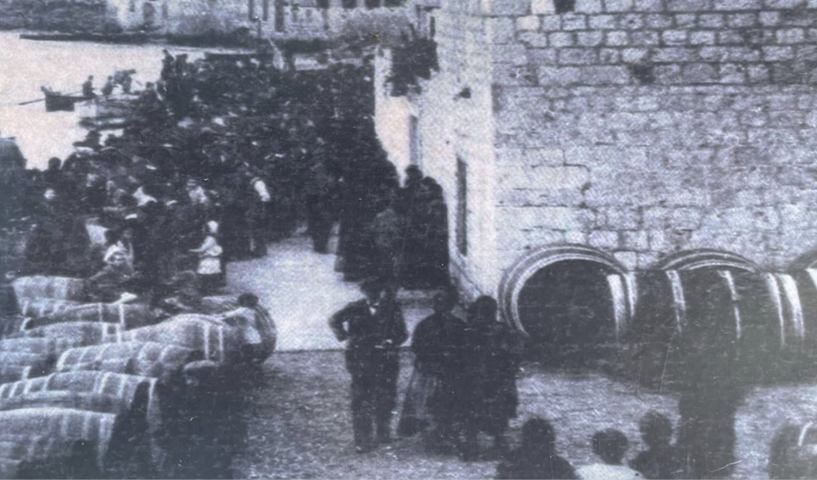
At one point Vis, with its ten factories, was producing 57 per cent of all the tinned fish of the Dalmatian coast. When communism collapsed the industry went too. Today, nothing of it is left due to ‘structural adjustments’ (the transition from communism to a free market economy), which were supposed to lead Croatia into a bright new future. All the factories were privatized, then went bankrupt, leaving workers without jobs.
Nowadays the only engine of the Croatian economy is tourism; the Croatian economy literally wouldn’t exist without it. According to the 2016 statistics, Croatia has the highest tourist GDP in Europe: at 18 per cent of GDP it is far ahead of Italy (2.2 per cent) and Spain (4.7 per cent). The flip side of this tourist success story is a devastated economy. Where once there were factories, today we have only services.
The most recent structural adjustment of the never-ending transi- tion from communism to capitalism is the Croatian conservative government’s law that effectively paved the way for the privatization of the country’s beaches. Back in the 1990s, after the dissolution of socialist Yugoslavia, everything in state or social ownership was pri- vatized, from factories to telecommunications, from the oil company to the banks.7 Given that there is barely anything left to privatize, it was just a matter of time before beaches and islands, the last public spaces, would become private as well. With 1,777 kilometres of coastline, 1,200 islands and around 2,000 beaches, Croatia is obvi- ously an almost infinite reservoir for something which might soon become Europe’s first private resort, turning the whole country into a sort of gated community.
A few years ago came a harbinger of this privatization. Tourists from Europe, mostly Swedes, started to descend on Vis every summer.
Some five or six hundred of them would come once a week in a fleet of thirty or forty sailing boats. Occupying the local beach bar, they would turn it into a typical western European disco, which of course is not free. The locals were unable to afford tickets to a beach which was until then free and public. Now the tourist boats come twice a week to Vis (which in a way is lucky, given that boats run daily to all the other Adriatic islands). Every day, more rubbish piles up.
Barba* Senko tells me that one of his friends, just back from watering olive trees in his drought-afflicted fields, came up with this idea for the tourists: instead of partying all night, each of them would be allocated an olive tree to tend. They could then buy all the olive oil which was produced from this tree and in return bask in the warm glow of their contribution to the sustainable development of the island. This is the future of tourism, he thinks.
Mostly, though, the people of Vis prefer to work their fields rather than dreaming of some new start-up. It’s hard, but at least for a few hours they are alone and content. They don’t want to be anyone’s sav- iours. And above all, they don’t want to be saved by their saviours.
The Fascist occupation
What the tourists and saviours don’t know is a simple fact: here a stone is not merely a stone. Every stone is a document of resistance.
Every house, now turned into a konoba, rakija-bar or boutique hotel, was once a shelter for refugees, a hospital, a theatre, a radio office. Fields were once transformed into airports and sports grounds (cricket was and is still being played here); devastated buildings were factories; caves were illegal printing offices.
Long before the tourists, our small island in the Adriatic Sea was occupied for centuries. In the fourth century Bc, the Greek tyrant of Syracuse, Dionysius the Elder, founded the colony Issa on the island. Later it became an independent polis, with its own money and even its own colonies. It was a Roman colony until the collapse of the Roman
Empire, following which it was under the rule of the Republic of Ven- ice for three and a half centuries, until 1797. After being handed on to Napoleon and then the Kingdom of Italy – with Italian as the official language – the island was ruled by the Austrian Empire for just over a century. Following the First World War, it was briefly Italian again. Finally, in 1920 it was ceded to the Kingdom of Yugoslavia.
During the Second World War, the island was occupied again, this time by fascist Italy. As Italian troops landed on 30 April 1941, locals lit bonfires on prominent hills and all the villages were daubed with antifascist graffiti.8 Italian slogans were overwritten by local youths, who added Vederemo (‘we’ll see’) to the Italian Vinceremo (‘we will win’). The next day, the workers’ holiday of 1 May, people flooded onto the streets in celebration – and in what was evidently a protest against the occupiers.
The fascists immediately set about trying to suppress resistance. The Italian language was imposed in schools and public institutions; all Croatian signs were removed from municipal buildings and replaced by portraits of Mussolini and Italian flags. Now, the official greeting was the notorious raised arm ‘Roman’ greeting. Closing the island’s sports clubs and theatre groups, they opened their own: ‘Fascio’ for adults, ‘Piccole’ for the youth, ‘Ballila’ for children and ‘Dopolavoro’ (a fam- ous ideology and practice invented by Mussolini back in 1926) for the post-work leisure of adults.
In a misperception common since time immemorial, what the occupiers didn’t understand was that the local population would rather starve or die than live and serve under fascist occupation – or any other occupation, come to that.
As the Italians and Germans occupied most of the disintegrating Kingdom of Yugoslavia, many of Vis’s young people left to join the Partisan resistance in the mountains and forests of Bosnia, Serbia, Croatia, Slovenia and Montenegro, while the rest of the population resisted the occupiers in all possible ways.
Workers in the island’s sardine-canning factories, whose produce was now exported back to fascist Italy’s armies, carried out acts of sabotage and subversion, from go slow strikes to using faulty pack- aging, and producing batches without preserving oil, or with the oil replaced by chemicals. The seasonal workers in the vineyards went on strike, prompting the rest of the island’s seasonal workers to down tools as well.
The resistance took many forms. When, occasionally, the mines anchored in the sea came free from their moorings and were blown onto the island, fishermen would capture and dismantle them, turn- ing them into hand grenades for the Partisan resistance movement.
There were other, similarly dangerous acts: on the anniversary of the October Revolution in 1942 a young Partisan called Nikola ‘Top’ Marinković, son of a poor fisherman, climbed to the top of the 50- metre-high bell tower of Komiža church and unfurled a red flag with the hammer and sickle. Although the young man managed to escape the ensuing volley of rifle fire from furious Italian troops, he was later killed. His act of courage was more than just a symbolic gesture of defiance. It was a sign from the future, a sign that liberation could be achieved if the other locals were prepared to show similar cour- age. And they did. Because courage is contagious.
With the resistance continuing, the Italian navy blockaded the island and started rounding up suspects. When people began to flee the villages and towns for the fields, hills and forests, the Italian occupiers imposed a general ban on movement, putting the entire population under house arrest. They detained ten suspected Partisans and shot them next to the church, while the locals, under house arrest, watched through the half-open windows. But this couldn’t – and didn’t – stop the resistance movement either.
When Mussolini’s regime fell on 25 July 1943, the island’s inhabit- ants started organizing for the final liberation. All over Vis, bonfires were lit, people flooded the beaches, singing Partisan songs. They took the island back.
The Liberation of the island
Today, as the last participants in this historic struggle pass away and its memory fades, we reassure ourselves with the old mantra ‘It can’t hap- pen here’, or just indifferently look on while Europe is being occupied again by new forms of fascism or other dystopian nightmares under a name yet to come. On the one hand, Europe is already occupied by
powerful financial institutions, banks and corporations which know no borders. Countries on the continent’s periphery – Greece, Spain, Croatia – were the first victims of this ‘shock therapy’ (austerity, privati- zations), but now the boomerang is returning to the centre: the UK, France, Germany, with new labour laws and market deregulation, including the privatization of healthcare, education and public spaces. The Gilets jaunes (‘Yellow Vests’) protests that hit France and Europe in late 2018 were a reaction to that, not to a simple increase in carbon tax; it was the victims of austerity who were protesting. On the other hand, many European states are either witnessing a rise of extremist and popu- list movements – the Alternative für Deutschland in Germany; France’s Marine Le Pen – or a shift to radical right and xenophobic governments (Italy, Austria), or have already been transformed into semi-authoritarian states with new laws and changed constitutions (Hungary, Poland). New borders and walls are being erected, while the EU army sends patrols to its outer borders with Croatia and Albania, and to Mediterranean countries such as Libya where the refugee problem is being ‘outsourced’.
On top of this, in June 2018 the hardline interior ministers of Austria, Germany and Italy formed what the Austrian Chancellor Sebastian Kurz called an ‘Axis of the willing’ to combat illegal immi- gration into the EU. His choice of phrase, coincidentally or otherwise, carries much darker historical undertones: a previous ‘Axis’ between precisely those three countries occupied Europe in the Second World War, with dire consequences for the whole continent and its people.
The question is not so much what the future of Europe will look like; it’s more traumatic than that. What if the future is already here? What if Donald Trump’s (or Poland’s, Hungary’s, Austria’s) evangelic fundamentalism will lead us directly into the science-fiction autoc- racy of Margaret Atwood’s The Handmaid’s Tale? What if Europe’s crisis will bring us into the nightmare of Alfonso Cuaron’s dystopian movie The Children of Men (2006), in which the ‘state of exception’ (civil war, refugees in cages, terrorist attacks) has been normalized?
It is precisely in this context of what might be described as the begin- ning of a new ‘occupation’ of Europe that the story of Vis, a story from the past, resonates with potential for our future.
What the period of fascist occupation of Vis shows is that resist- ance can acquire many forms and even a small number of determined
people on a remote and isolated island can defeat a numerically and technologically superior enemy. The period of liberation, meanwhile, shows that the flip side of resistance is – and must always be – the progressive, constructive part. Resistance to the old world and build- ing a new one have to go hand in hand, simultaneously. A determined ‘No’ has to be followed by an even more determined ‘Yes’.
Vis’s history embodies this perfectly.
As soon as the local population liberated the island from the fascist occupation, the people returned to their villages, fields and ships. As the rules and laws of the fascist regime were abolished, people started collectively rebuilding what was destroyed, they returned to the fields and stored carob, figs and grapes for the struggle that would follow: the final liberation and foundation of Yugoslavia, whose starting point was Vis in 1944. When the island was liberated there was little money. It was a barter economy: fresh fish for meat, or eggs for bread. Cigarettes became available only when the Partisans broke into German warehouses on the mainland.
And, as in the time of occupation, necessity became the mother of invention. When Vis, then the only liberated Adriatic island, was bombed by the Germans, the local fishermen watched where the bombs fell. If one exploded in the sea, as soon as the coast was clear, they would rush to collect the fish: massive catches of up to 100 kilos per explosion. The bombing was turned into an opportunity to feed the local population and its resistance movement.
In the last months of 1943, the British arrived, but even before then, Allied pilots operating out of Italian bases against Yugoslav, Austrian or Romanian targets had Vis inscribed in red on their flight maps: a friendly island British or American pilots could aim for in the event of an emergency. The British and the islanders set about trans- forming Vis into a frontline base, clearing 60 hectares of vineyards so that an airfield could be built on a site in the hills. Today, the airport is once again covered in vines, but the shape of the fields and the sur- rounding stones tell of the island’s once-strategic importance.
The real revolution in these months, however, was the construction of a new society.
As a number of British spies, doctors and RAF officers would later recall, the biggest achievement of the period of liberation was that of self-government: all aspects of life were organized locally by the villagers themselves. A people’s committee was in charge of the economy and welfare of the whole community. What was more, every other village or town in the free territory of Yugoslavia would come to be organized along this model; the resistance movement, on the other hand, was led centrally. If we ever had the necessary dialec- tics between what activists today call ‘horizontality’ and ‘verticality’, it was here: democracy at its best.
The resistance not only radically transformed the economy but the very core of society. In 1944 an RAF officer described the island to Denis Johnston. ‘You will like it here,’ he said.
It is the most incredible operation in first rows of struggle which I have ever seen. It is a strange army – men, women fight, live and work together. Kids, boys between 10 and 12, armed by hand grenades and rifles, work as couriers. More precise, they walk through the enemy lines, carrying messages from one partisan headquarters to the other. Men and women share responsibilities and duties equally – on the basis of complete equality. Discipline is strong. Flirting is extremely undesirable. Gender differences are, seems so, put ad acta until the war is finished. Some of the partisan women are incredibly handsome. They have an enchanting smile which puts a spell on you. But you can’t misinterpret their cheerful Zdravo. They greet you as an ally, not as a potential boyfriend. After all, look at their equipment – girls with braids have machine guns, bayonets at their arms and two bombs, fastened to the strap. They are always armed, even when they dance.
The officer clearly stared too long. He recalled a sharply humorous put-down from one of the partisan women, Katja: ‘You Englishmen, you are so funny, you never look the girl in her eyes, you only look at her “bombs”.’
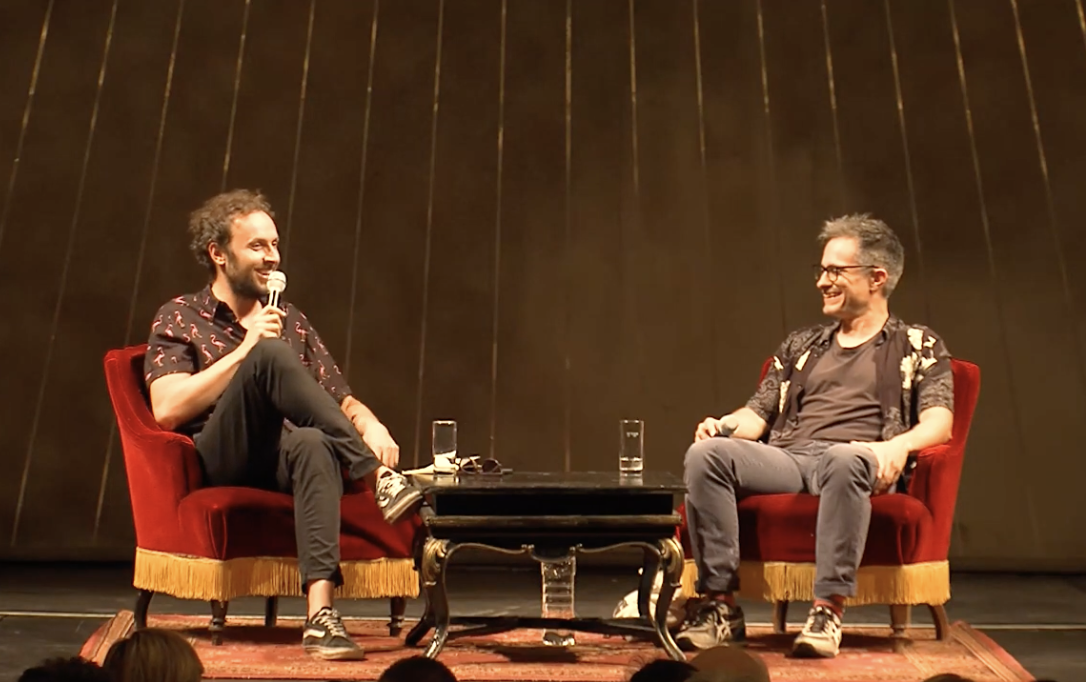
Gael García Bernal at Tito’s cave on island Vis in June 2022
I’ve spent a long time thinking about the first sentence of this column. The beginning has changed as it has been affected by moods and sorrows, which together with age, make this beginning an arborescent chaos. I have to let go to recognize what I want to say. I must find that mythological prickly pear cactus in backlight to draw the different figures that appear on its branches. I had to let go in order to understand and thus constantly create myself. Eventually, I had to accept that there are many beginnings.
This chaos will only make sense once the consequences of patience float back to the earth from which they emerged. Choosing one of them at random: the birth of my first son, Lázaro. Happiness emerged from this in the form of a light that illuminated the path ahead. In addition to feeling the sense of fear that those of us who have children experience, I embraced an idealistic attitude, throwing myself into the act of being a supportive partner and caring for my offspring. I wanted to make the friendliest, most expansive team of all: my family. Luckily — perhaps because I had prepared myself for whatever fate wanted to throw at me — the idealistic side trumped the fearful one.
This position is not free of fear at all. Idealism, on the verge of turning 30, appeared as an echo of how powerful youth is, and how even more powerful it is to know how wrong we are in some of our conclusions throughout life. But that beginning, that commandment that makes us see the future as the only possible reality, encouraged me to keep asking the everlasting question, framed and contextualized in the present: will the earth be habitable for my son when he grows up?
This question — which more and more people seem to be asking — was followed by other related queries: how drastic is climate change? What can I do, individually and collectively, to reverse the damage we have caused? Who is responsible for the majority of pollution? Are other people asking these same questions? Does anyone have the answers?
Many questions emerged over long hours of conversation and pondering while my son slept in that very short time when babies sleep most of the day, rather than at night.
Little is understood about true exhaustion and sleep deprivation until you become a parent. You’re completely exhausted, yet you know that this is the best possible form of insomnia. It is also a luck, a privilege, a way of communicating acidly with the cosmos to say that one is alive. And on those errands, while going to buy the milk that was not needed because nobody drinks cow’s milk in my house, memories came to me of my own moments of courage in life.
“I haven’t drunk Coca Cola since I was 15,” I thought aloud once, as I looked at a picture of a cow on a container of milk. I had made the decision when visiting a town in the Huichol mountains between Nayarit and Jalisco, in Mexico, where there was no drinking water, but there were many bottles of Coca Cola for sale. It was a minor rebellious act — almost insignificant — but it required a lot of discipline. I didn’t mention it to anyone, so as not to have to explain the political reasoning and find myself with a condescending response about the null consequences of my personal boycott. Even back then, I noticed the thin smiles of people who were tired of fighting.
I would read the financial section in the newspaper, to see if the shares of that soft drink company had gone down — any drop in stock price brought me the same satisfaction that one feels when seeing a hated sports soundly beaten. I remembered this as I stared down at the picture of a cow that seemed to laugh at me and follow my gaze, like the Mona Lisa.
I was tired and happy in my first months of fatherhood. All the songs and drawings had a new meaning. All the questions took flight and stayed with me all night, like a tropical storm. Sometimes, I managed to get up to write down these concerns, to see if the calm of the next day could be accompanied by some lucidity that would help me find an answer. But with every answer came 10 more questions. Perhaps that is why the term that began in the Western cultural hemisphere as “ecology” has now become “the climate crisis.”
Every question faces the great glass wall that Gunther Anders described as the supraliminal: in short, it is that which is real but is so big to understand that it sails over words like the atomic bomb or like a great tsunami. It would get to the point where all I wanted was to hear an expert give some optimistic clue about the future. But that clue never came, much less from the experts, who are acting as lookouts for the tragic horizon.
And so, the nights and days passed, merging with each other. Could it be that becoming a parent naturally generates all this questioning? Could it be that now we’re not only wondering about the future of our children, but about the future of humanity as a whole? I feel that, today, we’re asking ourselves terrible questions in response to a call that connects us to the Earth and to everything we perceive.
In a column written in 2014, Eliane Brum gave a name to the modern anguish and anxiety that we human beings feel, and which I am sure are suffered by all living beings as well, now and everywhere. This “21st-century disease” is the alarm that summons us to pay attention to the destruction of all the things that keep us alive. It’s a silent scream — it’s an art to be able to hear it.
Taking care of the Earth and trying to understand the climate crisis has changed my life. It has given me direction, combined with that beautiful and liberating feeling that comes from being a father, when you finally realize that there is someone more important than yourself. Of course, there are many ways to grow up and realize this — I don’t mean to say that being a parent is the only way to achieve such a leap of maturity. But that’s how it happened to me. Or at least, that was a trigger for these concerns that I already held, but which I had never faced.
I close with a phrase that the Hungarian writer Sándor Márai has a character say in his novel, The Last Encounter: “In the end, at the end of everything, one answers all the questions with the facts of one’s life. The questions that the world has asked him over and over again are these: ‘Who are you? What do you really want? What have you really known? What have you been faithful or unfaithful to? With what and with whom have you shared yourself, with courage and cowardice?’ These are the questions. One responds however one can, either by telling the truth or lying: that doesn’t matter. What is certain is that, in the end, one responds with his whole life.”
This essay was originally published by El Pais on 8th of May 2023 here.