Island School of Social Autonomy has been nominated for the SozialMare Prize for Social Innovation
We are honoured that ISSA has been nominated for the SozialMarie Prize that is being awarded to 15 outstanding projects every year. It honours initiatives that offer novel, sustainable and exemplary solutions to current social challenges. Out of 401 projects from across Europe, ISSA is among 34 projects that have been nominated for SozialMare.
“Starting from the conviction that education is one of the biggest challenges today, and that in its transformation lies a solution to our contemporary crisis, in 2021 we established a ‘school from the future’ on the Adriatic island of Vis. It started form the reconstruction of an old stone house and revitalization of 3 hectares of land, with the aim of developing infrastructure and alternative models of education and involving the public in practises of sustainable development and social autonomy. What is particularly innovative is the innovation of the school itself in the 21st century.”
The winning projects of SozialMarie 2025 will be announced at the award ceremony on May 1, 2025, in Vienna.
On 26th of March, some of ISSA’s co-conspirators will take the stage at the international arts and cultural centre Culturgest in the heart of Lisbon to talk about “Future Islands” and the experience of the Island School of Social Autonomy
“A multiplicity of social experiments and practices of community building have been arising lately across the world. These new institutions already form a network that explores and enacts forms of mutual aid, pirate care (care practices that do not align with social conventions of productivity and efficiency) and self-organisation, a social autonomy that, instead of separation, fosters the community connections that are useful in times of planetary crisis, but also for creating conditions for a “good life“ in face of the ongoing and deepening climate crisis, neoliberal destitution and war as permanent state of affairs. While heterogeneous and with different backgrounds and aspirations, one commonality is the attempt to build “convivial tools”. In this conversation about those forms of conviviality, we are joined by Carmen Weisskopf (!Mediengruppe Bitnik), Srećko Horvat and Marko Pogačar from ISSA, the Island School of Social Autonomy, a community project established on the island of Vis, Croatia”
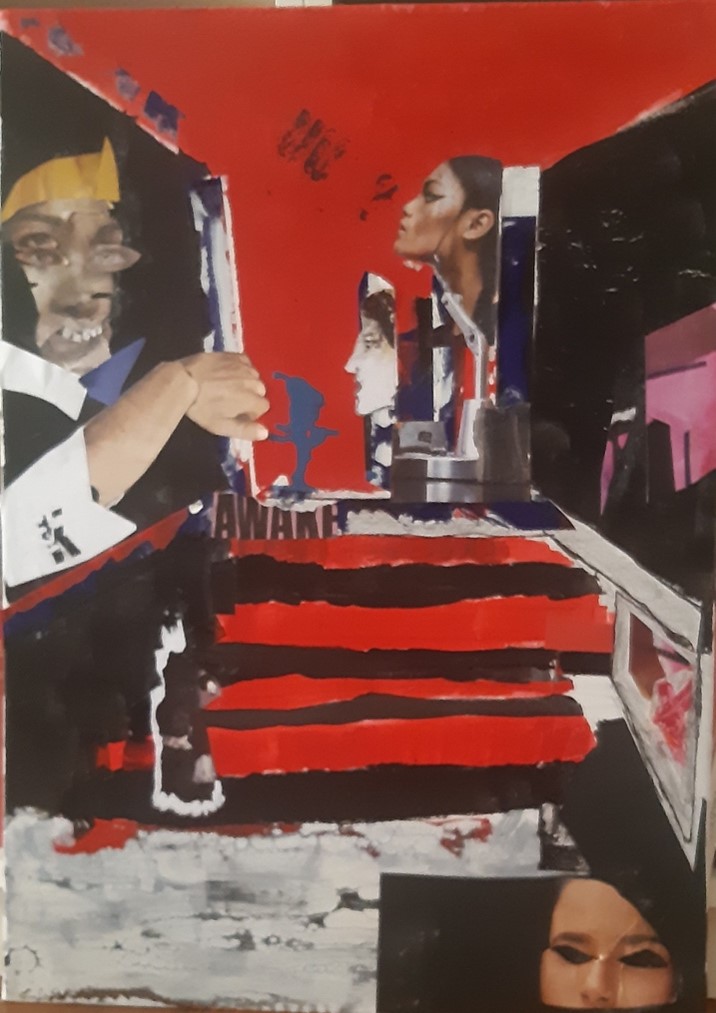
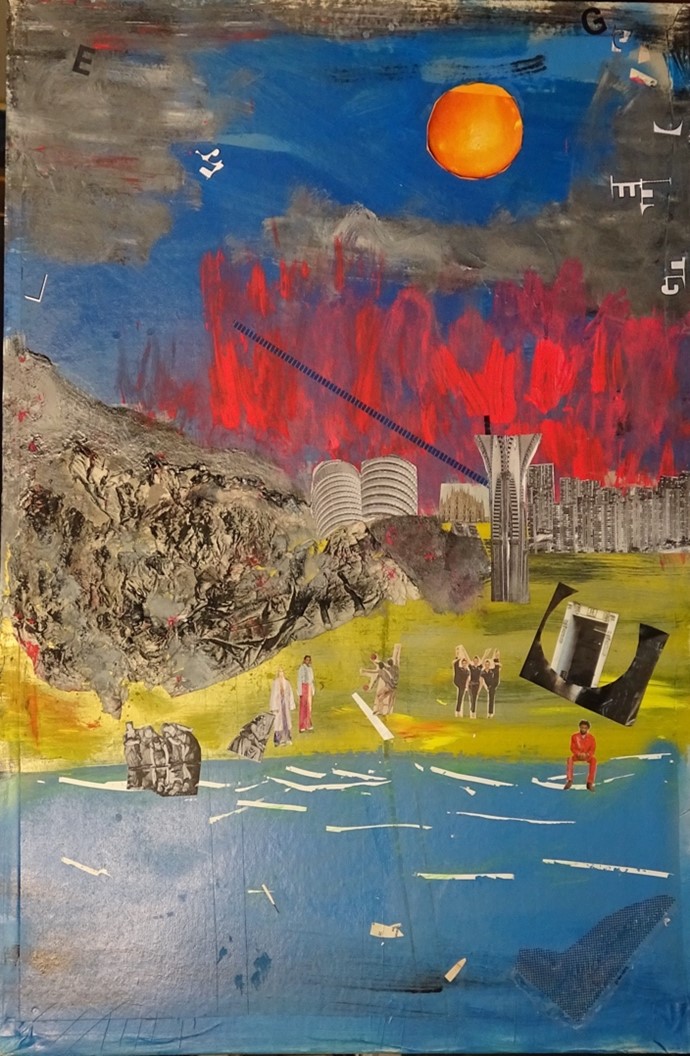
Franco “Bifo” Berardi For the exhibition in Komiža (October 4-10)
I’m not a painter. I cannot deny that sometimes I paint, but I do it in a state of separation from myself. By the way, it is difficult to say what is myself, where is it, and what it wants. Therefore, separation from myself is enigmatic.
Istubalz is the name of this separation of the self from the self. Call it schizo-something, if you want. ISTUBALZ means Istituto di studi balzanici, but this expression is impossible to translate, because the word: “balzanici” does not exist. “Balcanici” yes, it exists, and in English it translates by the word: Balkan. Also, the word: “balsamici” exists, and you translate it in English by the word: “balsamic”. And the word: “balzani” exists, and you translate it in English by the words: “queer”, “strange”, “weird”. But the mix of these three existing words is a non-existing word that means nothing, but also means much more. Balsamic weirdness for Balkan friends.
The fault, according to Vidokle, resides with the sun. These days the sun shines horribly all day long, all week long. Night is hot and humid here. And there, as far as I know. People die under the sun. I’m not joking like in ancient times, those who are not part of the chosen people are obliged to work under the sun and many of them die. The chosen people have the right to submit other people to slavery. The chosen people have the right to torture men, to kill babies, to steal dolls, to bomb schools and hospitals. As they have been chosen (by god, of course, by who else?), they can do whatever they want. They have been chosen by god, so you should not object. They have the right to kill a hundred thousand persons. This is called democracy, the chosen people are the only democratic country in the Middle East, right? Democratic persons have the right to burn non-democratic persons alive. Democratic persons have the right to stir up dogs against the cradle of non-democratic babies. This is happening under the sun.
Migrant people, coming from Asia and from Africa have dangerously traversed the Mediterranean Sea. They decided to come to Europe because they trust advertising. They wanted to live in a democratic country. They did not know that democratic countries are routinely drowning people coming from non-democratic places. So many have been drowned. Lured by democratic propaganda. Europe is the land of democracy and wellbeing. So, Europeans have the (sacrosanct) right to drown anyone they don’t like.
Many of those that Europeans have drowned in the Mediterranean have left their village and the land parched by draught. Because of the sun, and because of the tons of carbon dioxide emitted by the Europeans. Millions of tons, by the way. So, they have been obliged to leave their villages, they have been obliged to dare the waves, and many have drowned because the Italian Government has prohibited saving drowning people.
However, many have survived, and disembarked on the Southern Italian coast. They were happy to be survivors, and they were happy to be at last in a democratic country, but they knew nothing about massive slavery in southern Italian agriculture. They learned this the hard way. Because democracy means that I can vote and elect the members of Parliament, but you have to work under the sun ten hours per day for a few euros.
This is why Prometheus is repenting: he realizes that his gift has turned into a curse. Civilization is the name of the curse. And slavery is part of our civilization. When I understand that slavery is back all around the globe, I get nervous. When I understand that there is nothing I can do except collaborate with fire – I get nervous. I have been nervous for many years now. Nervousness has much to do with visual art.
When it comes to visual art, I’m stuck in the ‘80s. In that decade, for the first time, I had a glimpse of what panic means. For the first time I heard someone yelling in the street: Don’t panic. This was the signal that panic had begun. Since then, Visual culture has become part of the self-inflicted torment that is aggressing the collective sensorium.
I was impressed by the proliferation of Keith Haring’s viruses and Rammellzee’s insults on the walls of the Lower East Side. That pictorial frenzy met the electronic proliferation of wires and airwaves. At that point visual culture went beyond the limits of speed and started invading attention. At a certain point I got aware of this: attention is under siege. When I came to realize the danger of proliferation it was already too late. When it’s too late, I get nervous, and I need painting, I need to take part in the proliferation of chaos.
This is why and when I started painting, feeling some shame for wasting time in such a useless activity, I realized that it was too late. This was the only thing I could do: run along the dynamics of disaster.
The act of painting is a contradiction, because you are collaborating with the visual overload. Nevertheless, I cannot refrain from taking part in the chaotic proliferation. I feel compelled to collaborate with fire. It is a way to ease the pain.
I am a writer, you know. This is what they say about me, and I cannot deny that I write, I do it all the time, sometimes it helps me to make ends meet, and gives me the possibility to address a (not so) large audience, and to exchange some bits of reasoning with them. But it’s getting boring, I guess. Not for me, I mean, but for those who insist to read my books. I have been writing too much. Not my fault, aging is to blame. As I have been around for so many years, I have accumulated an indecent number of pages, and I’m ashamed of that.
Hypersemioisis is chaogenic. The hypersemiotic agent is an accomplice of chaos: chaotic emanator.
When I realized that it was too late, I started taking part in the malicious activity of overwhelming your senses. Too much stimulation, too much. Those who denounce overload are overloading attention, and this is causing some tension to me. When I want to relax this inner tension, I take part in the visual aggression against your senses, and against your ability to find a way out. I multiply the signs that lead astray, the visual stimulations that give me a thrill of perverse pleasure.
Can I say that the cognitive conditions for emotionality have changed up to the point that the cycle desire-pleasure unfolds entirely in the space of neuro-semiotic stimulation? There is no way to stop the chaotic machine, there is no way to slow down the ride. So why not march on the side of chaos?
Franco “Bifo” Berardi (Bologna, 1949) is one of leading contemporary philosophers. He was the founder of the famous “Radio Alice” in Bologna and an important figure of the Italian Autonomia Movement. He worked with the French psychoanalyst Félix Guattari and since then published over two dozen books such as After the Future, Heroes: Mass Murder and Suicide, Breathing: Chaos and Poetry, The Uprising: On Poetry and Finance, The Second Coming, The Third Unconscious, Precarious Rhapsody and many others. As one of its conspirators, Bifo was actively involved in setting up ISSA since the very beginning. This is his first exhibition of paintings.
Franco “Bifo” Berardi Uz izložbu u Komiži 4. – 10.10.2024.
Nisam slikar.
Ponekad slikam, ali radim to u stanju odvajanja od samog sebe. Usto je teško reći što je to ja, gdje je, i što želi. Samim time je odvajanje od samog sebe zagonetno. To odvajanje sebe od sebe zove se Istubalz. Ako hoćete, nazovite to shizo-nečim. ISTUBALZ, odnosno Istituto di studi balzanici, izraz je koji je nemoguće prevesti jer riječ „balzanici“ ne postoji. „Balcanici“ da, postoji i znači Balkan. Također postoji riječ „balsamici“ te bi se prevela kao „balzamičan“.Postoji i riječ „balzani“, a može se prevesti kao „bizarno“, „neobično“, „čudno“. Kombiniranjem ovih triju postojećih riječi nastaje nepostojeća koja ništa ne znači, ali također znači mnogo više. Balzamična bizarnost za balkanske prijatelje.
Krivo je, prema Vidokleu, sunce. Ovih dana po cijele dane sunce strahovito sija, cijele tjedne. Ovdje su noći vruće i pune vlage. A i tamo, koliko znam. Ljudi umiru od sunca. Ne šalim se, kao u stara vremena, oni koji nisu odabrani, primorani su raditi na suncu i mnogi od njih umru. Odabrani narod ima pravo podjarmiti druge u ropstvo. Odabrani narod ima pravo mučiti ljude, ubijati bebe, bombardirati škole i bolnice. Budući da je odabran (od boga, naravno, koga drugoga?) može raditi što god da želi.
Odabrao ga je bog, stoga mu se ne smije protiviti.
Ima pravo ubiti na stotine tisuća ljudi. To se naziva demokracijom, odabrani narod jedina je demokratska zemlja na Bliskom istoku, zar ne? Demokratske osobe imaju pravo žive spaliti nedemokratske. Demokratske osobe imaju pravo nahuškati pse na kolijevku nedemokratskih beba. Sve se to događa na suncu.
Migranti iz Azije i Afrike prelaze Sredozemno more uz velike rizike. Odlučili su doći u Europu jer vjeruju tome kako se oglašava. Željeli su živjeti u demokratskoj zemlji. Nisu znali da demokratske zemlje rutinski utapaju ljude iz nedemokratskih mjesta. Tako su mnoge utopili. Primamljene demokratskom propagandom. Europa je zemlja demokracije i dobrostanja. Pa Europljani imaju (nepovredivo) pravo da utope bilo koga tko im se ne sviđa.
Mnogi od onih koje su Europljani utopili u Sredozemnom moru napustili su svoja sela i zemlju, opustošene sušom.
Zbog sunca, i zbog tona ugljičnog dioksida koje ispuštaju Europljani. Na milijune tona, usput rečeno. Primorani su stoga napustiti svoja sela, primorani su se suočiti s valovima, a mnogi su se utopili jer je talijanska vlada zabranila da ih se spašava.
No mnogo ih je preživjelo te su se iskrcali na južnoj obali Italije. Bili su sretni što su preživjeli, sretni što su napokon u demokratskoj zemlji, no nisu ništa znali o masovnom ropstvu u južnotalijanskoj poljoprivredi. To su naučili na teži način. Jer demokracija znači da ja mogu glasovati i birati članove Parlamenta, ali ti moraš deset sati dnevno raditi na suncu za samo par eura.
Zato se Prometej kaje: shvatio je da se njegov poklon pretvorio u kletvu. Civilizacija je ime te kletve. A ropstvo je dio naše civilizacije.
Kad pomislim kako se ropstvo vratilo u cijelom svijetu, postanem nervozan. Kad pomislim da ne mogu ništa osim surađivati s vatrom – postanem nervozan. Nervozan sam sad već mnogo godina. Nervoza je itekako povezana s vizualnom umjetnosti. Kada je u pitanju vizualna umjetnost, zapeo sam u osamdesetima. U tom sam desetljeću prvi put dobio uvid u to što znači panika. Prvi put sam čuo nekog kako viče na ulici: Nemojte paničariti. To je bio znak da je nastala panika. Otada je vizualna kultura postala dijelom samonametnutog mučenja koje napada kolektivni senzorij.
Dojmila me se proliferacija virusa Keitha Haringa i Rammellzeeove uvrede na zidovima Lower East Sidea. Ta slikovita groznica susrela se s elektroničkom proliferacijom žica i radiovalova. U tom je trenutku vizualna kultura nadišla granice brzine i počela osvajati pažnju. U nekom trenutku sam toga postao svjestan: pažnja je pod opsadom. Kada sam shvatio opasnost proliferacije, već je bilo prekasno. Kada je prekasno, postanem nervozan, i trebam slikanje, trebam sudjelovati u proliferaciji kaosa.
Zato sam, kada sam počeo slikati, ponešto se stideći što tratim vrijeme na tako beskorisnu aktivnost, shvatio da je prekasno. To je bilo jedino što sam mogao raditi: prihvatiti dinamiku katastrofe. Čin slikanja je kontradikcija jer surađuješ vizualnim preopterećenjem. Međutim ne mogu se suzdržati od sudjelovanja u toj kaotičnoj proliferaciji. Osjećam potrebu da surađujem s vatrom. Način je to olakšavanja boli.
Znate, ja sam pisac. Tako kažu za mene, i ne mogu reći da ne pišem, radim to stalno, ponekad mi i pomogne da spojim kraj s krajem i daje mogućnost da se obratim (ne toliko velikoj) publici, podijelim neka razmišljanja s njom.
Ali valjda postaje dosadno. Mislim, ne meni, nego onima koji inzistiraju na čitanju mojih knjiga. Previše sam pisao. Ne svojom krivicom, zasluge idu starenju. Tu sam već mnogo godina, akumulirao se besraman broj stranica, i toga me stid.
Hipersemioza je kaosogena. Hipersemiotički agent suradnik je kaosa: kaotični emanator.
Kad sam shvatio da je prekasno, počeo sam sudjelovati u ovoj malicioznoj aktivnosti preopterećenja osjetila. Previše stimulacije, previše. Oni koji se odriču preopterećenja, preopterećuju pažnju, to me čini donekle napetim. Kada želim opustiti tu unutarnju tenziju, sudjelujem u vizualnoj agresiji na tvoja osjetila, i na sposobnost pronalaska izlaska. Multipliciram znakove koji nameću na krivi trag, vizualne stimulacije od kojih dobijem nalet nastranog užitka.
Mogu li reći da su se kognitivni uvjeti za emocionalnost promijenili do te mjere da se ciklus žudnje-užitka posve odvija u prostoru neurosemiotske stimulacije?
Ne postoji način da zaustavimo mašinu kaosa, ne postoji način da usporimo. Zašto ne bismo onda marširali rame uz rame s kaosom?
S engleskog prevela Dorotea Held
Franco “Bifo” Berardi (Bologna, 1949.) jedan je od vodećih suvremenih filozofa. Bio je osnivač poznate piratske radiostanice “Radio Alice” u Bologni i važna osoba talijanskog pokreta za autonomiju. Radio je s francuskim psihoanalitičarom Félixom Guattarijem i od tada objavio više od dvadesetak knjiga kao što su After the Future, Heroes: Mass Murder and Suicide, Breathing: Chaos and Poetry, The Uprising: On Poetry and Finance (Pobuna: O poeziji i financijama), The Second Coming, The Third Unconscious , Precarious Rhapsody i mnoge druge. Kao jedan od suosnivača, Bifo je od samog početka aktivan u izgradnji Škole autonomije. Ovo je njegova prva izložba.
Towards Archipelagos of Permanent Autonomous Zones
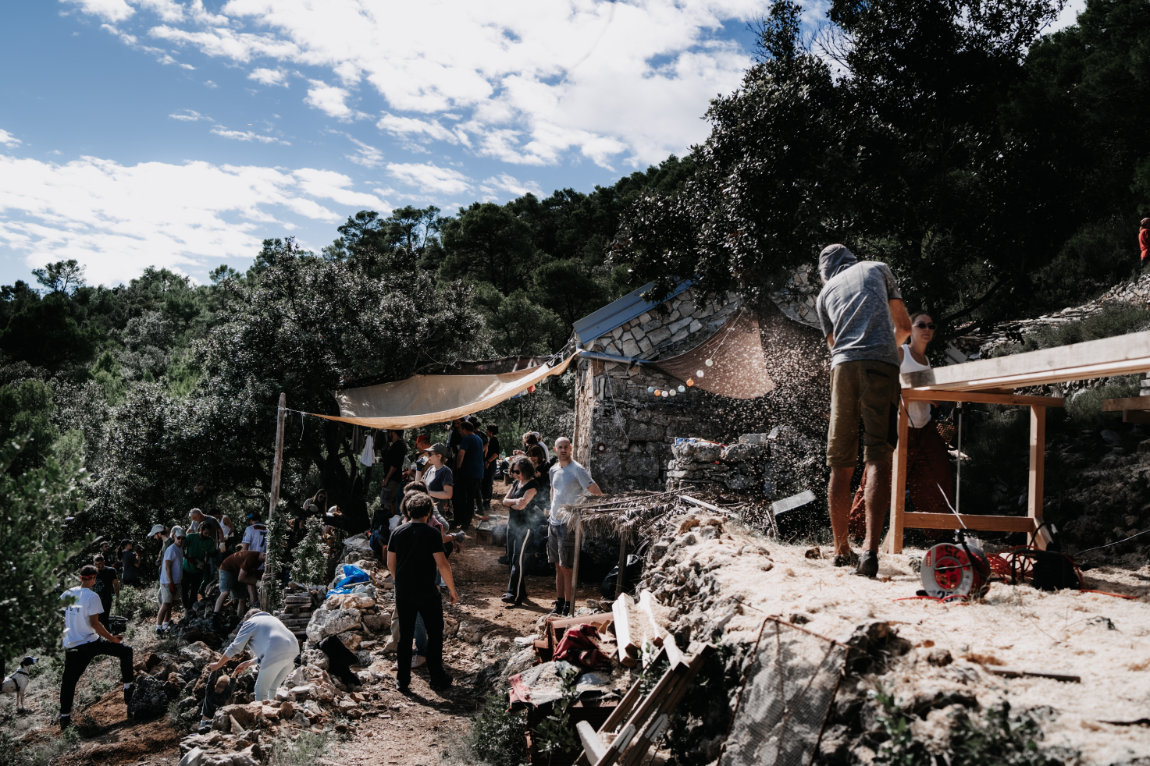
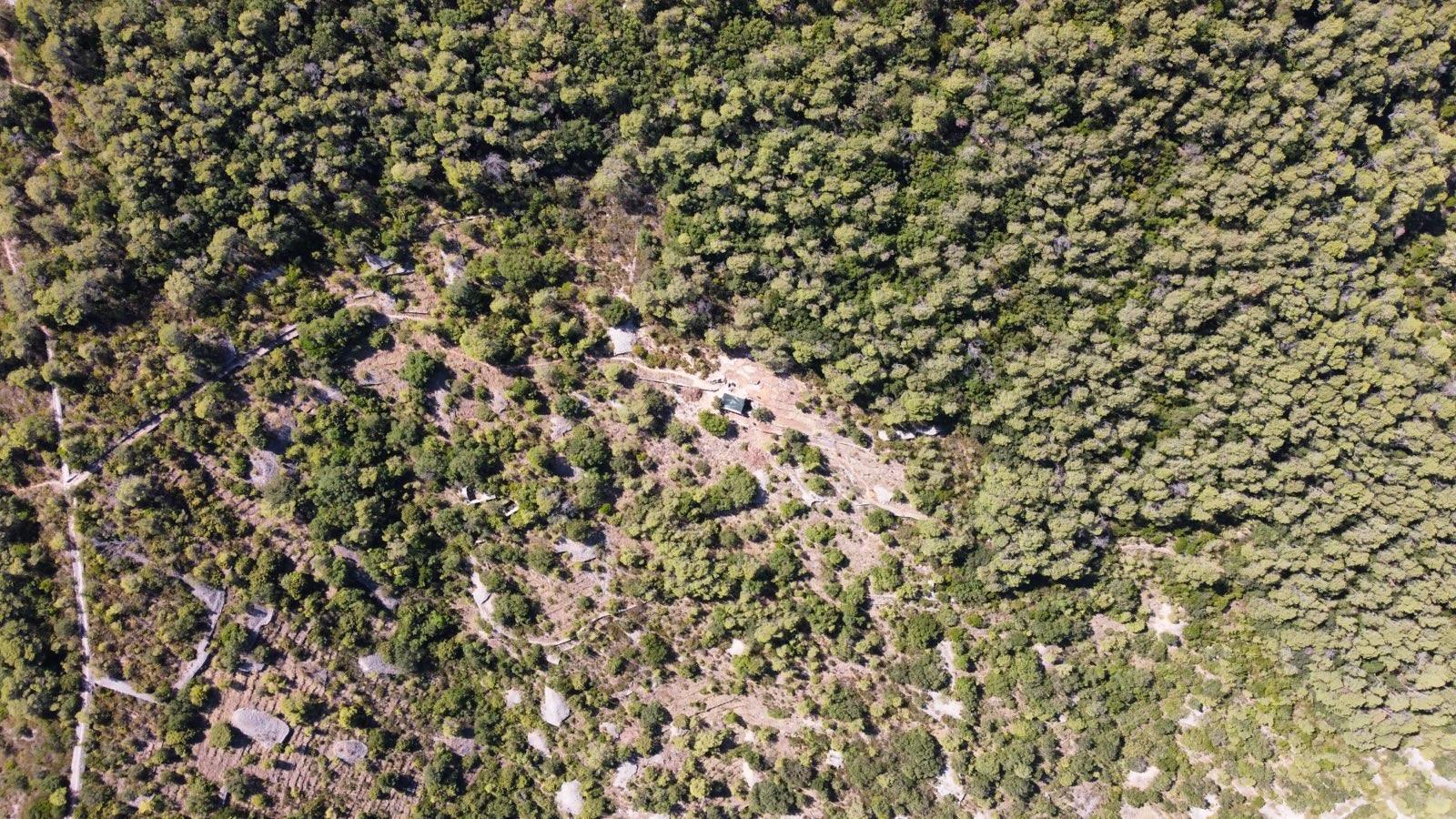
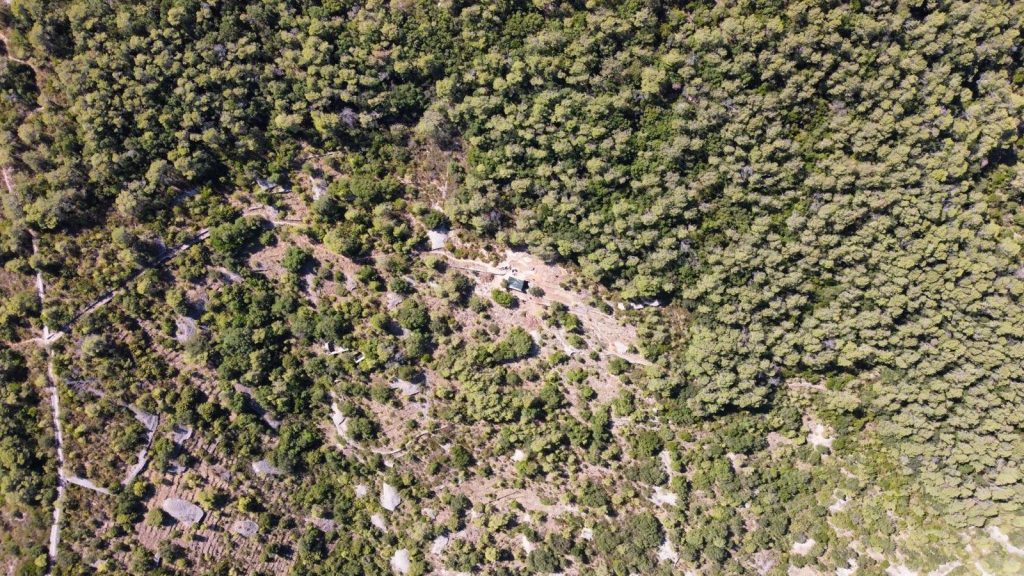
ISSA before the reconstruction of the old stone house, 2022
It all started with a sort of conspiracy. Now you probably think we’re crazy – flat-earthers, lizard people believers, X-Files fans, Davos conspiracy theorists, chemtrail enthusiasts, deep-state believers, Pizzagate supporters… or maybe a whole universe of conspiracies comes to mind.
Conspiracy obviously became a bad word. Everything became a conspiracy, and conspiracy became everything. These days, just like genocide, conspiracy is live-streamed.
Who would be crazy enough to proclaim to be a conspirator.
But what if there is no collective action or understanding of the world without conspiracy?
When we say it all started with conspiracy, we think of the original, primordial conspiracy: the conspiracy of breathing together, not simply living together, in the same rhythm or in many different ones.
Among perceptive thinkers, at least three of them have deepened our understanding of conspiracy in relation to breathing and rhythm. One is the great educator Ivan Illich, the other is the semiotician Roland Barthes, and last but not least, our own conspirator Franco “Bifo” Berardi.
In his lecture “The Cultivation of Conspiracy”, given in 1998 on the occasion of receiving the Culture and Peace Prize of Bremen, Illich reminds us that the origin of the word conspiracy and the prototype of conspiracy lies in the celebration of the early Christian liturgy in which, no matter the origin, men and women, Greeks and Jews, slaves and citizens, engender a physical reality that transcends them. The shared breath, the con-spiratio, is the peace understood as the community that arises from it.
“Community”, says Illich a few years before his death, “is not the outcome of an act of authorative foundation, nor a gift from nature or its gods, nor the result of management, planning and design, but the consequence of a conspiracy, a deliberate, mutual, somatic and gratutious gift to each other.”
The original meaning of conspiratio, which brings us closer to Roland Barthes, comes from the mouth-to-mouth kiss among the faithful attending services: originally it represented a commoning of breath.
At his late lectures at Collège de France, later published as How To Live Together, Roland Barthes became captivated by communities in which everyone follows their own rhythms, while at the same time there are parts of the community that have a common rhytm. The main objective of these communities, according to Barthes, was “to safeguard rhuthmos, that is to say, a flexible, free mobile rhythm; a transitory, fleeting form, but a form nonetheless”.
These kind of “idiorryhythmic constellations” and forms of living together came to life in the Syrian and Egyptian deserts. Throughout human history anchorites, hermits, and outcasts sought to escape the rules and control of higher powers. The rhythm Barthes researched was a rhythm “that allows for approximation, for imperfection, for a supplement, a lack, an idios: what doesn’t fit the structure”.
“There is a consubstantial relationship between power and rhythm”, warns Barthes, “before anything else, the first thing that the power imposes is a rhythm (to everything: a rhythm of life, of time, of thought, of speech.”
In his book Breathing: Chaos and Poetry, published just a year before the brutal murder of George Floyd and the onset of the COVID-19 pandemic, one of the conspirators behind ISSA, Franco “Bifo” Berardi, claims that the words “I can’t breathe” expresses the general sentiment of our times:
“Physical and psychological breathlessness everywhere, in the megacities choked by pollution, in the precarious social condition of the majority of exploited workers, in the pervading fear of violence, war, and aggression.”
It is precisely respiration that, according to Bifo, can help us understand the contemporary chaos: the process of “breathing with chaos” or “chaosmosis”, which he defines as ‘osmosis with chaos’, is where a “new harmony emerges, a new sympathy, a new syntony.’”
We need to not only learn how to breathe together again but also how to breathe with chaos.
“Dream Valley” on Vis
S’nova dolca, “The Dream Valley”, island Vis
When we first arrived to the “Dream Valley” on the island of Vis, a dense, overgrown pine forest covered the land.
The last time it was cultivated was more than half a century ago, half a century before we placed our feet and hands on it – to establish a school from the future, on a remote Adriatic Island.
The only remnants on that hill near Tito’s cave, for several centuries cultivated as fruitful vineyards, were the ruins of an old stone house once used for wine storage and a small area to shelter a donkey, the true proleterian among animals.
The donkey, one of the symbols of the Meditteranean, was domesticated approximately five to seven thousand years ago in Africa and since then, after spreading rapidly through Eurasia, it was mainly used for work. Donkeys were champions of carrying. But we could find none on our island to help us carry the material uphill in order to reconstruct the old stone house.
The glorious – and strenuous – time of the donkey, at least in this part of the world, was done. The owners of the few remaining donkeys on the island rightly concluded that borrowing them for our crazy project would be too demanding on the first proletarians.
So, we had no other option but to carry quite literaly tons and tons of material: from wood, sand and gravel to tools and hundreds of books by hand and foot. Luckily, thanks to an early donation by our only seemingly unlikely conspirator, Pamela Anderson, the first tools we invested in – after realizing the symbol and soul of the Meditteranean is disappearing – were “electric donkeys”.
The “electric donkey” can also be used for transfer of books to ISSA
We still carry tons of material uphill by hand and foot, but now we at least have the benefit of modern technology: two electric wheelbarrows. But even with our “electric donkeys”, our project still sometimes reminds us of a Mediterranean version of Fitzcarraldo.
We are not Klaus Kinski in Werner Herzog’s movie transporting a steamship over the Anders mountains to build an opera house, but we are determined to build our School in the forest in the hills, with no option but to carry everything uphill.
We do not plan to build an opera house, that is a bit too bourgeois for us. Although even an opera could take place here.
Besides renovating the old stone house and transforming it into the headquaters for the island school – with water and solar power, compost toilets and showers, classrooms in the middle of nature, residencies, and a library – we are also dreaming of creating an amphitheater in the “Dream Valley”.
The part of the island where ISSA is being born is originally called Sinova dolca (the “Son’s Valley”), but also S’nova dolca, which could be interpreted as “Dream Valley”. At least that is the meaning we like to ascribe to it.
Who are we and why are we doing this?
At first, people thought we were crazy. Many islanders probably still think so.
Why would anyone, in times of global tourism and global crisis, invest their time and life into something so slow and without any financial profit?
Why would anyone build a school on a remote island in the midst of the Adriatic Sea, in a part of the island that was abandoned overgrown by forests for more than half a century?
Who are we?
We are wild dreamers, artists and poets, philosophers and activists, drystonewallers and builders, who got tired of waiting for the “day after”, the day after a fundamental event that would change the contemporary way we live together, not only among humans, but among other species, with animals and all other sorts of living beings, including our only planet.
Why are we doing this?
We are not preppers. We are not preparing for the “day after” the cataclysm. We know it has already happened.
We are not merely concerned with our own survival nor are we interested in surviving for survival’s sake.
Unlike the current-day preppers, with their private jets, nuclear bunkers, libertarian cities and escape plans to New Zealand or Mars, we are not abandoning humanity or the planet.
As D. H. Lawrence memorably said in Lady Chatterley’s Lover:
“Ours is essentially a tragic age, so we refuse to take it tragically. The cataclysm has happened, we are among the ruins, we start to build up new little habitats, to have new little hopes… We’ve got to live, no matter how many skies have fallen”.
We’ve got to live, no matter how many skies have fallen.
But how do we need to live?
What kind of habitats can we and must we build?
Slowly, we arrive at the age-old question of philosophy: What is “good life”?
And what is “good life” in our contemporary times, in the end of times, in times of extinction?
But before, if ever, we arrive to a proper – ontological, ethical, political, social – answer to this crucial question, we must go back to the island, to this place on Earth that was always, even when it was still a mountain, connected to the mainland.
And before we come back to the future island, we must place it somewhere.
We must place it in the archipelago.
What is an archipelago?
The most common definition of an archipelago is a “group of islands”, but this standard definition mainly addresses its spatial dimension.
An archipelago is not only temporal occurrence, it is both spatial and temporal, geological and cultural, natural, and artificial.
The word archipelago originally comes from arche, from the Greek word for “original”, “principal”, “source of action”, “first principle”, and pelago, meaning “deep”, “sea” and – “abyss”.
Interestingly, the great Croatian poet Tin Ujević, in his beautiful text on the island of Vis, Komiža and the archipelago where we founded ISSA (“Nit u srcu mora: Komiža na Visu“, 1930) mentions the connection between the origin of the word of Adriatic and its relation to the abyss:
“Finally, in a mournful, bathed wasteland, I personally rehearsed an impossible thing, happiness. It was an escape from all the pressures of reality. Here I took into my soul all the infinite seas on which I have never vomited, and who would not want to live like this in nature, in an oceanic, Otahite happiness? I said: Vis is dearer to me than the entire Adriatic, and Saint Andrew is even dearer to me than Vis. Atlantic and Pacific waters come to me, not just the Adriatic. And that Hadria, I told the listeners, comes from the Dravidian word ‘Hodru’, which in Dravidian means Abyss (abyss), because in ancient times, water really broke through here and submerged inhabited and cultivated areas.”
Geological evidence we have today proves that, indeed, that is how the Adriatic was created when water submerged the land.
This archipelago and its future islands were a result of an abbys of gigantic proportions, a consequence of an underwater volcano more than 220 million years ago, when the supercontinent Pangea still dominated the world.
Around 20,000 years ago, during the Last Glacial Maximum, sea levels began to rise in the Adriatic region. From the top of the hill at ISSA, we can see what is now called Dalmatia and the highest parts of the Dinaric Mountains along the eastern coast of the Adriatic. All the islands we can see from here – Hvar, Brač, Korčula, Pelješac – were once part of the mainland.
The Adriatic during the Last Glacial Maximum, around 20,000 years ago
Before the ice started melting, the Adriatic Sea was 120 meters lower, and hunter-gatheres were still roaming through its valleys. As sea levels began rising, soon they had to adopt and find other ways of survival. Now, it was the sea that was the future. Then came the agricultural revolution, herding and domestication of animals. And the donkeys.
But it would be wrong to think of the Neolithic and agricultural revolution as an event, a sudden change, like a rapid rise in sea levels and hunter-gatherers immediately stopping hunting for animals and becoming fishermen. The available data shows that the Neolithisation of the Adriatic was a complex and arrhytmic process that took almost a thousand years to establish.
Here the recent book by David Wengrow & David Graeber, Dawn of Everything, is useful to get a better understanding of history as an archipelagic process itself.
Unlike Steven Pinker or Yuval Noah Harari and their teleological notion of history connected to the ideology of “progress”, Wengrow and Graeber convincingly argued that long after the agricultural revolution, there was no fixed model of social organisation but a multiplicity of social arrangements. In short, our prehistory was not uniform but consisted of myriad forms of living together – even before the agricultural revolution, there were large cities, some monarchies, some egalitarian, others were seasonal.
In short, history and social change itself is an archipelagic process.
So, what is an archipelago?
It is a document of a previous catastrophe, of many previous catastrophes.
And of renewal, at the same time.
What was once a catastrophe is now today’s archipelago.
What was once a mountain, is now an island.
An archipelago is evidence of both revolution and evolution.
What is an island?
An island, even though the word in many Slavic languages originates from “stream” and “current” (Croatian otok from tok, teći okolo, Serbian ostrvo from struja, stream, Slovak ostrov, Ukranian ostriv), is not simply a place sourrounded by water.
As Gilles Deleuze notes in Desert Islands: “It is an island or a mountain, or both at once: the island is a mountain under water, and the mountain, an island that is still dry. Here we see original creation caught in a re-creation, which is concentrated in a holy land in the middle of the ocean.”
Gilles Deleuze on a beach, Big Sur, California, 1975 (Photo by Jean-Jacques Lebel)
In other words, to perceive an island as an island would mean not to perceive geology, the vast past and major planetary events that have led to what would become future islands.
Deleuze goes on even more poetically:
“Some islands drifted away from the continent, but the island is also that toward which one drifts; other islands originated in the ocean, but the island is also the origin, radical and absolute. Certainly, separating and creating are not mutually exclusive: one must hold one’s own when one is separated, and had better be separated to create anew; nevertheless, one of the two tendencies always predominates. In this way, the movement of the imagination of islands takes up the movement of their production, but they do not have the same objective. It is the same movement, but a different goal. It is no longer the island that is separated from the continent, it is humans who find themselves separated from the world when on an island. It is no longer the island that is created from the bowels of the earth through the liquid depths, it is humans who create the world anew from the island and on the waters. “
So, what is an island?
An island is primarily a possibility to construct not only a different spatiality, but a different temporality, ways of living-together, of co-breathing, of having a rhythm or idiorhythmy.
An island is also an object of desire.
A sort of utopian desire: from Plato’s travel to Sicily in order to convince a tyrant of his ideal society, Thomas More’s Utopiadepicting a fictional island society, Shakespeare’s The Tempesttaking place on a remote magical island, Aldous Huxley’s Island, the legendary pirate havenLibertaliaplaced on Madagascar, or even Hollywood blockbusters such as The Beach with Leonardo di Caprio placed on Thailand (and ruined its beautiful beach by over-tourism).
But an island also, very often, turns out to become a dystopia. Think of William Golding’s Lord of Flies set on a remote, uninhabited tropical island or of, more recently, Hunger Games set in a post-apocalyptic archipelago and Michel Houllebecq’s The Possibility of an Island.
When you think of islands, it is impossible not to think of colonialism and imperialism at the same time.
You can also think of Próspera, a private libertarian island in Honduras. Or you could think of Praxis.
But be warned: this is not to be confused with the famous 20th century Yugoslav philosophical school called Praxis which organized the Korčula Summer School on an Adriatic island. The new Praxis is another libertarian dream of a private island somewhere in the Mediterranean.
As long as there are islands, the tension between utopia and dystopia was and always will exist.
And we are not ashamed to be called naive, romantic, or even crazy for trying to bring to life the utopian desire of our future islands.
A gratuitous gift to each other
As we carry tons of material uphill, while we build and share our breaths and rhythms in the “Dream Valley”, we are not simply building a school. The school is, as we love to say, building us.
What we are learning once again is how to breathe together – how, through cooperation and the pure joy of community building, we can create something bigger than ourselves, both in terms of the individuals involved and temporality behind and in front of us.
We have learned patience and pomalo from the island through its nature, the climate, the winds, and the waves, its people, and its traditions.
We have also learned that we must embrace – following the footsteps of the great philosopher from Martinique, Édouard Glissant – the archipelagic thought as an alternative epistemology and way of thinking that accepts ambiguities, different rhythms, ruptures, and interactions of all sorts.
Unlike the continental thought, this archipelagic, southern thought – and practice (praxis) – challenges the universalistic idea of thought promoted by the Enlightenment, which not only diminished all non-Western knowledge, but also prepared ground for imperialism, colonialism and totalitarianism.
In his essay on Herman Melville, Gilles Deleuze writes about an affirmation of the world as process and as an archipelago. He understands archipelagoes as a “world in process,” which is connected to multiplicity.
It all starts from “the affirmation of a world in process, an archipelago. Not even a puzzle, whose pieces when fitted together, would form a whole, but rather a wall of loose, uncemented stones, where every element has a value in itself but also in relation to others: isolated and floating relations, islands and straits, immobile points, and sinuous lines. ”
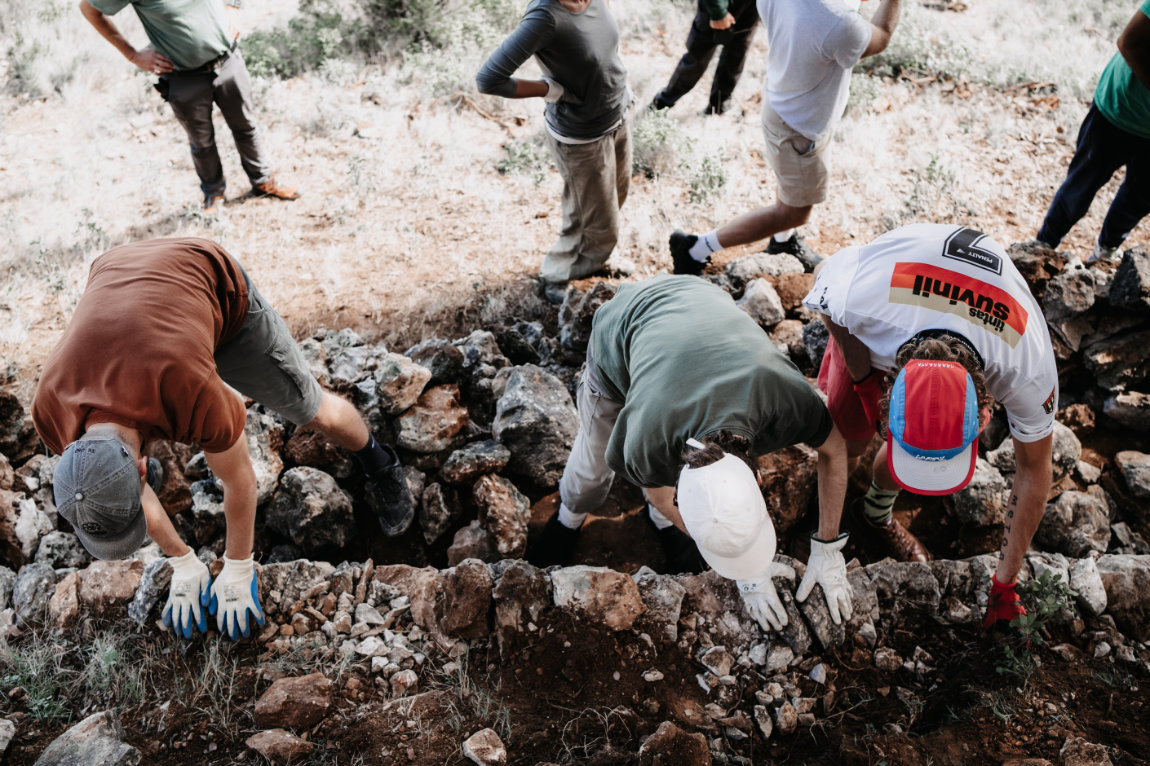
And it is here where we arrive at a quite unexpected encounter. The encounter between Deleuze and one of our favorite activities at ISSA – namely, dry stone walling.
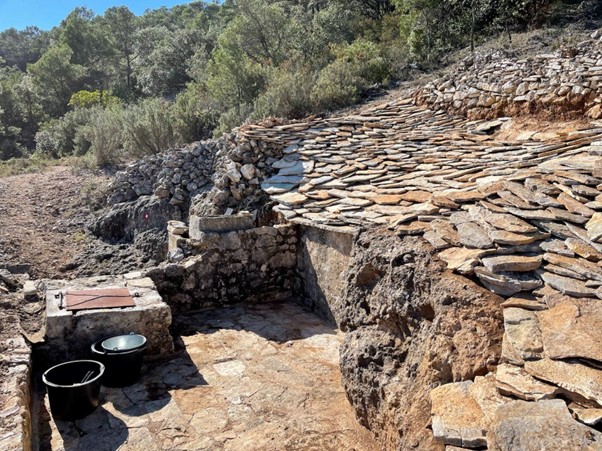
Building uncemented stones has been an integral part of the Mediterranean for centuries, even millenia. The function of dry-stone walls vary and can be all at the same time – protection against soil erosion, collection of water, protection against wind, landscape architecture…
What Deleuze, although you never imagine him as a dry stone waller, points towards are the archipelagic nature of the stone walls themselves. While walls are usually built to divide, they were also used to connect and provide well-being to communities around the Meditteranean.
We are not only interested in learning from those who have thought future islands in myriad ways before us, we are keen to learn from dry stone walls, from the oak tree in front of our School, from the cicadas and their ryhthms, from the winds and from the island itself.
We are not interested in building a sort of a temporary autonomous zone. We know everything is temporary.
Yet there is also eternity by the stars, as Louis-Auguste Blanqui, another great conspirator who spent over half of his adult life in jail, declared in his “astronomical hypothesis” in the year of the Paris Commune.
In this eternity by the stars, we are opening our sails towards archipelagos of permanent autonomous zones.
These zones already exist in many places of the world, as a consequence of conspiracy, a deliberate, mutual, somatic, and gratuitous gift to each other.
Before summer, we published an open call for S+T+ARTS 4 Water II for a residency at ISSA to address the challenge “Cisterns meet Modern Tech. Circular Water System as Convivial Tool”.
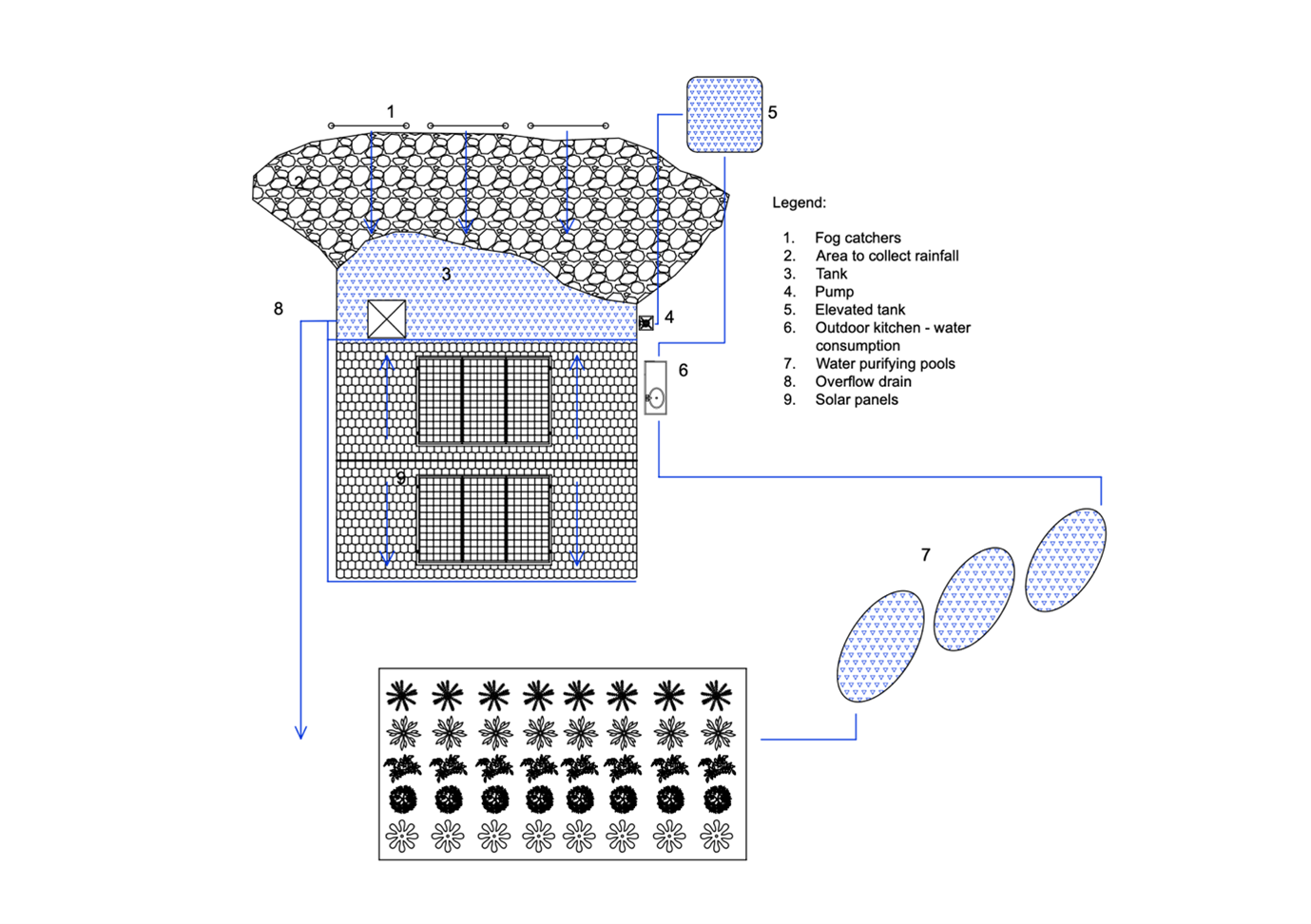
The goal of the residency is to develop a convivial tool: a prototype for a small-scale water collection and distribution system that combines traditional cistern technology and modern innovations, alongside community engagement on the island of Vis. The project will take into account the local context, the Mediterranean climate affected both by climate crisis and overtourism, which strain the island’s natural water resources.
Now we are happy to announce that, after meeting, the decision of jury was to reward Matko Šišak from ZMAG: Green Network of Activist Groups (Zelena mreža aktivističkih grupa)
ZMAG is an organization dedicated to sustainability, appropriate technologies, social transformation, and art, working diligently in developing an eco-social educational center Recycled Estate, 25 km south of the city of Zagreb. Over the past 25 years, while building this center, ZMAG has explored numerous innovative solutions. Today ZMAG is well known in Croatia and abroad as a hub for research, practical living, and education.
As part of the S+T+ARTS 4 Water II residency, the resident will build a “convivial tool” based on their permaculture landscape design and water management expertise, showcasing years of experience blending infrastructure and art.
The project will begin with the completion of the traditional roof water collection system (cistern) and stone-covered slide that is used for collecting the water. This phase will be executed with an artistic vision, incorporating a land-art approach using various sizes of stones, pebbles, and other natural materials. They will also build a “fog catcher”, a tool designed to collect morning dew – particularly effective in dry regions – providing fresh water for residents.
The second phase will involve installing a sink in the house, again crafted with artistic elements integrated into the water system at the ISSA educational center. Finally, the third phase will focus on constructing a greywater cleaning system using natural ponds and plants typically found in bio-filtration systems.
The final phase involves directing the water from the bio-filtration system to agricultural and orchard land. Starting with rainwater, it will progress from collection to natural filtration in final ponds, producing clean, reusable water. That water will be used in sustainable agriculture, creating a circular and holistic solution. The entire water circulation system will be powered by solar energy, an abundant renewable resource on the island.
The prototype built at ISSA can then be applied to other locations and communities with similar or closely related environmental and social contexts. In that way, the installed “convivial tool” has the potential to inspire and continue functioning long after the residency ends. The system is designed holistically, with each component – such as the natural water collection (traditional cistern), artistic design of the cistern and sink, natural building techniques and materials, renewable energy resources, and local agriculture – working synergistically.
Framed like this and integrated into an educational place such as ISSA, the installation from this project hopes not only to support the social dimension of communities, but also to offer a model for other communities, providing a “convivial tool” that addresses both environmental and social dimensions.
The Scottish rock band Primal Scream’s “Deep Dark Waters“, whose frontman Bobby Gillespiebelongs to the co-founders of ISSA, are releasing their first new alboum in eight years. Now they have shared its second single, the protest song “Deep Dark Waters” inspired by Franco “Bifo” Berardi, also one of our initial and longterm co-conspirators.
Announcing the new song, Bobby said: “‘Deep Dark Waters’ is influenced by the writings of Franco ‘Bifo’ Berardi. It contains a warning from history. Those who do not learn from the past are condemned to repeat it.”
In the song Gillespie pulls no punches as he sings: “Our fortress continent / Our values torn and bent / We bomb and when they run / We tell them they can’t come / Just like in World War two / We showed no pity on the Jews / We othered them as well / Abandoned them to hell / We say ‘they’re not welcome here’ / ‘send them all back there’ / Where’s the enlightenment / In our crime/their punishment? / Our fortress continent / Built on Colonial theft / Our European mess.”
For this year’s event ISSA 2024: To Live together we have prepared a very special, first ever, exhibition of Bifo’s paintings, who will also deliver a lecture on “Thinking after Gaza”.
Roll up your sleeves and prepare for scrolling – THE PROGRAM for ISSA 2024: To Live Together is finally out!
We will be joined by Franco “Bifo” Berardi, Total Refusal, Madina Tlostanova, James Bridle, Rumena Bužarovska, Silvia Federici (per live-stream), !Mediengruppe Bitnik, Srećko Horvat, Chto Delat?, Judith Meyer, Marko Pogačar, Želimir Periš, Marija Andrijašević, Anja Zag Golob, Saša Savanović, Pirate Care, Forest University, Memory of The World, Nadežda Čačinovič, Kӣr & Tadi, IssaFix, Drugo More, Jamie Allen, Daphne Dragona, Ankica Čakardić, Boris Buden, Goran Bogdan, Jovana Stojiljković, and many others.
Don’t be shy, feel free to explore the participants page as well: PARTICIPANTS
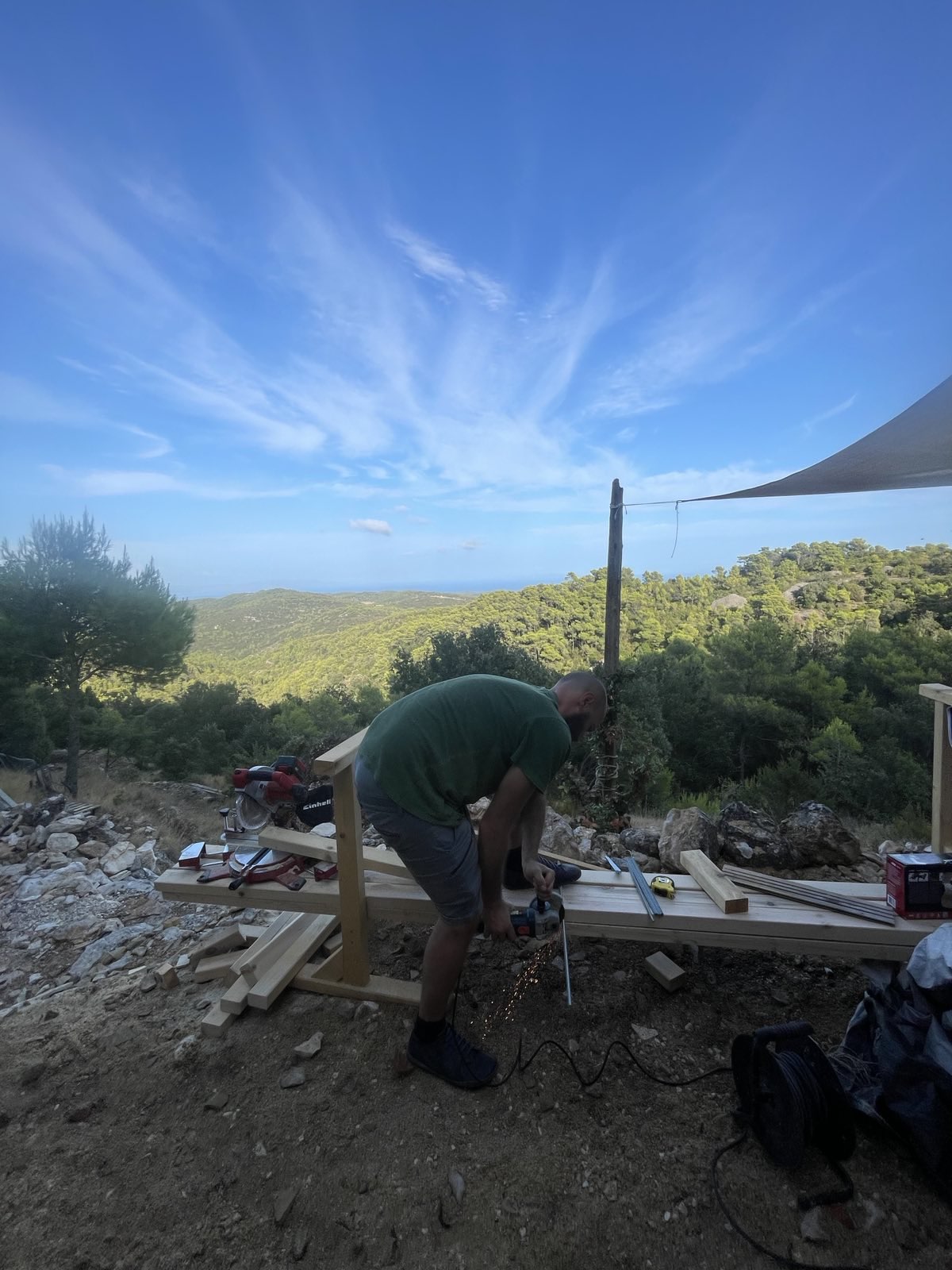
We’ve been busy all summer, preparing for the event and setting up our headquarters. We’re thrilled to meet everyone soon – the program is now available, so be sure to explore the participants and events.
Check out our gallery featuring ISSA volunteers and founders who are working tirelessly this whole summer!
The work on dry stone walling continued, with the help of our resident expert, Igor Mataić:
Then the preparations and the installation of the solar panels begun:
We’re excited to reveal the first details about our annual school program ISSA 2024: To Live Together, taking place on the island of Vis from 4 to 9 October, 2024.
We will be joined by Franco “Bifo” Berardi, Total Refusal, Madina Tlostanova, JamesBridle, Rumena Bužarovska, Silvia Federici (per live-stream), !Mediengruppe Bitnik, Srećko Horvat, Chto Delat?, Judith Meyer, Marko Pogačar, Želimir Periš, Marija Andrijašević, Anja Zag Golob, SašaSavanović, PirateCare, Forest University, Memory of The World, Nadežda Čačinovič, Kӣr & Tadi, IssaFix, Drugo More, Jamie Allen, Daphne Dragona, Ankica Čakardić, Boris Buden, Goran Bogdan, Jovana Stojiljković, and many others.
The program will include lectures, performances, discussions and conversations, readings, dances, guided tours, cooking, work actions (physical labour), workshops, exhibitions, film projections, and lots of pomalo.
The detailed program of ISSA 2024: To Live Together will be announced soon.
All programs are completely free. However, you will need to register your participation to ensure you can take part in all the programs. Please register by sending us an email to issa@issa-school.org with:
Subject: REGISTRATION: ISSA 2024 -Your name -Affiliation (if any) -How long you plan to stay -Whether you plan to take part in work actions (briefly mention your skills)
Please let us know if you are coming by August 20th at the latest.
If you like what we are doing and you can support us, please consider donating to support our major event this October.
ISSA 2024: To Live Together
When the Sahara dust turns the sky above the Adriatic islands into a yellowish haze reminiscent of Blade Runner, and heat waves no longer come in waves but permanently settle on the shores, we no longer need weather forecasters to tell us what’s happening.
The Mediterranean, as we know it, is rapidly changing. In the last 2,400 years, since the ancient polis of Issa was founded on the island of Vis, the sea level has risen two meters. Scientists predict that in less than 100 years, by 2100, it might rise by one meter. At the same time, the Mediterranean is warming 20% faster than the global average. We can already feel the impacts on ecosystems and communities, migration and tourism, and the ways we live and organise life.
While the Mediterranean, home to over 500 million people and economically dependent on tourism – which may soon vanish due to intolerable heat – is becoming the climate crisis “hotspot,” it is also becoming the perfect spot for much-needed discussion and reflection on what is happening and how to live, or how to create conditions for a “good life” in times of wildfires, water scarcity, droughts, and storms of all sorts, from the wild winds of capitalism to the dark clouds of fascism. Our aspiration is to create possibilities for navigation when favourable winds stop blowing and the ship remains immobile or starts to sink.
That’s why we have chosen To Live Together as the central topic of our ISSA voyage from 4 to 9 October 2024 on the island of Vis. The question is no longer whether humanity or the planet as we know it will survive; it will not. The question is how to live a life worth living – together – amid the ongoing collapse, with our myriad, human and non-human, differences.
Faced with a planet where the 6th mass extinction event is underway and a world in a permanent “state of exception”, of which the never ending war is just one aspect, it is here and now – wherever we are – that we must explore, reinvent, and enact new forms of living together, different ways of imagining – ourselves, our environments, our relations.
We invite you to join our exciting school program in October and start building new ways of being, living and learning together beyond the ruins of capitalism.
We build the school, the school is building us.
A few useful tips:
Accommodation: There is plenty of private accommodation available in October and you can find it through the usual websites we don’t want to promote. There are two remaining socialist hotels: Hotel Biševo in Komiža (https://modra-spilja.hr/en/hotel-bisevo/) and Hotel Issa in Vis (https://vis-hoteli.hr/en/hotel-issa/). Please note that camping is prohibited on the island (although you might not face significant trouble if you camp for a few days, however we are not equipped to accommodate people uphill at ISSA).
Transport: there a few ferries (2,5h) and catamarans (1,5h) daily from Split to the island of Vis, you will be able to find a schedule here: https://www.jadrolinija.hr/en Most events will take place in Komiža, and if you stay there, a car is not needed – we will organize transport to the School.
Working actions at ISSA: please make sure to bring proper shoes, enough water (at least 2L per person) and working gloves. All registered participants will receive additional details in September.