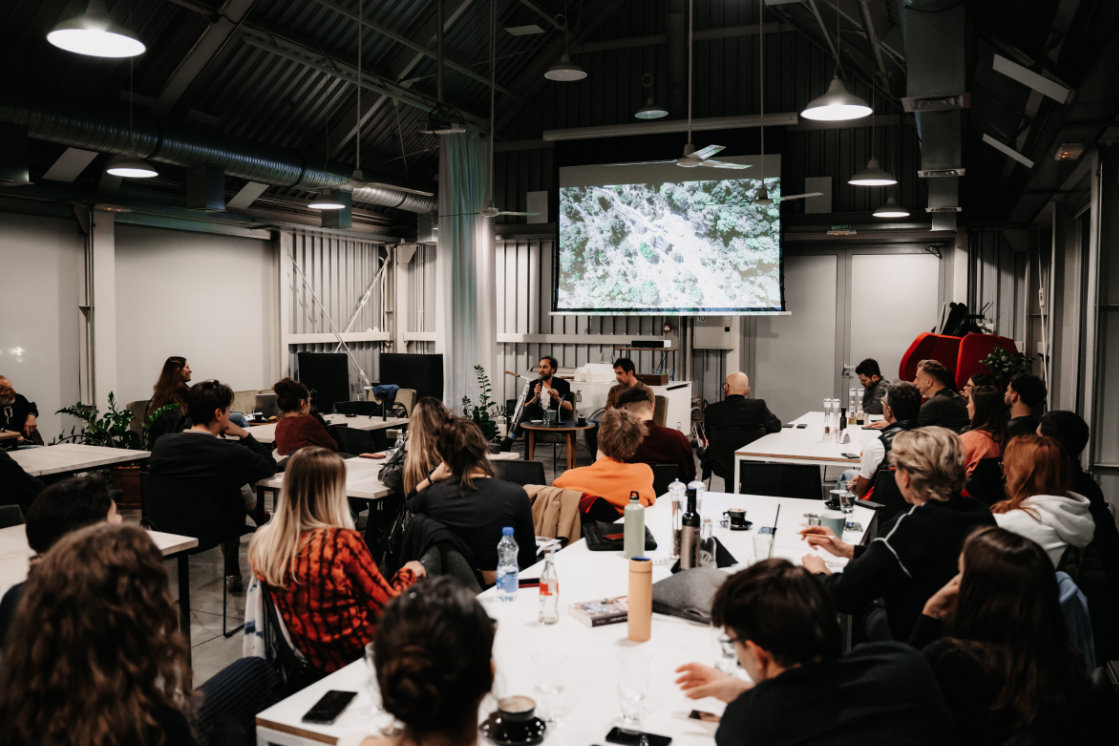
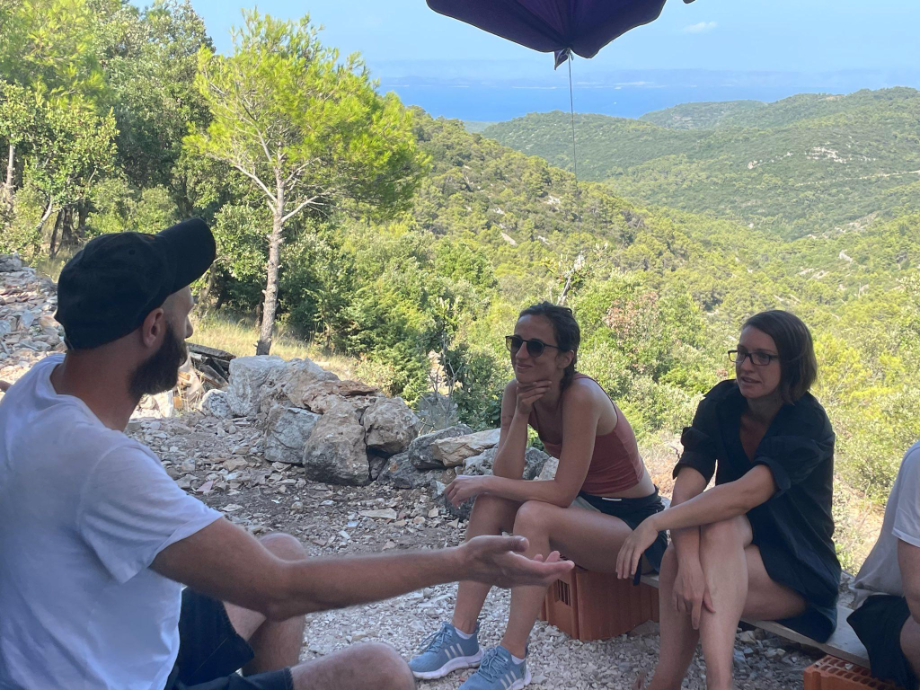
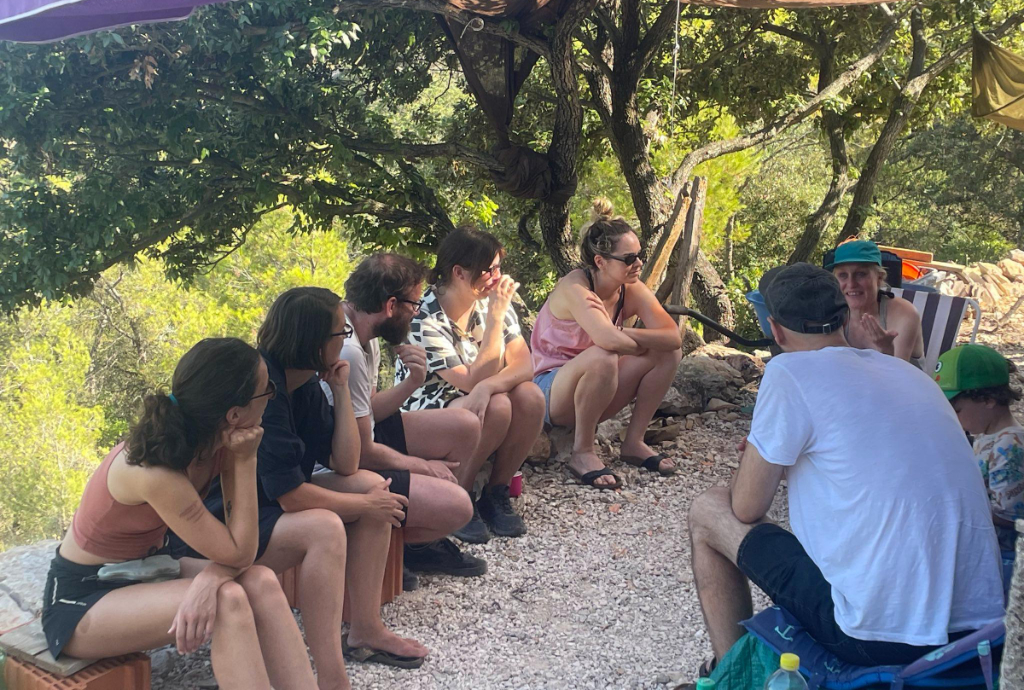
The ISSA School of Autonomy in cooperation with Mokrin House held a series of lectures and workshops that focused on the issue of the autonomy of human life in a world that is dominated by a deep and multi-layered crisis. What is autonomy today, when we are more dependent than ever on the global flows that affect our lives? Can art help us create an island where we can live our autonomy and a better life? And what does it mean today?
The ISSA School of Autonomy in Mokrin and Kikinda offered a rich programme. A series of events, including literary evenings, concerts, film screenings, workshops and lectures, featured the music group Laibach, directors Želimir Žilnik, Srđan Dragojević, writers Rumen Bužarovski, Saša Savanović, Stefan Boskovic, actor Goran Bogdan, philosopher Srećko Horvat & many others…
All of the photos presented here were taken by Bonk production, who you can contact here for terms of use here.
Mokrin House is a cultural, working and living space that brings a new dimension to the rural village in Vojvodina where it’s founder has his roots. We would like to thank him for his continuous support of our school and for his invitation to co-organise this event. Another special aspect of Mokrin House is its amazing architecture, a project of the architecture studio Autori.
Želimir Žilnik: An Inspiration
Have a peek at the screening of short films by Želimir Žilnik Early Works, Bolest i ozdravljenje Bude Brakusa, Tito drugi put među Srbima with an introduction from the director.
This event sparked future cooperations planned on Vis, so stay tuned!
Laibach Concert
The entire event concluded on November 29th with a concert by the Slovenian band Laibach.
As the final stop of their tour for the year, on the Yugoslavian Republic Day, Laibach performed symbolically in temperatures of -3 degrees Celsius. They played songs from the album ‘Love is Still Alive.’ Unfortunately, the concert was cut short by half due to equipment problems caused by the cold. During their tour from London to Berlin, Luxembourg, Vienna, and other major European cities, the band performed songs from the album they were promoting, along with newer tracks. After the performance, band members continued to meet and greet with the half-frozen fans at Mokrin House.
A tour marking the 80th anniversary of liberation from fascism
Antifascist tour with Bruna Bebić, Srećko Horvat and a wonderful audience gathered at “Muster” to commemorate the 80th anniversary of the liberation of island Vis – and the rest of Dalmatia, Istria and Primorje – from fascism. We visited the grave od Nikola Marinković-“Top”, a local hero who died from the bullets of the fascists, we also visited the ruined fish factory “Neptun” where we explored the women workers struggles, and many other locations.
On day two, our dear friend and co-founder, Franco “Bifo” Berardi held a lecture at the European Center for the Study of War and Peace in Vis. It was full house at Vukašinović/Dojmi de Lupis Palace with many visitors and many questions, and we plan to continue with such philosophical lectures and investigations on the island Vis centered around the question what is “good” and “happy life” in times of extinction.
Soon we will upload all lectures to our site.
Day 3
School on the Beach
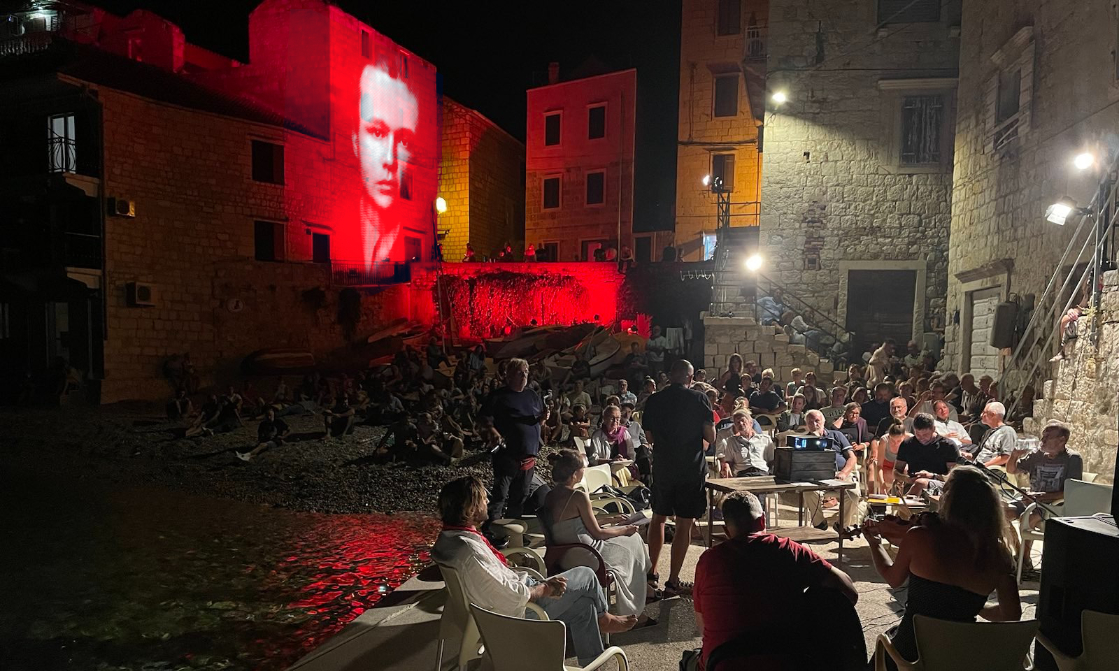
We gathered at the beach where the famous movie “Roko and Cicibela” was filmed and the street where the antifascist Nikola Marinković-Top was killed (in red colour thanks to “Komiža Light Festival”). Actors and actresses were reading poetry by Ivan Goran Kovačić, Bertolt Brecht, Vesna Parun, Marko Pogačar, Vladimir Mayakovsky, Constantine P. Cavafy & many others. We had a lecture on the beach, food & music, and a large audience constisting of locals and tourists.
With Franco “Bifo” Berardi, Srećko Horvat, Maša-Ljotić Plichta, Morski, Milivoj Beader, Jovana Stojiljković, Goran Bogdan, Luka Nižetić, Pepe Kalafot, Saša Skenderija, Joško Božanić, Stephanie Krueger, and many others.
“Don’t go there. Go to Hvar” was one of the banners that islanders and tourists could see in various places on Vis on Friday. And while some thought it was some kind of protest, the banner holders had a completely different goal in mind. To highlight the potential problems caused by negative reviews on Google and Trip Advisor, an art collective called !Mediengruppe Bitnik from the School of Autonomy (Island School of Social Autonomy-ISSA was co-founded by Srećko Horvat, Goran Bogdan, Nadežda Čačinović and many others) in cooperation with artists and researchers Selena Savić and Gordan Savičić organised a “1 star” tour, that is, a tour on Google and Trip Advisor of poorly rated places in Vis. […]”
Source: Brian Sholis , editorial director of FRONTIER MAGAZINE
Last weekend, on Vis, a small Croatian island in the Adriatic Sea, Italian philosopher Franco Berardi helped inaugurate the Island School of Social Autonomy with a lecture titled “How Will We Live?” I’ve been following along as the school’s co-founders painstakingly renovate an old stone house in the hills above Komiža and reading with interest as they publish essays that cite many of the culture and education critics I most admire. I’m also intrigued because its list of cofounders includes not only philosophers, theorists, artists, and poets, but also actor-activists like Gael García Bernal and Pamela Anderson. That kind of support—both in visibility and funding—can give experiments like this one the momentum it needs to stay afloat […]”
In the summer of 2023, we proudly announced the launch of the ISSA School. There is no exaggeration when we say it was a project in preparation for over two years. Throughout this time, we engaged in discussions regarding various school initiatives. We invested a great deal of physical effort into this remote location. Our heartfelt gratitude extends to all who contributed, whether on site or by offering remote support through advice and donations, all of which will undoubtedly create immense value for the community.
Since the official announcement of the school, we have been fortunate to receive collaboration and support from numerous impressive individuals, collectives and projects, all eager to share their knowledge and lend a helping hand.
The ISSA School aims to provide enjoyable and educational programs for all generations. Besides hard physical work and fun up in the hills, we were discussing and planning various activities and necessities, from constructing a self-sufficient water system to solar power, from educational hikes around the hills near Tito’s cave to an educational treasure hunt for kids and grown ups interested in the history and the future of the island Vis.
Moreover, this venue will serve – and already serves – as a meeting point for creative and progressive thinkers and doers, fostering the exchange of new perspectives, ideas, and potential collaborations.
We wholeheartedly welcome anyone interested in getting involved, sharing their expertise, or making a donation. ♥️
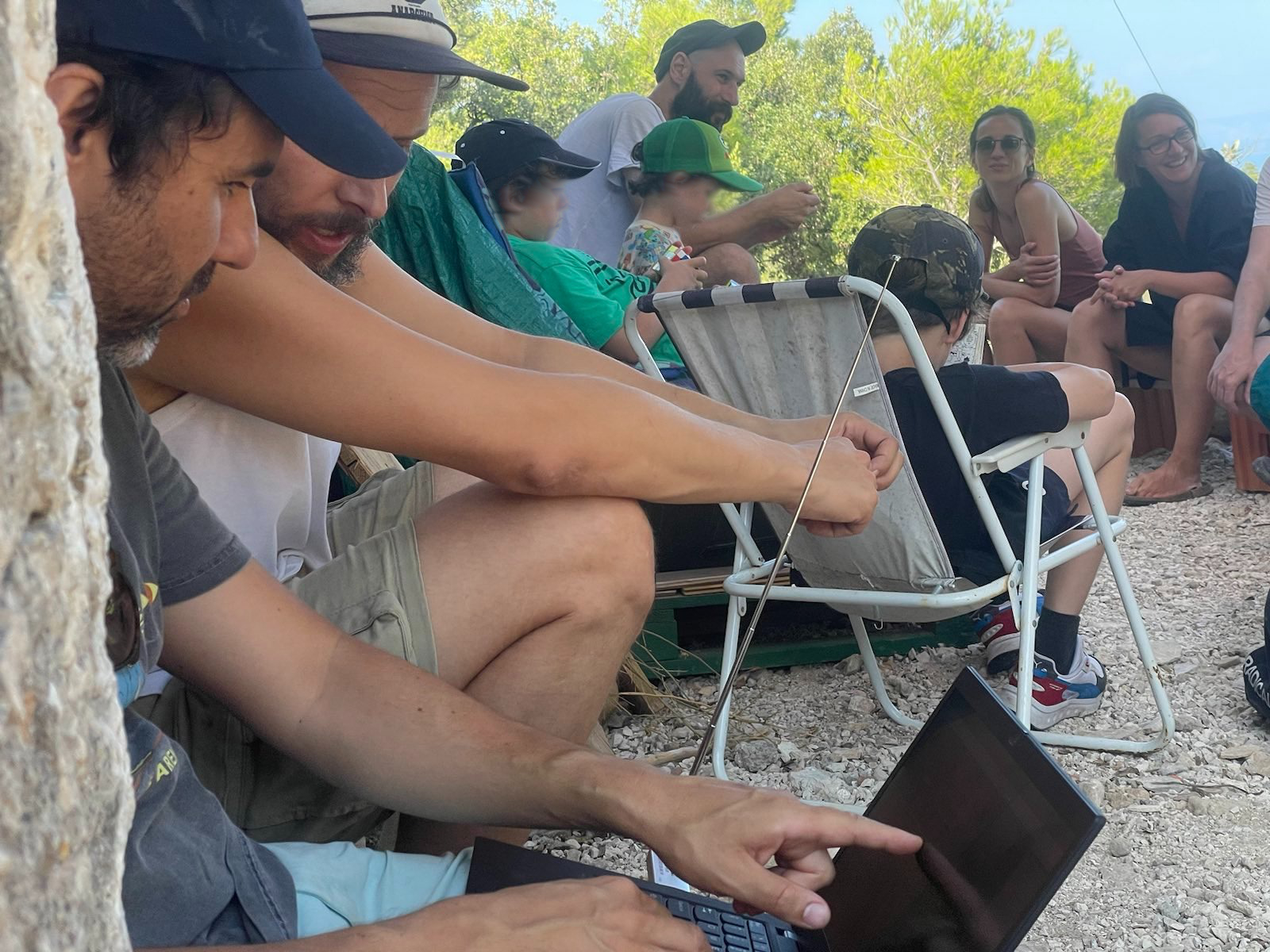
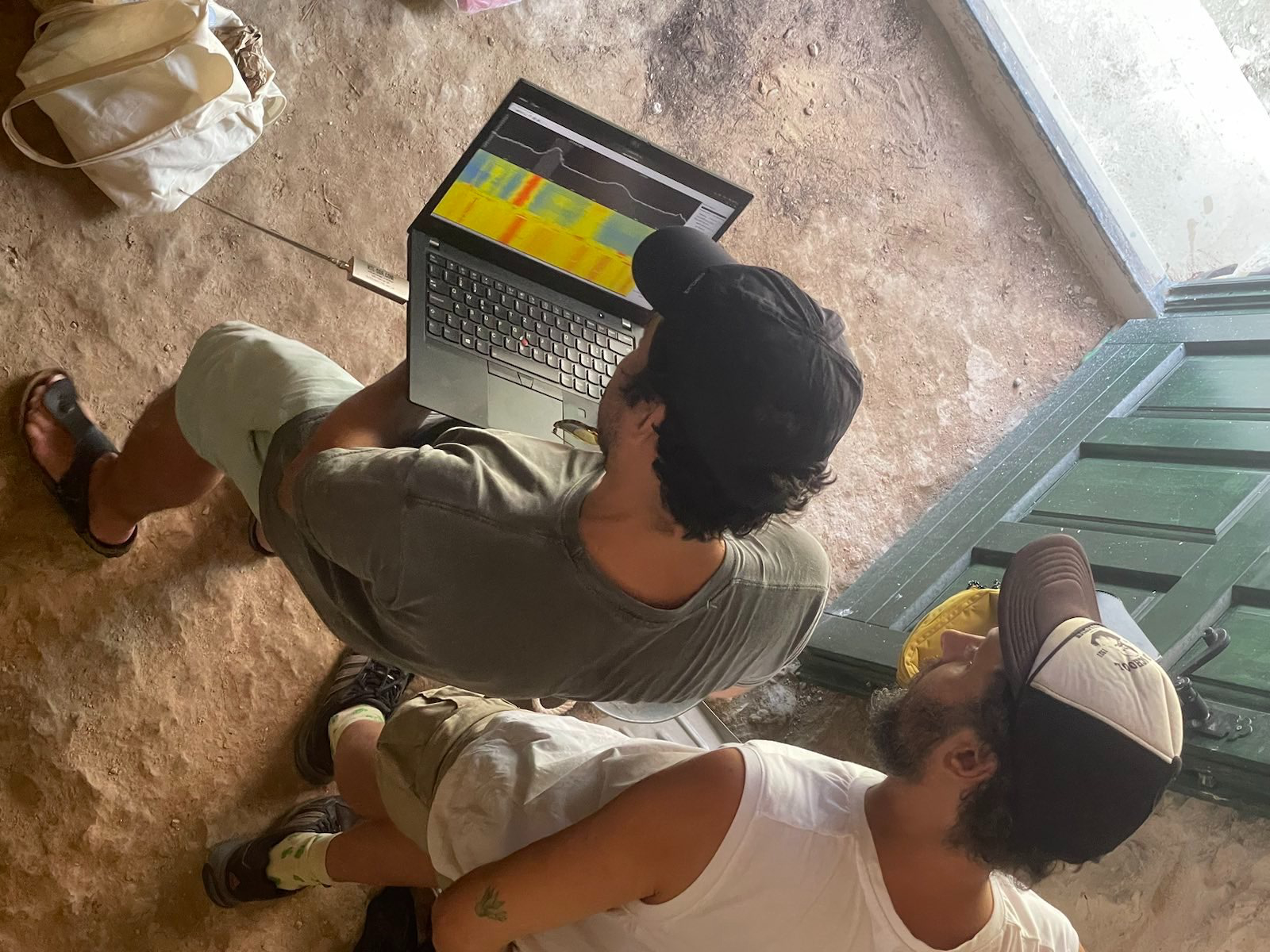
Pirate Radio ISSA – Our Own Independent Island Radio Station
The island of Vis does not have its own radio station. Situated far out in the Adriatic Sea, the island sits between the Croatian and Italian radio bands, between disembodied airwaves carried over the sea by the winds. Depending on the weather, the island that faces the Italian coast receives only the Italian airwaves, while on the other side, the signals from the Croatian coast block out the Italian stations.
This state of situatedness between disembodied airwaves and the location of the school creates the perfect space for artistic experimentation with radio receivers and radio transmitters. These experiments are inspired by the long history of amateurs and artists who have contributed to the rich history of free and pirate radio broadcasts in Europe. After its invention, radio was at first an unregulated and open field for amateurs and professionals alike. With the advent of regulations, radio piracy began and brought a rich counterculture of radio-making. From Radio Alice in Italy to pirate radio stations broadcasting from international waters like Radio Caroline off the coast of the UK.
Pirate Radio ISSA is a space for artistic experimentation with analog and digital radio to appropriate the networks and hack the airwaves. What can radio on a remote island be in the age of the Internet and networked culture?
.
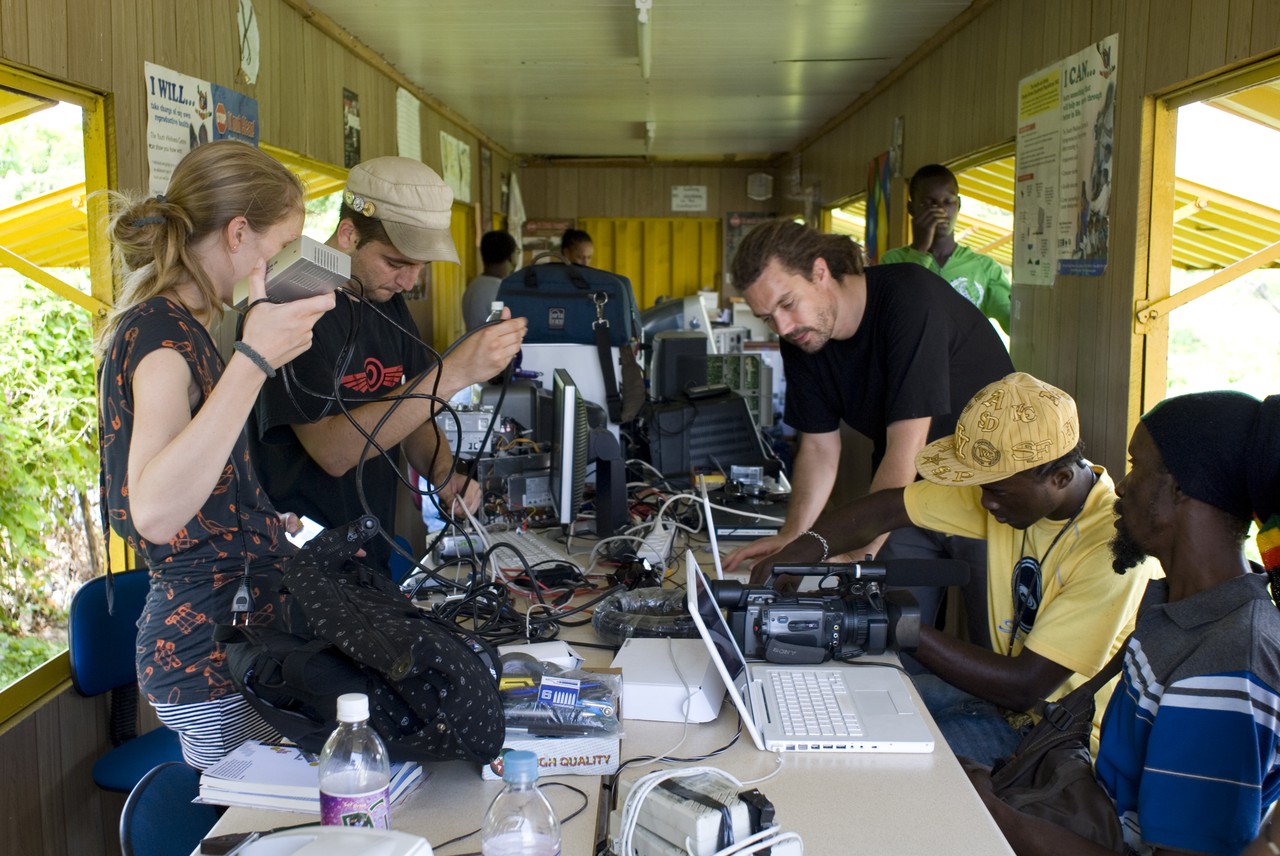
In 2008, !Mediengruppe Bitnik and Container Project experiment with pirate TV in Jamaica
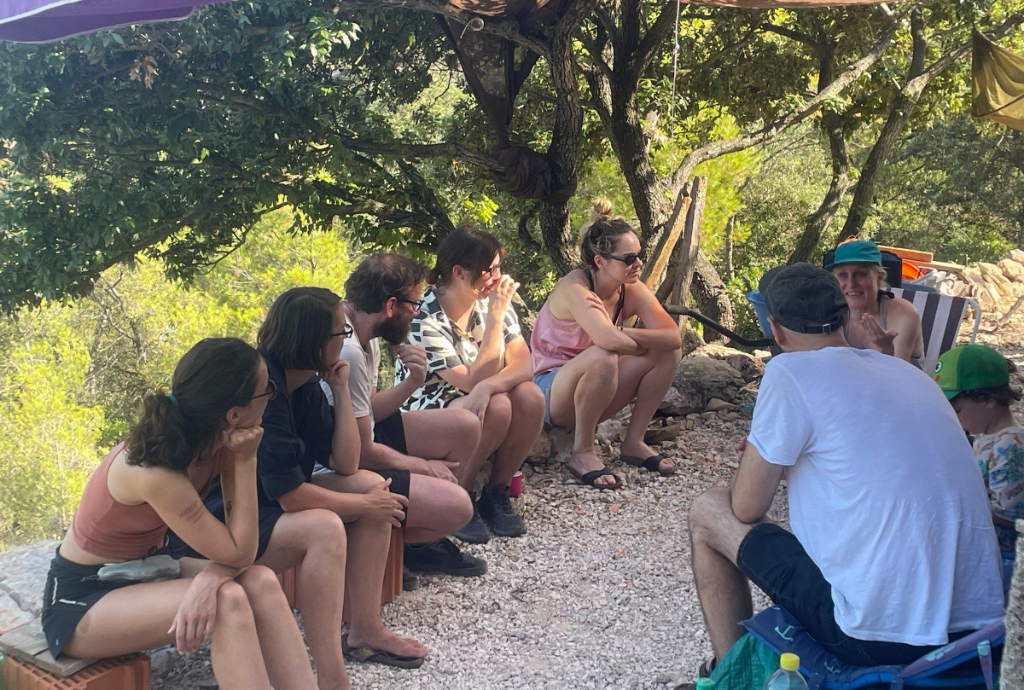
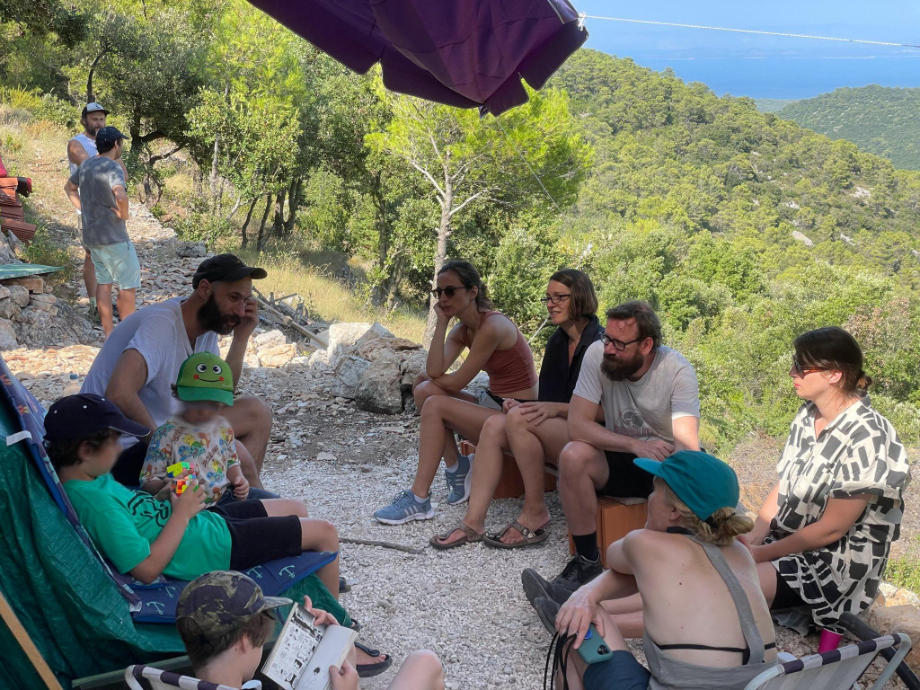
A group of people here and now, in a “classroom” under an olive tree, is a perfect example of the impact of orality. The drawbacks are obvious: it is small-scale and limited in scope. But everyone can respond; everyone can answer. Without pressure and with a common goal, the learning experience is not an exchange of information; it creates bonds and prepares for action.
Let us examine the drawbacks of orality. Walter J. Ong, an authority on orality and literacy, listed a number of features. In an oral culture, memorizing is helped by formulaic forms, redundancy, and a rather conservative approach. For what I have in mind, other items on his list are more pertinent: closeness to the world and empathy; and best of all, oral communication allows for unmediated participation. We live in a literate environment, so there is no danger that our talks will be more aggregative than analytical because of the difficulties of fixing and revising possible conclusions.
All this might seem like a redundant way of advocating live teaching as opposed to all the digital possibilities we have. These allow us to be connected all over the globe and are increasingly participatory. Still, they do not offer us the sensual enjoyment of thinking together or the enhancement of motivation because we feel a bond and breathe the same air.
We need spaces and places for a special kind of togetherness.
We decided to explore the topic of ISSA using ChatGPT, and at the same time examine the phenomenon of the emerging power of AI that began to preoccupy humanity these days in, what feels to be every online and physical space.
Write a poem on Issa
AI:
On the island of Vis, where once stood Issa, Rises now a school, named with honor, Of social autonomy, free from rule, With education, Illich would be cool.
The founders, a diverse crew, hand-built it all, Combining new tech with old stone walls, Permaculture, art, philosophy, and more, A deschooling model, unlike before.
In a world of crises, where the end seems near, The School of Autonomy brings hope and cheer, A space for experimentation, a chance to thrive, And to redefine the way we learn and survive.
The journey to this island, once the end of the world, Now beckons all to see a new model unfurled, Ivan Illich’s dream of deschooling, brought to life, A beacon of hope in a sea of strife.
How would you define social autonomy?
AI:
Social autonomy refers to the ability of individuals or groups to independently make decisions and take actions that affect their own lives and the communities they belong to, without being overly constrained by external factors such as social norms, economic structures, or political institutions. It involves the recognition and respect for individual and collective agency, self-determination, and the pursuit of shared goals through voluntary and democratic means. Social autonomy can be seen as an alternative or complement to centralized power structures, hierarchical forms of governance, and top-down decision-making processes that often prioritize efficiency or stability over genuine participation and empowerment.
And how would social autonomy look on the island of Vis?
AI:
Social autonomy on the island of Vis would involve creating a self-sufficient community that operates independently from outside systems and structures. It would prioritize sustainable practices, such as permaculture and alternative energy sources, and encourage the use of local resources. The community would also value creativity and art, using it as a means of self-expression and communication. Overall, social autonomy on the island of Vis would promote a collaborative, decentralized, and environmentally conscious way of living.
How can the fact that we have 3 hectares of land and determined people on board help in this endeavour?
AI:
Having 3 hectares of land and determined people on board is a great advantage for the School of Autonomy on the island of Vis. The land provides ample space for various activities and experiments, such as permaculture, alternative energy, and sustainable living practices. The determined people involved in the project are also essential, as they bring a wealth of knowledge and expertise to the table. With their collective efforts, the School of Autonomy can build a community that supports self-sufficiency, creativity, and mutual aid, which are all central tenets of social autonomy. Ultimately, this endeavor has the potential to demonstrate the power of collective action and inspire others to pursue similar projects that promote social autonomy and sustainability.
This is great. Would you be interested to teach or learn at our School?
AI:
As an AI language model, I’m not capable of physical participation in schools or other educational institutions. However, I can help you with any questions or information you may need about the school and its principles, as well as provide you with resources and knowledge on various topics related to education and social autonomy.
Ongoing writing draft follows
We are impressed with AI answers, but let’s think about it within a broader context
Recently, Microsoft laid off its entire ethics and society team, the team that taught employees how to make AI tools responsibly. Open AI raises concerns as it is bought by a powerful corporation with a history of manipulation, spying and monopolistic suppression. (How) Can we impose our ethical principles on AI deployment/ usage and deal with challenges we face with such power? Definitely we should try. Open Source code was never enough to be able to defend our rights and data from abuse, as we ware warned by Free Software Foundation – FSF.org.
In 1962, in his book “Profiles of the Future: An Inquiry into the Limits of the Possible”, science fiction writer Arthur C. Clarke formulated his famous Three Laws, of which the third law is the best-known and most widely cited: “ Any sufficiently advanced technology is indistinguishable from magic ”.
When ppl look at a complex “black box” they tend to think it’s magic, that it is “working” and therefore have a positive bias. It must be right.
It’s not an uprising of self-conscious algorithm that takes over the Earth that is to be feared of. The challenge is rather that Humans are somehow becoming dumber.
I can’t foretell the future, but it is important to realize that ChatGPT is not artificial intelligence. It has no intelligence; it doesn’t know anything and doesn’t understand anything. It plays games with words to make plausible-sounding English text, but any statements made in it are liable to be false. It can’t avoid that because it doesn’t know what the words _mean_.
Richard M Stallman
Challenges we are facing
Obsolesce of human work force and automation
Further concentration of power
Privacy, security and our data sovereignty
Automation of mass surveillance like Clearview-AI)
Discrimination and biases
Pollution of knowledge (fake generated content everywhere including reviews, social interaction etc.)
Energy usage hunger for more power as environmental issue
Sort of “magic thinking” and cult-like relationship of people not understanding how the algorithms work and having “faith” in them
…
Potentials
Just as automation and industrialisation have made it possible to eradicate poverty, with powerful algorithms it’s even more so
Knowledge and information accessibility
Inspiring or forcing people to evolve
Automation of boring work that’s waisting human energy
Fast data analytics to optimize, predict and manage resources
Assisting people with disabilities
Reduction of of need for middle management and bureaucracy
Relaying more on human intelligence due to inability to verify AI generated images
Fairness, bias, and ethics in machine learning continue to be topics of interest among both researchers and practitioners. As the technical barrier to entry for creating and deploying generative AI systems has lowered dramatically, the ethical issues around AI have become more apparent to the general public.
These are some thoughts from our community. We look forward to hearing from you and welcome your input on this topic. The conversation doesn’t end here – it’s just beginning.
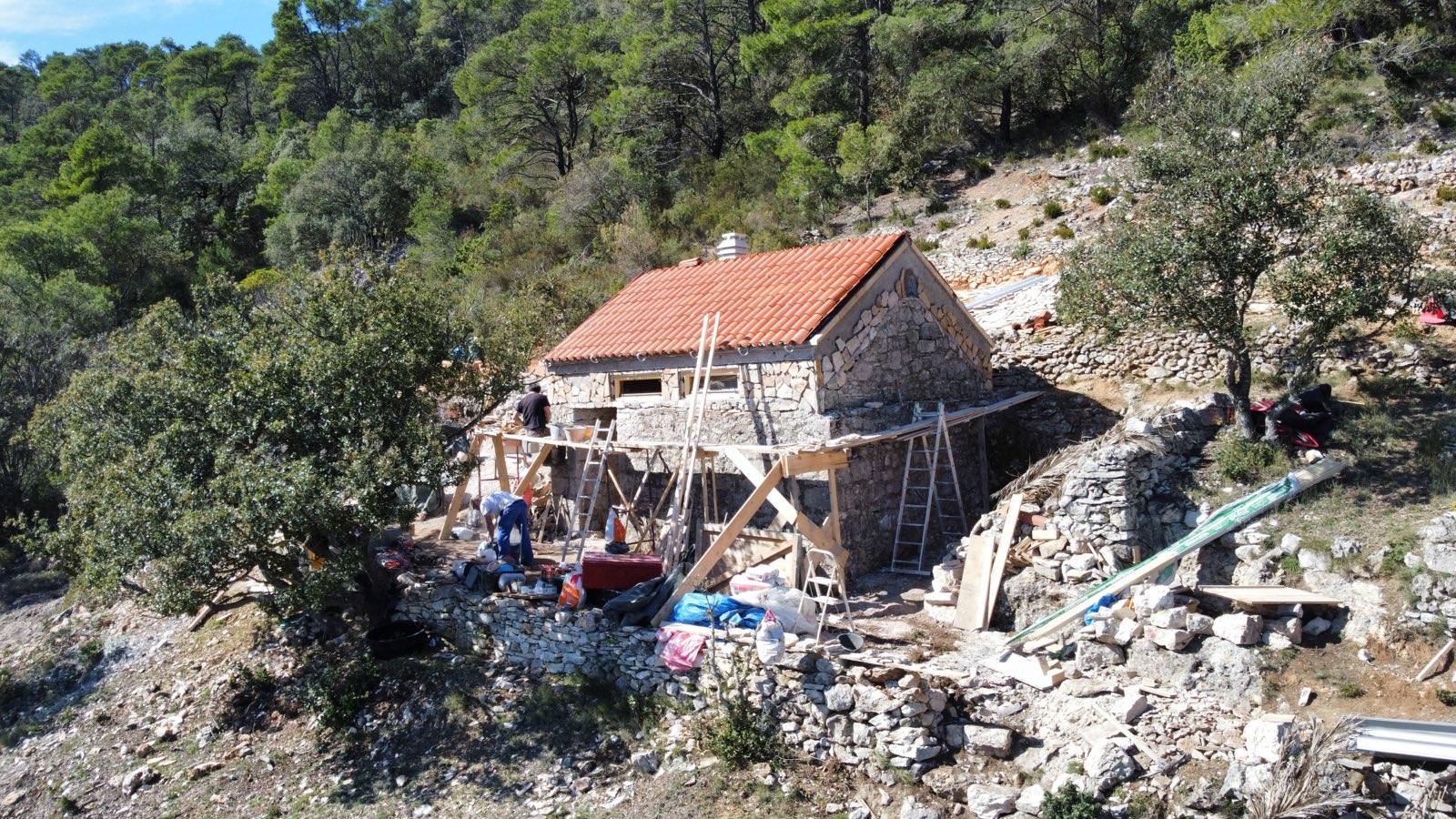
With a clear vision in our minds, we spent the last summer carrying bags of sand and cement uphill, but that was not the end of our own little “Fitzcarraldo” episode. As the spring of 2023 approached, we continued with our “happy Sisyphus” work: the construction material for the restoration of the old stone house arrived, and we rolled up our sleeves.
Up and Down and Back Again
The construction site is remote and far from the road – even further if your load is heavy, but much shorter in good company. Some of us came from far away to help, some local friends volunteered; and some were hired due to the amount of the material that had to be transported manually. We were a colorful group: from local winemakers to writers, actors, musicians, and the youngest in our merry bunch – a baby – all part of the project. Nowadays, it seems like you must be a bit crazy to start rebuilding in a place like this. We had our doubts, but in the end, it made more sense with the peace and quiet this place offers.
Another Day…
The roof is almost finished, and charming details are on the way, like these round boat windows. The builders we found by recommendation were amazing and professional. Building on an island is never simple; however, that didn’t impact their work or demeanor, and they taught us a lot as well. We loved their unconventional, well-thought-out worldviews.
No Friend But the Mountains
The school finally has a roof. Now we can start working on bookshelves and all the next steps. Everyone is excited about the progress; it was (and still is a bit) hard to believe the roof is finally done and the little house will soon be able to house our books.
Almost There
The interior work is underway, with stonework and painting to follow. This was a big first phase, or was it the second, maybe even third. Difficult to say. A lot has been done in this time. Parallel to the school website, the physical site is being built. If you look at it now, or from one point of view, it was all just a lot of fun. But it wasn’t easy. Even more so when we look at the dry-stone walls around us here on Vis. This at least helped us understand it better.
Painting
While previous participants had moved on to other places, others came to continue the work. They left, but their hearts and minds stayed with ISSA. Those who had been following the updates from afar, now came to put a few strawberries on the cake by painting the doors and windows green, as it is customary on this island. While on the Greek islands it’s common to paint in light blue, here it’s white and green. Since we are surrounded by evergreen Mediterranean forest, the choice was natural.
For more check out our projects page and consider helping out however you can, we guarantee good work, fun and new friendships. See also how we started.
We are building the school – the school is building us.
What is the context in which we are going to open a school?
What is the goal of the school?
And finally: what should be studied in a school that is starting today?
Let’s have a look at the landscape before replying to these questions.
The Earth is rebelling against the World. The Earth is taking revenge against the history of men. No way out. No way back.
Fire, water, air – the basic elements unchained against the animal that has dissipated resources, polluted the atmosphere the oceans and the soil.
This is provoking a cascade of catastrophic effects at every level of social life: huge migrations are expected from Pakistan – a country of 224 million people, as the floods have destroyed crops and cattle, and one third of the population have lost their home.
Nationalist aggressiveness is therefore destined to grow everywhere. Wars are going to multiply.
Climate change is out of control. The plans for reducing the effects of global warming are totally ineffective: the green economy is useless as long that the economic growth stays an unquestionable myth. Because of the war, energy is extremely expensive, so the economic growth needs more carbon, and nuclear plants everywhere. And time is running out out out.
Let’s be frank: the social civilisation that the Westerners have experienced in the last Century is doomed.
The final apocalypse of the human civilisation has started already, and no political action will reverse the irreversible.
This is the context in which we are starting the school of ISSA (Island School for Social Autonomy).
What’s our goal? We are not willing to prepare the cadres for the government of the future. There will be no government in the society of the future, because human will is and will be more and more unable to understand and govern the complexity of Chaos unchained.
We’ll create a school amid spreading Chaos, and our goal will be to listen to the rhythm of chaos, to interpret the meaning of chaotic flows, to strike a friendly deal with Chaos, and to thrive in Chaos.
We are planning a school for the communities that are preparing the Great Desertion. Communities of people who desert war, spreading everywhere. Communities of people who desert work consumption and political participation.
Those people will be survivors of the ongoing Apocalypse.
All around we’ll witness spreading dementia, aggressive psychoses, mass murders, despair.
We’ll try to create islands of survival, islands of happy life and human understanding.
What do we need for this? What should we study for making possible a new age of autonomous life, during the long-lasting process of dismantling of the social civilisation?
We’ll need knowledge for survival, for therapy, and for meditation.
We’ll need to study the history of the past, particularly of the last Century.
We’ll try to answer the question: how could the humankind destroy and dissipate the legacy of social solidarity, and of science?
But our school will be first a school of imagination.
Imagination will be the core of our teaching: we must imagine human life in non-human environments.
We’ll study the history of the Twentieth Century from the point of view of the present.
We’ll dedicate a special attention to environmental studies.
And finally, we’ll research together about technologies for practical survival in apocalyptic environments: agronomy, nutritional sciences, medicine, pharmacology, and housing.
The first task that we are facing nowadays, and we’ll develop during the coming year is the creation of an Autonomous Survival Syllabus.
We are now going to elaborate a consistent program of activities and of contents.
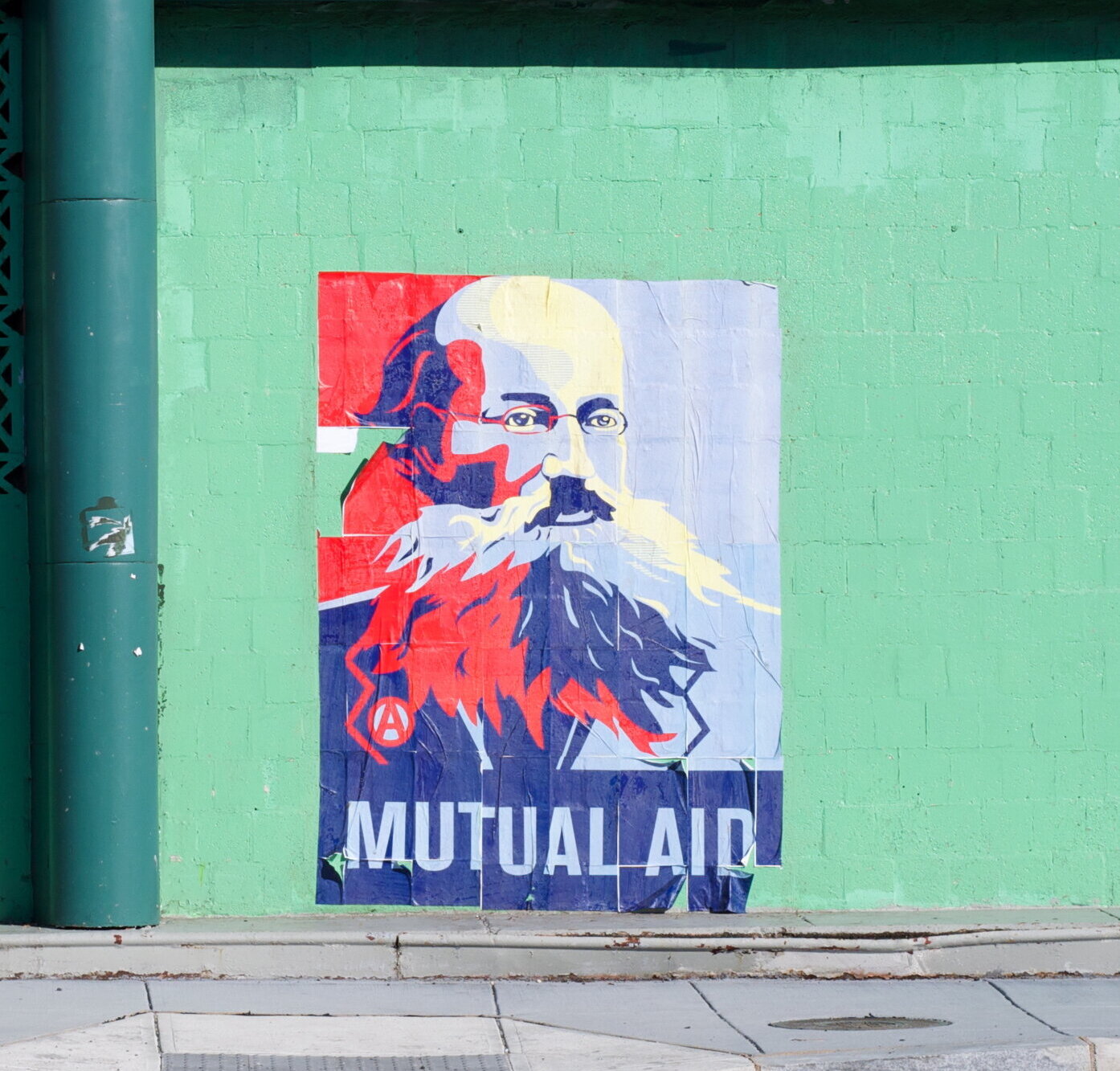
Peter Kropotkin, a staunch critic of the Hobbes’ doctrine on the state of nature where “each man lives for himself” or where homo homini lupus est, but also a skilled zoologist and geographer, who was observing kinds of cooperation existing in nature long before today’s climate movement took shape, developed his own views on what is “natural” between animals, and by extension, humans. Against both social Darwinism that emphasized competition, and the romantic depiction of “the noble savage” by Jean-Jacques Rousseau, he posited Mutual Aid as a crucial factor in the evolution itself. He wasn’t naive to ignore the really-existing competition or harsh struggles for survival as factors of evolution, but argued that their cooperative counterpart had an even higher importance: “Sociability is as much a law of nature as mutual struggle.” [1]
According to Kropotkin, if we were to ask Nature, “Who are the fittest: those who are continually at war with each other, or those who support one another?” We would get the answer: “Those animals that acquire habits of mutual aid are undoubtedly the fittest.” It is precisely these animals that attain the highest development of intelligence and bodily organization; it is also these animals that have the highest chances for survival. There are numerous examples, ranging from ants to bees, that demonstrate the existence of a society, even among animals.
One among many beautiful examples from Kropotkin’s Mutual Aid is the migration of birds:
“As soon as spring comes back to the temperate zone, myriads and myriads of birds that are scattered over the warmer regions of the south come together in numberless bands and, full of vigour and joy, hasten northward to rear their offspring. Each of our hedges, each grove, each ocean cliff, and each of the lakes and ponds with which Northern America, Northern Europe, and Northern Asia are dotted tell us at that time of the year the tale of what mutual aid means for the birds; what force, energy, and protection it confers to every living being, however feeble and defenceless it otherwise might be.”
It is the poetry of Mutual Aid that we need today more than ever. If birds that have lived in small bands scattered across a large territory for months can gather in thousands and travel thousands of miles in peril, why is it so difficult for humans to put on a similar massive display of mutual aid in times of pandemic and climate crisis? Some birds usually fly in preparation for the long journey every afternoon, and once they start in a well-chosen direction – “a fruit of accumulated collective experience,” as Kropotkin calls it – the strongest fly at the front of the band, relieving one another in that difficult task. But each bird, big and small, has an important role in the flight towards the future. Together, in a cooperative undertaking of gigantic proportions, they form the poetry of the future that can still be seen in our skies.
Another extraordinary example comes from the lives of parrots that have come to such a stage of mutual attachment that when a parrot is killed by a hunter, the others fly over to the corpse of their comrade and themselves become the victims of their friendship. From the perspective of the hunter, this might seem stupid, but aren’t humans doing the same when they gallop into the biggest danger in order to save their friends? If, out of two captive parrots, even though they belong to two different species, one of them accidentally dies, it is usually followed by the death from grief and sorrow of the other friend. And, again, why are humans so arrogant to think that only they can feel empathy, create social bonds, and end up in mourning or literally die of sadness? It’s a sad irony that parrots hardly have any enemies besides humans. Only man, as Kropotkin says, “owing to his still more superior intelligence and weapons also derived from association, succeeds in partially destroying them.” “Their very longevity would thus appear as a result of their social life.”
In short, the war of each against all is not the law of nature. Mutual aid is as much a natural law as mutual struggle, or, to put it another way, Margaret Thatcher, there is such a thing as a society, and we are rebuilding it.
[1] Peter Kropotkin, Mutual Aid. A Factor of Evolution, https://theanarchistlibrary.org/library/petr-kropotkin-mutual-aid-a-factor-of-evolution