Događaj je zamišljen kao večer u kojoj se razgovor o budućnosti otoka odvija za stolom. Hrana nije samo posluženje nego metodologija: kroz zajedničko kuhanje i objedovanje otvaraju se pitanja klimatskih promjena, globalnih lanaca hrane, turizma i nove društvene strukture otoka.
Večera je inspirirana metodom Naan Aligned Cooking, koju ISSA – “Škola autonomije” zajedno sa Kevinom Kenjarom razvija od 2024, ali se namjerno ne ograničava samo na “lokalne” namirnice. Jelovnik reflektira stvarnost suvremenog otoka: kombinaciju onoga što dolazi iz mora i polja, ali i onoga što stiže trajektom iz globalnih logističkih lanaca – iz supermarketa, skladišta i distribucijskih centara.
U tom hibridnom prostoru hrane pojavljuje se i nova društvena stvarnost otoka: strani radnici, sezonski radnici i migranti koji već danas oblikuju turizam i ugostiteljstvo u Hrvatskoj. Među njima su i radnici iz Nepala, Filipina, Indije i drugih zemalja, čije kulinarske tradicije postaju dio svakodnevice otočnih kuhinja.
The New Year began in a deepening world disorder. While Israel – despite the ceasefire – continues its bombardment of the Gaza Strip, further worsening the catastrophic conditions in which Palestinian civilians live, international politics is increasingly being shaped openly by imperial power, military force, and the logic of conflict.
Birzeit University in the West Bank. Photo: Nalmimi, CC BY-SA 4.0, via Wikimedia Commons
Abdaljawad Omar & Basil Farraj
Talk on Thursday, 26 February, 2026, at 6 pm Filodrammatica, large hall (Korzo 28/1, Rijeka)
As global attention shifts ever more toward other flashpoints of geopolitical ambition, Palestine is increasingly fading from view. In addition to the ongoing catastrophe in Gaza, the escalation of violence in the occupied West Bank is also passing largely under the radar.
According to UN data, last year saw a record number of attacks by Israeli settlers against Palestinians in the West Bank, with more than 1,800 documented violent incidents. Already in the first days of the year, the Israeli army carried out a raid at Birzeit University in the occupied West Bank, injuring eleven Palestinian students.
It is from Birzeit University, where both work as professors, that leading Palestinian philosopher Abdaljawad Omar and anthropologist Basil Farraj are coming to Croatia for the first time.
Under the title Palestine: Life Is Resistance, the two speakers will share their personal testimonies, present the situation in the occupied West Bank, and deepen understanding of both the possibilities and the limits of Palestinian resistance – on Thursday, February 26, from 6 PM at Filodrammatica, Rijeka.
They will be joined in discussion by writer and political scientist Saša Savanović, theorist and translator Stipe Ćurković, as well as the Rijeka audience. The event is organized by Drugo more, ISSA – School of Autonomy, and the Center for Theoretical and Critical Research of the Faculty of Humanities and Social Sciences in Rijeka.
Admission is free. The talk will be held in English
MORE ABOUT THE GUESTS:
Abdaljawad Omar is a Palestinian writer,based in Ramallah, Palestine. He serves as an Assistant/Adjunct Professor in the Department of Philosophy and Cultural Studies at Birzeit University, where he teaches and conducts research on political theory, decolonial thought, and the intellectual history of Palestinian resistance. Omar regularly publishes essays and articles in outlets such as Mondoweiss and contributes to international discussions on colonialism, resistance, and Middle Eastern politics.
Basil Farraj is the Director of the Ibrahim Abu Lughod Institute of International Studies, and an assistant professor at the Department of Philosophy and Cultural studies, Birzeit University. Basil’s research addresses the intersections of memory, resistance, and art by prisoners and others at the receiving end of violence. Basil has conducted research in several countries including Chile, Colombia, and Palestine.
Saša Savanović is a novelist, essayist and non-fiction author. She has published two critically acclaimed novels (Deseti život, 2018 and Novo Sada, 2022), along with a wide range of articles, essays, research studies and popular commentary. She lives in Komiža and Rijeka.
Stipe Ćurković is a translator and a member of the Program Committee of the Subversive Forum, the theoretical and discursive segment of the Subversive Festival. He lives and works in Zagreb.
organizers:
Drugo more, ISSA – School of Autonomy, Center for Theoretical and Critical Research of the Faculty of Humanities and Social Sciences in Rijeka
Supported by:
Ministry of Culture and Media of the Republic of Croatia, City of Rijeka – Administrative department of education and schooling, culture, sports and youth
Drugo more is a beneficiary of the financial support of the Kultura nova Foundation
Drugo more is a beneficiary of the institutional support of the National Foundation for Civil Society Development for the stabilization and/or development of the association
The program is realized in the framework of Year-round Refleks program.
Association of organisations Molekula manages Filodrammatica
Palestina: Život je otpor
Nova godina započela je produbljivanjem svjetske krize. Dok Izrael – unatoč primirju – nastavlja bombardiranje Gaze, dodatno pogoršavajući katastrofalne uvjete u kojima žive palestinski civili, međunarodnu politiku sve otvorenije oblikuje imperijalna moć, vojna sila i logika sukoba.
Birzeit University in the West Bank. Photo: Nalmimi, CC BY-SA 4.0, via Wikimedia Commons
I dok se svjetska pažnja sve više usmjerava na druge žarišne točke geopolitičkih apetita, Palestina se sve više gubi iz fokusa. Osim nastavka katastrofe u Gazi, ispod radara prolazi i eskalacija nasilja u okupiranoj Zapadnoj obali.
Prema podacima UN-a, prošle je godine zabilježen rekordan broj napada izraelskih doseljenika na Palestince na Zapadnoj obali, s preko 1800 dokumentiranih nasilnih incidenata. Već u prvim danima godine, izraelska vojska izvršila je raciju na Sveučilištu Birzeit na okupiranoj Zapadnoj obali, ozlijedivši pritom jedanaest palestinskih studenata.
Upravo sa sveučilišta Birzeit, gdje obojica rade kao profesori, po prvi puta u Hrvatsku stižu vodeći palestinski filozof Abdaljawad Omar i antropolog Basil Farraj.
S početkom u 18 sati, u četvrtak 26. veljače u riječkoj Filodrammatici pod naslovovom Palestina: život je otpor obojica će izložiti vlastita svjedočanstva, predstaviti situaciju u okupiranoj Zapadnoj obali, ali i produbiti razumijevanje mogućnosti i nemogućnosti palestinskog otpora.
U razgovoru će im se pridružiti književnica i politologinja Saša Savanović i teoretičar i prevoditelj Stipe Ćurković, te riječka publika. Organizatori događaja udruge su Drugo more i ISSA – Škola autonomije, te Centar za teorijska i kritička istraživanja riječkog Filozofskog fakulteta.
Ulaz je slobodan. Program se održava na engleskom jeziku.
Abdaljawad Omar i Basil Farraj
VIŠE O GOSTIMA:
Abdaljawad Omar je palestinski pisac i filozof iz Ramale u Palestini. Radi kao asistent/vanredni profesor na Odjelu za filozofiju i kulturne studije Sveučilišta Birzeit, gdje predaje i provodi istraživanja o političkoj teoriji, dekolonijalnoj misli i intelektualnoj povijesti palestinskog otpora. Omar redovito objavljuje eseje i članke doprinosi međunarodnim raspravama o kolonijalizmu, otporu i bliskoistočnoj politici.
Basil Farraj je ravnatelj Instituta za međunarodne studije Ibrahim Abu Lughod i docent na Odjelu za filozofiju i kulturne studije Sveučilišta Birzeit. Basilovo istraživanje bavi se presjecima sjećanja, otpora i umjetnosti kod zatvorenika i drugih koji su žrtve nasilja. Basil je provodio istraživanja u nekoliko zemalja, uključujući Čile, Kolumbiju i Palestinu.
Saša Savanović je književnica i politologinja, piše prozu, esejistiku i publicistiku. Objavila je romane Deseti život i Novo Sada, kao i niz priča, eseja i kolumni. Živi u Komiži i u Rijeci.
Stipe Ćurković je prevoditelj i član Programskog odbora Subversive foruma, teorijsko-diskurzivnog dijela Subversive Festivala. Živi i radi u Zagrebu.
Organizatori: Drugo more, ISSA – Škola autonomije, Centar za teorijska i kritička istraživanja Filozofskog fakulteta u Rijeci
Program podržali: Ministarstvo kulture i medija RH, Grad Rijeka – Upravni odjel za odgoj i obrazovanje, kulturu, sport i mlade Drugo more je korisnik financijske podrške Zaklade Kultura nova Drugo more je korisnik institucionalne podrške Nacionalne zaklade za razvoj civilnoga društva za stabilizaciju i/ili razvoj udruge Program se održava u okviru Cjelogodišnjeg programa Refleks. Prostorima Filodrammatice upravlja Savez udruga Molekula
The Island School of Social Autonomy (ISSA) is located on three hectares of land above the small coastal town of Komiža, on the island of Vis in the Adriatic Sea .
The following text was originally written for INC Reader #18: Tactical Media Reader – Common Tools for Common Struggles, edited by Chloë Arkenbout, Tommaso Campagna, Sepp Eckenhaussen, and Geert Lovink, which will be published in book form in early 2026. Many thanks to Kate Babin for proofreading.
In an era shaped by the destructive forces of (neo-)colonialism, capitalist extraction, unsettlement and climate crisis, ISSA cultivates experimentation for reconstructing and sustaining life forms and social bonds outside the logics of neoliberal governance and extinction. The school is located within the Mediterranean Sea, a position that Tiziana Terranova identifies as subaltern and a ‘laboratory for the development and testing of new technologies for the government of mobility, the securing of borders, and the military policing.’[1] ISSA is a place and mindset that experiments with traditional and new technologies, that explores ‘autonomy as a political strategy and as a model for organizing social life’, [2] countering the prevailing logics and institutions that Terranova speaks of. Focusing on self-sustained and life-integrated learning instead of discipline and disruption, here, a growing group of artists, philosophers, media scholars, journalists, and activists are building new kinds of social, material, and media infrastructures that unfold differently than the logics of late capitalism.
In autumn 2024, I attended the first major public event organized by them. I took a ferry from Split across the Adriatic Sea, next to me, an elderly man with sun-tanned and wrinkled skin was reading a biography of Tito. After embarking, I found myself on a public bus with many others, travelling along hilly roads to the other side of the island, arriving on, one would say, an idyllic vacation destination. I then walked 15 minutes along narrow, cobbled streets to a former Yugoslav socialist hotel on the seafront that, with stunning attention to design details, resembled an era unfamiliar to me. The next day, a bus picked up a group of people—art students, artists, academics, retirees, families, and activists—and drove us uphill to the actual school site. On my first day of the working action, I carried wooden planks along an earthy path for about 800 meters with strangers for several trips. We worked to prepare the future terracing, which soon would host guests, gatherings and talks under the open sky. I not only encountered some of the 200–250 people who were part of To Live Together, but also several dark grey-green salamanders that quickly hid under warm rocks when they sensed my presence. I remember the buzzing of insects and the fly-by of butterflies, as well as the distinctive scent of wild rosemary and salvia in the Dalmatian coastal area. We worked for about six hours—some building stone walls, others hunting for a 4G or 5G signal with DIY antennas, while still others cooked, rested, chatted, or provided (child) care. At lunch we were served a Naan-Aligned dish, and gradually, some of the strangers began to become familiar faces. After lunch, media hacktivist Marcel Mars introduced ISSA’s online pirate library and strategies for media resistance. More on that later.
What draws me to ISSA and what I aim to map out with my contribution, is not merely what they do, but how they do it. This is not an institution that produces knowledge as commodity, but one that understands knowledge as ecology: messy, interconnected, resistant and disobedient to extraction. This is not an institution that produces another event to be attended, but the making-present of threads, the conspiracies between ideas and bodies. Their approach is refreshingly material. Where others theorize about networks, ISSA enacts them by building together—and not as part of another Biennale or University program. Their experiments are not lab-like, temporary curiosities but affective infrastructures—ways of being together in common that generate new possibilities for learning, creating, existing. [3] They understand that pedagogy is not neutral transmission but active world-making and that teaching mustn’t be disciplinary, but can be a form of love and leisure. [4] Their tactical and strategic tools proliferate not as finished products but as protocols—ways of doing that can be adapted, hacked, reimagined by others. What strikes me most is how they hold together the theoretical and the practical without flattening either. ISSA follows the idea that there’s no divide between theorists and practitioner but ‘that the production of theory is also practice.’ [5] The site itself carries memory—layers of history that they neither dismiss nor romanticize but work with. ISSA suggests that learning might be less about acquiring and more about attuning. In a time when education increasingly resembles extraction, they insist on slow restoring and cultivation. All this feels urgent.
To Organize! Mediated Resistance
The land in the hills of Komiža belongs to private owners who have made it available to the association for a symbolic rental price for 99 years. For the core group, transparency is crucial for direct democracy and living well together. However, transparency in complex social structures that scale up might be obscured, which is why organizing, trust, and care must become equally important. Since its founding, over twenty-five ‘conspirators’ have supported ISSA’s vision with funds, advocacy, or labor. The current core group of organizers includes Marina Andrijašević, Srećko Horvat, Predrag Kolaković, Marko Pogačar, Saša Savanović, Gordan Savičić, Selena Savić, Domagoj Smoljo, and Carmen Weisskopf from !Mediengruppe Bitnik. [6] Many have biographical links to Croatia and former Yugoslavia, bringing lived experiences of different forms of collective organization. I first heard about ISSA and its public program at Berlin’s Panke.Gallery event esc return ↩: scripts for degrowth, buen vivir and living otherwise,[7] and when I registered for the public program, I was invited to join a Signal group that now connects almost 200 people.[8] It is, even now, a very active group, sharing news of student protests in Belgrade, resources on DiEM25, information on projects with similar concerns, solarpunk book tips, recipes, and more. While ISSA’s basis rests on the organization of its core group members and the material infrastructure, it extends into a communal-collective enunciation, a shared presence, intent, and its manifestation. Rather than discarding the notion of community as outdated, I argue for its continued relevance where it intersects with broader collective struggles. Within ISSA, multiple communities intersect. There is the Berlin-based community; a network connected through Croatia, the Balkans, and the Mediterranean Sea; an extended international community; the local community of Komiža; and the more-than-human communities of land and sea. As with any diverse grouping, identities diverge, livelihoods and political emphases differ. Yet the challenge remains: how to live, build, and organize together in difference, not by erasing these, but by learning to dwell within multiple worlds.
To Live Together: Social Autonomy
In asking how ‘to live together’ [9] and discussing which forms of society make a good life possible, ISSA is firmly rooted in a rich philosophical, political, and activist tradition that is left-leaning in thinking and action, critical of authority, state structures, and centralized power. The Island School stands in close vicinity to common struggles, from the communist Yugoslav partisans who fought a fascist regime on the island in the 1940s (Fig. 2), the (proto-)anarchists, the Italian autonomous movement of the late 60s and early 70s, the anti-globalization movement of the 90s and early millennium, and Critical Net Cultures or Tactical Media. Like these previous movements, ISSA positions itself critically towards liberal democracy. Instead of liberal democracy, it advocates for direct and participatory democracy, openness, heterogeneity, hospitality, mutual aid, and social instead of individual autonomy. Social autonomy builds on the basic understanding that the social fabric is always interconnected and interdependent, never based on separation or self-sufficiency for some.
The ISSA website is full of stories, writings, and conversations that inspire the project: a text by anthropologist David Graeber on Libertalia, a possible 17th-century community on the island of Madagascar founded by French pirates; a tribute to internet activist Aaron Swartz, an early advocate of digital piracy and the digital commons; a text by Henry David Thoreau, who moved to a cabin near Walden Pond in North America in the mid-19th century to live deliberately; and a text on the concept of mutual aid by the anarchist Peter Kropotkin, who argued in 1902 that for many animals cooperation was as important as competition. What is interesting here is that for thinkers like Kropotkin and Thoreau, the question of autonomy and life is not only directed at the human community. It explicitly includes non-human agents as part of the social. In contrast to most of the above-mentioned movements, this principle of interconnectedness amongst all species is reflected in the Island School of Social Autonomy’s approach for example in the way they build but also in their close exchange with artists and friends such as James Bridle or Višnja Kisić and Goran Tomka from Forest University.
While the collection of references helps to understand ISSA’s guiding principles, the voices of women* who serve as inspiration could be expanded. As part of the public program To Live Together, Silvia Federici gave an online lecture. She reminded us that no male-dominated movement, from the anarchists to the communists, has ever adequately addressed questions of reproduction and the conflict between capital and life. Whatever action we take, says Federici, must contain within it the seed of a different kind of society, one that extends towards feminists, translocal, ecological, and infrastructural concerns. ‘In today’s new forms of capitalist development, the digital economy, you cannot have an economy without practically destroying, consuming the earth, without an immense amount of extractivist activity to produce the lithium, the coltan, and the many other minerals that are necessary.’ Thus, Federici calls for a deactivation of mechanisms as a tactic, for collectivizing reproduction in a way that is not built on the exploitation of people and nature. For ISSA, this is not a nostalgic return to an imagined premodern common or localism, or the complete rejection of all digital technology, but a way of rethinking the socio-technical and social reproduction itself. Tools and infrastructures of everyday life—information technologies, food, health, learning, care—become the site where social autonomy is practiced and defended.
To Learn and Build Together: Convivial Tools
ISSA’s understanding of the tools and infrastructures that form society follows to a great extent Ivan Illich’s concept of conviviality. Illich was a critic of industrial and technocratic society with its dogma of acceleration and productivity and its tools that serve overgrowth, monopoly, over-programming, and polarization. He argued that tools are not limited to machines and hardware, but include systems that produce information, education, health, knowledge, and collective decision-making. He intended it to refer to autonomous and creative interaction between people and between people and their environment. The German dictionary translates ‘conviviality’ as ‘unbeschwerte Heiterkeit’ and ‘Geselligkeit’, meaning ‘carefree cheerfulness’ and ‘joviality’. However, in a world of genocide, terracide, and overwhelming grief, I don’t believe in ‘carefree cheerfulness’ and ‘joviality’ as endurable forces. I prefer to translate conviviality as ‘with the living’ or ‘living with’, as a communal force between all living species and matter. An active and discursive act of living with. A convivial society is one without technocrats. A convivial society is one without power holders. A convivial society might include traditional forms of governance. Each convivial society has its unique arrangements. According to Illich, the focus must be on tools that enable ‘self-initiated learning’, that are ‘least controlled by others’, that are participatory and accessible, and that cultivate an autonomy that respects planetary boundaries. ISSA is, so to speak, a real-time experiment with convivial tooling. Its planned infrastructure projects include the construction of geodesic domes, Thoreau’s Cabin, an amphitheater, electric cars and boats, an uphill zip line, a pirate radio station, a Mediterranean forest garden, a seed bank, and a local server, embodying this commitment. In the last two years, several basic infrastructure projects have been realized: the reconstruction of the 100-year-old stone house and the construction of several terraced stone walls under the guidance of local expert Igoš Matić. Wherever possible, traditional building methods and local materials such as stone and earth were used (Fig. 4.) The dry stone walling method is non-invasive and has been used in Dalmatia for centuries. Electricity has been provided by solar panels.
!NEON!!!
Currently under construction are a large terrace, an outdoor kitchen, compost toilets, antennas, a local server, and a forest garden, all collectively planned and built. ZMAG (Zelena mreža aktivističkih grupa, Green net activist group) was commissioned to build a circular water system consisting of a traditional cisterna, cloud collectors, water tanks, and bio-filtration systems (Fig.5 & 6). ISSA’s website is self-hosted by !Mediengruppe Bitnik, enabling local autonomy over information and digital sovereignty outside corporate cloud systems. The local server to be built on-site and powered by solar energy might become a node within the Solar Protocol, a larger network of solar-powered servers where each server only transmits data based on an environmental logic, dependent on season, the time of day, and weather conditions. The stone house serves as both repositories, housing ISSA’s physical and digital libraries. Both collections feature texts about the Mediterranean region, about radical theory, or practical ‘how-to’ pamphlets, while the digital library, based on a local file server, mirrors shadow libraries like UbuWeb with its 4TB, and sometimes another mirror travels to exhibitions and other sites (Fig. 7). Here, knowledge and infrastructure are conceptualized as commons—resources held collectively rather than privately owned. This sharing of knowledge through libraries, workshops, lectures, and community work actions creates a living pedagogy of collaborative learning, embracing the DIWO (do-it-with-others) ethos and skill-sharing that foreground collective reconstruction strategies. The title of the working actions in October 2024 was We Are Building the School, the School Is Building Us—a phrase that captures the materialist Marxist understanding that as we actively transform the material conditions around us, it simultaneously transforms our social fabric. During my stay on the island of Vis, I attended the workshop Your Own Private Pirate Radio Station (Fig. 8 & 9). Later, in 2025, in a continuous workshop as part of Wiener Festwochen, I managed to finish my first self-soldered radio transistor. It works! It may sound trivial, but this generative act of skill-sharing, of not only seeding an idea but giving me the tools to access/read books aloud or share records from my music collection with my immediate neighbors through transmission technologies—whether in the event of a breakdown or simply as a joyful tactic—changes something in my understanding of the political body towards a more caring and social habitat.
!NEON!!!
Regenerative Autonomous Zones
Many people involved within ISSA bring decades of critical engagement with information politics, media systems, computational processes, and governance in our networked world. Rather than retreating from technology, they recognize that today’s crises demand action beyond digital spaces and individualistic network culture. This isn’t prepping or anti-tech escapism, but a deliberate reimagining of how knowledge, social autonomy, and critical media infrastructure can be cultivated outside capitalist paradigms before being reintroduced to wider networks. The 1990s Tactical Media movement and Hakim Bey’s ‘Temporary Autonomous Zones’ promised political subversion through DIY, hedonistic, community-based approaches, and spontaneous moments of insurgency against information hegemony. [16] Where Tactical Media prioritized guerrilla interventions into existing systems and media subversion through websites, videos, and hacking, ISSA focuses more on building material autonomy through learning and infrastructure development. ISSA seems to shift from temporary insurrections to lasting infrastructures, from representational politics to embodied, relational practices that are regenerative, sustainable, and place-based without being place-bound. Unlike earlier movements concerned with collective deliberation across the whole social factory, or their hope in the global potential of the multitude, [17] ISSA focuses on the community, the place-based, the small-scale and the materializing, while remaining open and regenerative. Their hope lies not in singular solutions but in archipelagos of autonomous zones that persist rather than dissolve, engage rather than disrupt, and relate with place and material rather than isolate. ‘From the “free software” to the “solidarity economy” movement’, Federici and George Caffentzis point out that ‘“time banks”, urban gardens, seed banks, Community Supported Agriculture, food coops, local currencies, “creative commons”, shadow libraries, open syllabi, bartering practices – all represent a crucial means of survival. ’[18] With this in mind, it becomes obvious that ISSA is not meant to be replicated one-to-one elsewhere—different sites and communities need different tools and topics—but that its pedagogical approach might be a model to share.
The integrating of self-initiated learning, skill-sharing, and thinking and doing, the application of open protocols rather than solutions, and the focus on the social rather than the individual—these modes can serve as a model for radical local autonomies or testing grounds for direct democracy in other contexts. From the land uphill, from the local community of Komiža to the Paris Commune, to the Pro-Palestinian protests, to the student protests in Serbia, ISSA finds alliances and learns from and with them. To freely paraphrase Franco ‘Bifo’ Berardi, a founding friend of the project, we cannot control the whole force of global (media) dynamics, but we can steer smaller processes and continue to create many worlds of sociability. I wish for the future not to belong to fortresses at the center nor to gated bunkers, but to many networked islands at the margins—slowly and reflectively constructing convivial tools for worlds yet to come.
Denise Sumi is a PhD candidate at Weibel Research Institute for Digital Cultures at the University of Applied Arts Vienna. In her research she focuses on artistic practices that embrace technology-based relationality, transversal knowledge exchange, and collective approaches that establish and sustain a socially and ecologically responsible life with technology in a networked world.
[3] In her 2019 editorial for the transmediale journal, Daphne Dragona introduces the term ‘affective infrastructures’, defining them as ‘alternative architectures of association and resistance’ with reference to scholar Lauren Berlant. Daphne Dragona, “Affective Infrastructures Editorial,” transmediale, October 31, 2019, https://transmediale.de/en/journal/affective-infrastructures-0.
[4] In Deschooling Society, Ivan Illich refers to Thomas Aquinas who understood teaching as an act of love. He also draws upon the Greek term ‘schole’ that meant leisure. Ivan Illich, Deschooling Society (1970, reprint Chicago: University of Chicago Press, 2023), 101.
[5] Gayatri Chakravorty Spivak, “Can the Subaltern Speak?” in Marxism and the Interpretation of Culture, eds. Cary Nelson and Lawrence Grossberg (Urbana: University of Illinois Press, 1988), 275.
[6] This is by no means an exhaustive list, and these names have been joined by others with varying activities and degrees of intensity.
[8] Lately, all members of the Signal group have been invited to an online meeting to get more information about how to get involved. At this point, five working groups exist, covering the topics: Funding; Care & Organization; Infrastructure & Land; Digital Infrastructure; and Learning & Education.
[9] To live together was the title of the first public program, taking place from October 4 – 9, 2024. Island School of Social Autonomy, “To live together,” https://hr.issa-school.org/to-live-together/.
[10] Henry David Thoreau, Walden; or, Life in the Woods (Boston: Ticknor and Fields, 1854).
[11] Island School of Social Autonomy, “Inspiration,” https://hr.issa-school.org/inspiration/
[16] Hakim Bey, T.A.Z.: The Temporary Autonomous Zone, Ontological Anarchy, Poetic Terrorism (New York: Autonomedia, 1991).
[17] Michael Hardt and Antonio Negri, Empire (Cambridge: Harvard University Press, 2000), 22–41.
[18] George Caffentzis and Silvia Federici, “Commons Against and Beyond Capitalism,” Upping the Anti, 2020, 95.
Image Credits
Fig. 1 The Island School of Social Autonomy is located on three hectares of land above the small coastal town of Komiža, on the island of Vis in the Adriatic Sea, CC 4.0 by ISSA School / BONK productions.
Fig. 2 “A Tour Through Revolutionary Island” with Srećko Horvat , CC 4.0 by ISSA School / BONK productions.
Fig. 3 Learning with Pirate Care, “For a Global Mutiny Against an Empire of Negligence, CC 4.0 by ISSA School / BONK productions.
Fig. 4 Collective working action “We Are Building the School, the School Is Building Us” and “Dry Stone Walling” with Igor Mataić, udruga Pomalo, CC 4.0 by ISSA School / BONK productions.
Fig. 5 Getting insight from Matko Šišak into the infrastructure project “Circular Water System as Convivial Tools” by ZMAG, CC 4.0 by ISSA School / BONK productions.
Fig. 6 Construction diagram for the project “Circular Water System as Convivial Tools” by ZMAG, CC 4.0 by ISSA School / BONK productions.
Fig. 7 ISSA – Island School for Social Autonomy, ISSA Library, 2024, Tools for Change, 2024, HEK, photo: Franz Wamhof
Fig. 8 Participants of the workshop “Your Own Private Pirate Radio Station” by !Mediengruppe Bitnik, CC 4.0 by ISSA School / BONK productions.
Fig. 9 Building “Your Own Private Pirate Radio Station” with !Mediengruppe Bitnik, CC 4.0 by ISSA School / BONK productions.
When I moved to Amsterdam in 1991, Yugoslavia was in the process of collapsing. Not only I, but others from the region also persistently succumbed to the feeling of guilt; we were better off than the friends we left behind. Dealing with guilt, in my case, led to the decision not to pursue my thesis, but to focus on helping those who stayed, first and foremost, the independent media. After helping the “good guys” for years, I decided to help put the “bad guys”, war criminals, where they belong – in jail. Decades passed, the war in the Balkans ended, and the other wars started.
This October at the ISSA School in Komiža, a new group of guilty-feeling individuals gathered. It is enough to put a foot in the Adriatic Sea to start thinking about the horrors taking place in Gaza, on the eastern shores of the Mediterranean, not so far away. Those who stay on the island more often, who took part in the harvest of olives with the locals, couldn’t help thinking of the olive groves that Palestinians tended for generations and that are now burned down or destroyed so that the settlers from Israel can construct their houses or military compounds.
Looking around us, it is easy to find numerous serious and violent obstacles that endanger the pursuit of freedom and human dignity. Yet while lamenting may be impressive in good poetry, it is a weak companion to any social action. ISSA is an informal gathering of those who believe that something can and must be done, who strive to learn from the past and from others in order to effect changes, however small, in the present and, hopefully, create some positive impulses for the future.
Working around the clock
As mentioned in previous reports1, the times between annual gatherings on the island are always busy. In the year following the October 2024 meeting, the energy of the organizers has not been directed solely to the preparation of the next big event. Several working actions took place in and around ISSA’s small house on the hill, performed in waves by members, friends, volunteers and locals. In April, the Green Network of Activist Groups (ZMAG) continued their work on the circular water system, determined to build a “convivial tool” based on their permaculture landscape design and water management expertise, showcasing years of experience in blending infrastructure and art.2 And speaking about water, the Croatian Ministry of Environmental Protection and Green Transition decided that in September Vis’s water supply would start to be managed from the island of Brač. That could leave Vis without its own water supply system, even though it is the only Croatian island that has one. Together with the residents of Vis, many cultural workers who live, visit and create on Vis, including ISSA members, challenged that decision and organized a peaceful protest.3
At the same time, several programs have been prepared for the islanders. One was the screening of the most-watched Croatian documentary, “Fiume o morte!” The film’s director Igor Bezinović joined the audience for a conversation. Another was a public lecture organized together with Split Cinema as part of the interdisciplinary program ‘Hidden City’. This year’s theme was ‘Nature and Society’ and Srećko Horvat delivered a lecture at the school’s natural open air theatre in the making. ISSA also organized a four-day workshop on “slow” photography for anybody interested. And as always, those already on the island did their share of work during the olive harvest.
Active participants of the School, dispersed as they are across the globe, but well connected on the Internet or through occasional meetings in person, formed five working groups. They deal with Infrastructure & Land, Care & Organization, Fundraising, Education and Digital Infrastructure. Concrete plans, ideas and actions are in the making or already in progress.
International cooperation also continued as, for example, in Basel at the Haus der Elektronischen Künste (HeK) and its exhibition “Tools for Change” and in Lisbon at the arts and cultural centre ‘Culturgest’. There, the discussion focused on the ‘future islands’ and self-organization, a social autonomy that, instead of separation, fosters the community connections that are necessary in times of planetary crisis. In Girona, Spain, at Bòlit Contemporary Art Centre the library of ISSA was on display. In Berlin, during the gathering ‘On Mutiny and Federation’, Tomislav Medak, Valeria Graziano, Morana Miljanović, Marcell Mars, last year’s ISSA participants and comrades, presented the book “Pirate Care”, and at the Wiener Festwochen in Vienna, members of ISSA experimented in ways of cultivating forms of knowledge exchange and autonomy as a political strategy. The two-day workshop called “Radio Frida” offered both practical and theoretical experiments with pirate radio technology, in the belief that radio waves can be used for a global wave of resistance – for a world that rests on justice, equality and love.4
Reimagining Institutions
The title of this year’s main event, which took place 21-25 October, was “Reimagining Institutions”. It was organized by the Museum of the Commons, the Museum of Contemporary Art in Zagreb and the ISSA School, and attended by some 150 people from more that 20 countries including Croatia, Palestina, USA, Columbia, Mexico, Australia, Germany, the Netherlands, Malta, Serbia, Romania, Greece, Kosovo, UK, Austria, Slovenia, Italy, Japan… To highlight the starting point and the event’s intention, the organizers stressed:
“On the verge of the sixth mass extinction, in the collapsing international order, with autocrats and billionaires in power and unprecedented technologically enabled surveillance, with AI penetrating all spheres of life, amongst rising nativist, nationalist, fascist sentiments with insatiable appetite for growth and expansion, within the context of competitive nation states, can we conceive of institutions as conduits of emancipation?
Moving beyond the current institutional collapse, happening everywhere from democracy and education to the world’s leading international organizations, is it possible to re-imagine – and establish – institutions as open, democratic, egalitarian, self-organized, local and transnational?…
Could the institutions that we see getting more and more deprived of power and influence, abandoned, silenced and humiliated by political and economic powers, be re-imagined and re-built, before getting completely dismantled and erased? Should we be aiming at constructing parallel disobedient institutions? What can we learn both from historic examples such as the Paris Commune, and contemporary examples such as the defiance of Palestinians or the student occupations in Serbia?”5
Kristin Ross at ISSA SchoolRevolutionary tour through Komiža, led by HorvatWorkshop at ISSAWater System Workshop at ISSA
After an already traditional revolutionary tour through Komiža, led by Horvat, the first lecture, entitled “The Ecological Face of the Commune Form”, was given by Kristin Ross, an American literary theorist and professor emeritus of comparative literature at New York University and author of books such as ‘Communal Luxury: The Political Imaginary of the Paris Commune’ and ‘The Commune Form: The Transformation of Everyday Life’. In front of the enthusiastic audience in the Memorial centre Komiža, she offered for discussion themes as political memory, laboratory of political experimentation, contemporary movements against capitalist destruction and internationalism. One historical example, the Paris Commune, and a few French contemporary ones dealing with defence of the land by peasants and their diverse supporters, presented the framework. The emphasis was on the commune form as a process and the most important revolutionary strategy, rather than an abstract model. To influence a social change, the commune form has to create a spaces in the literal sense of the word, bringing together those who don’t have to share a uniformed ideology, but who do know what/who they are against. What the commune form means is solidarity and fellowship across diversity, astruggle and a way of life. In one of her books, Kristine Ross quotes Elise Reclus’ metaphor for autonomous forms of action as “tiny system of rivulets that appear on the sand after the ocean’s wave has retreated”. For Ross, the stream can be superior to the river because of the unpredictability of its course, and the possibility of making its own way.
Adania Shibli in conversation with Srecko Horvat
Palestinian author and academic Adania Shibli, author of the books “Tafsil Thanawi” (“Minor Detail”), “We are all equally far from love” and “Touch”, spoke about the problems of pedagogy and resistance, the necessity of students in difficult and dangerous situations to try to think outside the limits of hard reality, as well as misbehave. Even though misbehaving can be seen as undesirable in normal circumstances, it surely brings elements of liberation in the situations of war and occupation. As well as laughter, it can be seen as a defence and has the potential to become a basis for more structured resistance. In demanding circumstances, misbehaviour can be useful to counter and challenge structures of injustice. It helps bridging the gap between the darkness of the abyss and the creation of something positive by helping people to unlearn to be helpless.
Selena Savić and Gordan Savičić
The “Pirate radio workshop” was held by Selena Savić, an artist, architect, and assistant professor at the University of Amsterdam, and Gordan Savičić, an artist and critical engineer. They introduced unconventional practices of radio transmission, rethinking how radio technologies can be used to build networks of solidarity, situating radio in the context of ISSA and the island of Vis. Participants learned about various transmission technologies, both historically and theoretically, as well as their practical applications. Alternative frequencies and protocols for transmission have been tested, and the workshop concluded with a discussion on strategies for resisting and reimagining institutions with radio.
In “Reimagining Museum”, four well-known cultural workers – Zdenka Badovinac, Bojana Piškur, Theo Prodromidis and Ovidiu Ţichindeleanu, all members of the Museum of the Commons – problematized different reconstructive practices within and around institutions. They engaged with the question of the function and limits of classical museums, and how to make them more inclusive, democratic, solidarity-driven and resilient. The Museum of the Commons, a four-year project of L’internationale Federation of Museums, art organizations and universities, seeks to offer an alternative model to globalizing art institutions that replicate the structures of multinational powers and their centralized distribution of knowledge. It seeks to re-imagine institutions through climate awareness, translocal cooperation, and artistic strategies of healing and repair.
Pleasurable evening for book lovers, held in Croatian, attracted a lot of locals. The author Robert Perišić spoke about his book “A cat and the end of the world” (“Brod za Issu”) with another well-known colleague, Marko Pogačar. Both born in Split, they share a deep appreciation for the Mediterranean of the old, worries about the present and hopes regarding the future. The tale, following mythology and history, speaks about the founding of a Greek settlement on the Illyrian island of Issa (Vis). The main characters are a runaway slave, his cat, a donkey and the wind. As a reviewer pointed out, “classicists will find lots to love”. The public does as well, so the story, without offering spoilers, is best left to the pleasure of the readers.
The highly anticipated conversation “Disobedient Institutions” was focused on the Sumud Flotilla, the importance of collective action and solidarity. Saša Savanović, a novelist, essayist and non-fiction author, spoke with two participants in the recent attempt to challenge and break the siege of Gaza from the sea. One was Morana Miljanović, a sea captain, activist, lawyer and writer, who has been working in maritime Search and Rescue since 2019. She spoke about the practice of solidarity aboard the ships, commune form and learning by doing, safety on the boats, feeling of comradeship while facing chaos in organization, spontaneous ways in which that was resolved, hoping that the message will be received, and unlearning the helplessness. David Adler, a political economist and Co-General Coordinator of the Progressive International, who served on the advisory team for US Senator Bernie Sanders and directed policy for the Democracy in Europe Movement (DiEM25), spoke about disobedience, political urgency, “The Hague Group”, ordinary people who joined flotilla, and direct action. He questioned the extent to which the action had been successful and continued by describing Israeli soldiers as evil kids with big toys given to them by Washington, also arguing that there was no serious political reaction from America and that the European Union has to get more involved. Being Jewish-American, his kidnapping by the Israeli army and being put in prison evoked a lot of concern, well-articulated by Yanis Varufakis.6 Luckily, only two weeks after being released, he managed to join ISSA. As expected, a number of themes emerged, such as world governments not doing anything (which is a good example how the world is ruled), the arbitrary nature of all borders and nation states, international law that is not respected, the creation off better tools for change, the real face of capitalism, the history of self-organization during the WWII in Yugoslavia, El Shatt, self-management, sovereignty and self-determination. A new event would have to be organized by ISSA to discuss them all, but they have to be articulated at each opportunity. Anyway, people who dare are certainly worthy of admiration and good, supporting group of friends waiting for them on the island that was, long ago, also under siege by the bad ones.
“If Islands are the Future, what is the Connective Medium?”, was a contribution by Martin Pogačar, a cultural studies scholar with a PhD in memory and digital media from Ljubljana. He spoke about islomania, a term coined by Lawrence Durrell, referring to the condition of the people who find islands somehow irresistible, offering titles of books dealing with real, imagined and metaphorical islands. A step further, he tackled the meaning of the sea as the proverbial origin of life and terra firma as origin of all the troubles that we are facing today. In his opinion, two general futures may arise, aligned with terra firma and the thalassicprinciples. The first leads towards the cursed oligarchic structure, which apparently tends to arise from the dark triad (narcissism, psychopathology, Machiavellianism) and its use and abuse of its fuel (lootable resources, monopolisation of weapons, caged land). The second one directs towards the loose, unstructured (or under-overstructured), fluid approach to life that acknowledges vulnerability, but responds with solidarity and care.
Mosaic of approaches, actions and events
Two days of active work actions on the hill had been organized in between the school sessions. Igor Mataić, an engineer from the group ‘Pomalo’, already a well-known face near every new-build wall at ISSA, continued his silent work. Luka Vlahović, an award-winning architect and inventor, and Matko Šišak, builder, artist, permaculture designer and co-founder of ZMAG were also present. And a one-hundred-strong group was well-fed by Kevin Kenjar from Naan-Aligned cooking and chef Mary Ala.
Additionally, Kristin and Adania held two well-attended workshops to discuss the ideas they introduced in their opening speeches in depth. For the first time, a number of self-organized sessions took place, dealing with Serbian protests, the Komiški language (joined by Joško Božanić, the renowned Croatian linguist and poet, born in Komiža, who has been studying the oral heritage of this island, its dialect and oral literature intensively for years), Capoeira sessions about an Afro-Brazilian martial art and game that includes elements of dance, acrobatics, music and spirituality, Archipelago Map, Paths of Perception, Truth of dare, Politization of mental health, Decolonisation and restitution held by ‘Beyond Walls’, an Amsterdam-based art and research collective that, through research, art, and storytelling, engages with tangible and intangible heritage rooted in the (pre)colonial past.7
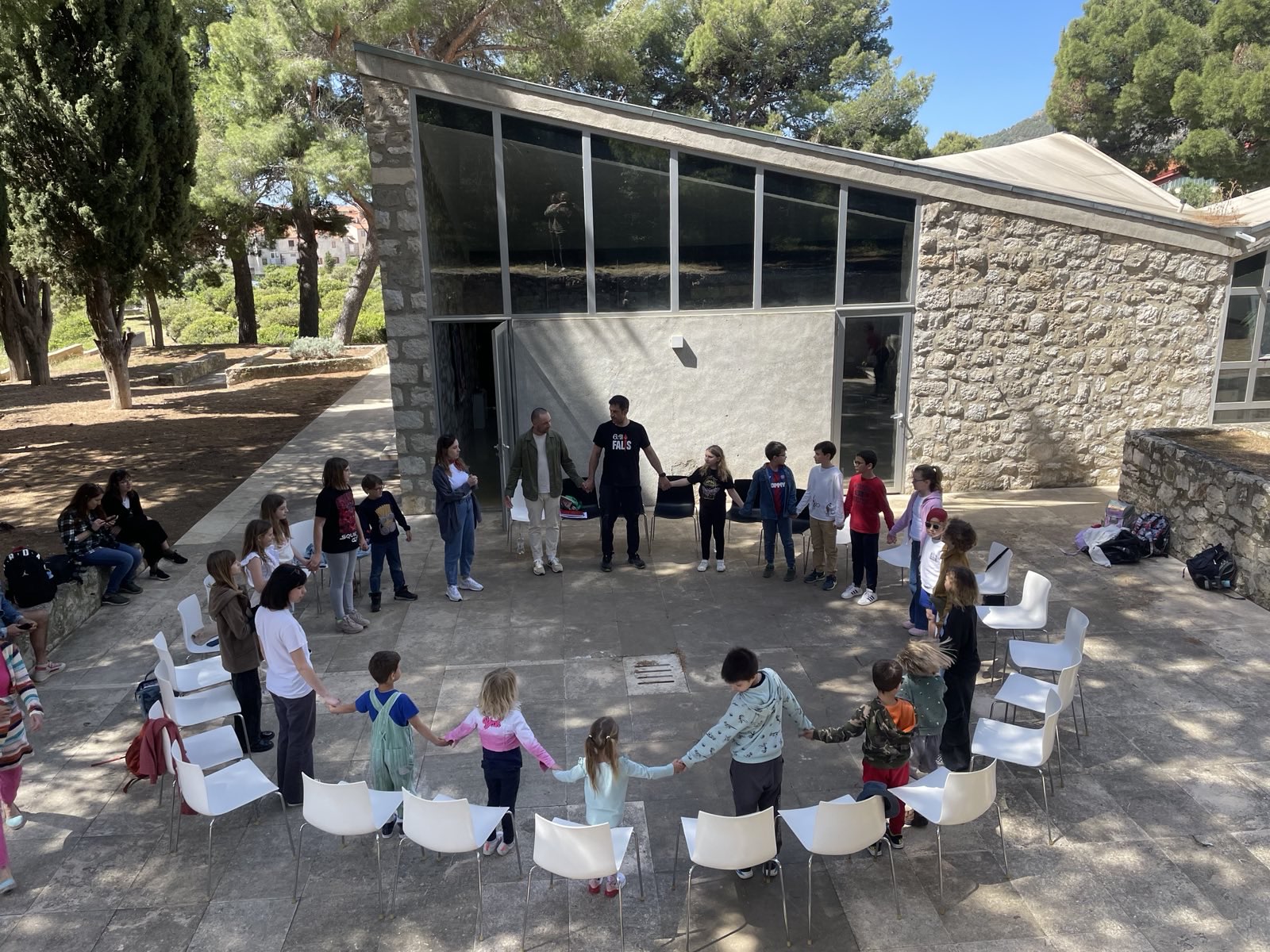
And if this was not enough, a kids’ party ensured that the guests and locals could enjoy an uplifting afternoon by the sea with their kids.
The film program was also not neglected. The screening of Jasmila Žbanić’s film “Blum: Masters of Their Own Destiny” (“Blum – Gospodari svoje budućnosti”) again brought together guests and locals from the area. The film tells the story of how Emerik Blum, a Bosnian Jewish businessman, philanthropist and politician, transformed a small studio into a major company Energoinvest, using a unique and democratic management style. In this model, every employee had a voice in the decisions that affected the business. And Angelina Radaković offered “War-Torn Ecologies; Resistant Worlds”, introducing seven Middle East films.8 Angelina is a Yugoslav-born curator and cultural worker based in London, UK. Her practice is grounded in collaboration and prioritizes relational, socially engaged and accessible approaches. Her current research explores movements and moments of transnational cultural solidarity, focusing on the Non-Aligned Movement and its relevance today.
Music was also in abundance. It started with the Music Jam Session by Ronjalution that continued deep into the night. The final get-together, “Karaoke with the Cause”, was held in Pirkotova Lula, an alternative cafe on the main popular square in the town, owned by Mare and Paulo. Their space was the Hang Quarters throughout the whole of the event. What was envisioned as an informal occasion for enthusiasts turned into a performance of highly talented people from all over the world, including singing and poetry. Even guest workers from Nepal passing by decided to join and sing, which was probably their first step in integration in the region.
Komiža in October
All that was happening at ISSA this October was organized by not more than 20 people and additional volunteers. A Care group and participants provided information on boat and bus schedules, possibilities to share rides to and from Komiža, the island of Vis, Split and who knows where, finding affordable accommodation, offering maps for the events, important telephone numbers on the island, location of lost and found items, cleaning of the public spaces the group used, logistics for the work on the hill. They also distributed leftover meals to those who could use it, exchanged recipes, photographs and videos, organized shelter for the island cats, described local events on the island (for example ‘Sabatina’), provided information on where to get local products, offered information about the songs played and shared reading lists and much more….
This year’s experience showed, once again, that being, working, eating and imagining together can pave the way to living commune forms in a real time. ISSA offered a mosaic of possibilities and alternatives to old, tired institutions. Although sociologically speaking, we are dealing here with a small sample, that fact does not seriously challenge the conclusion. After all, the numbers are not the rule. Engaging together in different practices and reimagining, implementing, challenging and improving the older ones in an autonomous manner is a refreshing and creative way to let some light in. And that must be the rule.
As Kristin Ross, Adania Shibli, and many others agreed, pleasure, joy and humour are crucial for the survival of any autonomous community, whether small or large. Ross also stated in one of her books, dealing with the Paris Commune: “What went on in the reunions and the clubs verged on a quasi-Brechtian merging of pedagogy and entertainment…. The nightly evening meetings had, in effect, replaced the theatres…. Communards gave the central role to aesthetics and pleasure in social transformation…. The bustle and mess and y of collective building, the palpable sense of a world, social transformation and experimentation….”. And in another, about the new initiatives in France: “….Eruption of spontaneous, joyful laughter, so distant in Lefebvre’s view, from the contemporary city dweller’s ironic and weary smile…. ( Michail Bakhtin on medieval peasants laughter as “the expression of a new and free critical historical consciousness…”)…”
These elements are mortar for constructing a strong structure inside any group and its surroundings. They are also unavoidable in alternative education. ISSA’s motto has stayed the same: “We are building the school, the school is building us”. And the word ‘pomalo’ is still the main one, not referring to any kind of laziness but rather to persistent patience.
The lessons to be learned from this year’s event are numerous, as they should be with any reputable organization. For example, too many of the too-good programs are maybe more than what a small group can achieve without succumbing to total exhaustion. Self-organized groups offer a lot of potential. More engagement with the locals has to be realised. However, what was confirmed is that building commune forms together as a way of life is deeply appreciated by all who attended this year’s ISSA gathering.
The Home at the Hill
During the last twelve months, a lot of work has been done on the hill, including the installation of 8 solar panels, fog/rain collectors, circular water system, showers and a compost toilet, an outdoor kitchen, a terrace in front of the stone house/library (work in progress), a small theatre and many more dry stone walls. For those actively involved in construction work, it looks increasingly like home. Occasional visitors from various countries are feeling the same. The sheer pleasure of working together on the hill gave a new dimension to the sense of belonging. And ‘home’ is primarily the place where one feels a sense of belonging. It is not reducible to the place of birth or the first learned language and culture which, anyway, we obtain by chance and not by wish. Emotion can closely follow rational choice of a space which somebody perceives as good to dwell on. One doesn’t have to be a Dalmatian islander to feel at home on the island of Vis. The great poet Tin Ujević wrote about Komiža, almost a hundred years ago:
“I found myself in the deep heart of the deep sea. It was the fairies themselves who brought me here, on an unknown date when the globe fell asleep and no one could see me. I am in the empire of adventures, in the miracle of events. I finally experienced what the world has forgotten. And I became the owner of a mystery.“
ISSA is offering adventure, experience, exploration and events in abundance. There is a feeling of a common cause and solidarity that results in friendship. Members and visitors do share a lot. On the other hand, native islanders, like mountain communities or other dwellers of the isolated settlements, can be ‘closed’, conservative and suspicious of newcomers. Challenges on Vis are, for now, not pronounced. Only time will tell if the real friendship between the locals and those entering their space will develop on a deeper level.
So, what do these newcomers, who feel at home on the island in the middle of Adriatic, agree they are all ‘against’? They are against xenophobia, nationalism, fascism, colonialism, the arms race, authoritarian regimes, disrespect of international law, consumerism, obedience, education for the perpetual circulus vitiosus of our alienated world, disrespect for nature…. On the other hand, they are passionate advocates of autonomy as a political and social strategy, as well as a way of life that values freedom, internationalism, creativity, experimentation, solidarity, mutual aid, friendship, tolerance and critical thinking. They are rebels against the silence, fighting for a society in which simple decency and human dignity will be the rule, not the exception. Does it all look far-fetched, overly romantic and naïve in the dark ocean and in-between mighty rivers of today’s world? Maybe, but only maybe, and depending on the perspective of the observer. Is it necessary? Yes, without any doubt.
Mira Oklobdzija is an independent researcher, activist, sociologist and anthropologist. She was a researcher on the team of experts working for the office of the Prosecutor at the UN ICTY. Her books include Revolution between Freedom and Dictatorship and, with Slobodan Drakulic and Claudio Venza, Urban Guerilla in Italy, as well as a number of articles dealing with human rights, political violence, war crimes, reconciliation, migrations, human nature, xenophobia, marginal groups, and outsiders. She lives in The Hague, Netherlands.
Photos usage: You are welcome to use photographs for ISSA and others’ use and promotional purposes under the licence CC 4.0 BY-NC-SA. If you’ll use them for commercial and/or editorial purposes, please consult with me first (please email: metodb@yahoo.com). When using the images, please credit them to me: Metod Blejec, @metodb (for the use on X), @metodb (for the use on Instagram), Metod Bljc (for the use on Facebook). This is, unless otherwise credited in the picture file name.
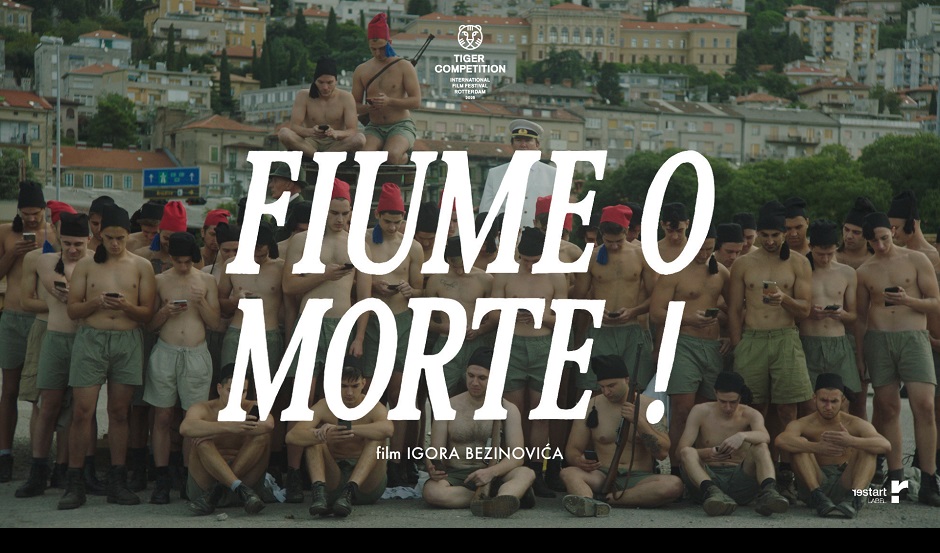
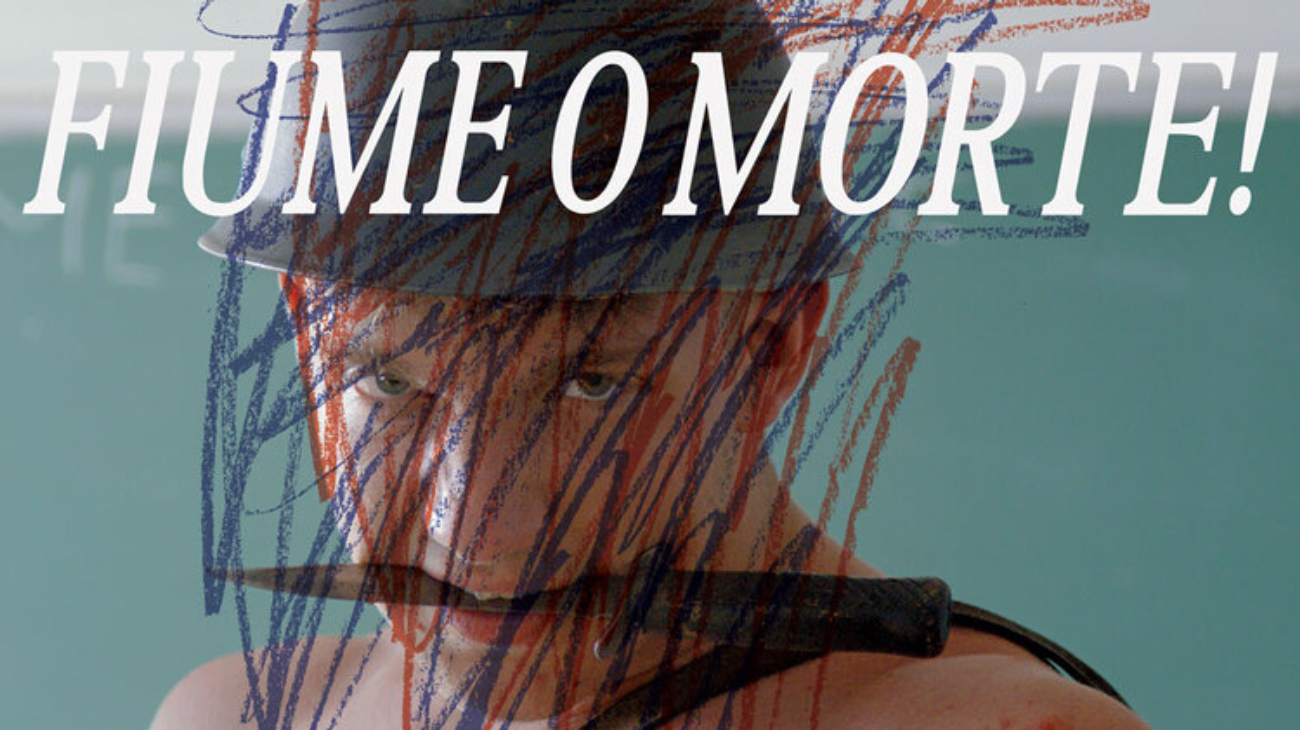
Projekcija najgledanijeg hrvatskog dokumentarca ikada stiže u Komižu. Zajedno s njime stiže i redatelj Igor Bezinović koji će nam se pridružiti u razgovoru poslije projekcije.
Kino Mediteran Komiža, 12.8.2025 (utorak) u 21:00
Novi film jednog od najosebujnijih hrvatskih filmskih autora, Riječanina Igora Bezinovića, dokumentarno-igrani film Fiume o morte!, originalan je film kakav dosad nije snimljen u domaćoj kinematografiji, a koji kroz izrazito inovativan stil progovara o fascinantnoj i široj javnosti nepoznatoj povijesnoj epizodi Rijeke.
U ovom stilski raskošnom, kreativnom i zaigranom filmu građani grada Rijeke, kojeg Talijani zovu Fiume, prepričavaju, rekonstruiraju i reinterpretiraju bizarnu priču o 16-mjesečnoj okupaciji njihovog grada 1919. godine od strane talijanskog pjesnika, dandyja i propovjednika rata Gabrielea D’Annunzija.
Poezija, kokain, dinamit, puške, nogomet, avioni, pokućstvo koje leti kroz prozor, koncerti, zatvori, sunčanje, tisuće vojnika, milijuni metaka, beskonačni govori i čak jedan čudnovati kljunaš… Sve su to dijelovi jedne od najbizarnijih okupacija u povijesti čovječanstva. Građani Rijeke ovim su filmom, nakon 100 godina, dobili priliku preuzeti povijest u svoje ruke i kroz film ispričati svoju verziju događaja.
Svoju svjetsku premijeru Fiume o morte! imao je na Međunarodnom filmskom festivalu u Rotterdamu, gdje je osvojio dvije nagrade – glavnu nagradu Tiger natjecanja te nagradu kritičara FIPRESCI što ga čini prvim hrvatskim filmom koji se nagrađen u prestižnoj natjecateljskoj konkurenciji tog festivala. Film Fiume o morte! osvojio je šest Zlatnih arena na Pula Film Festivalu.
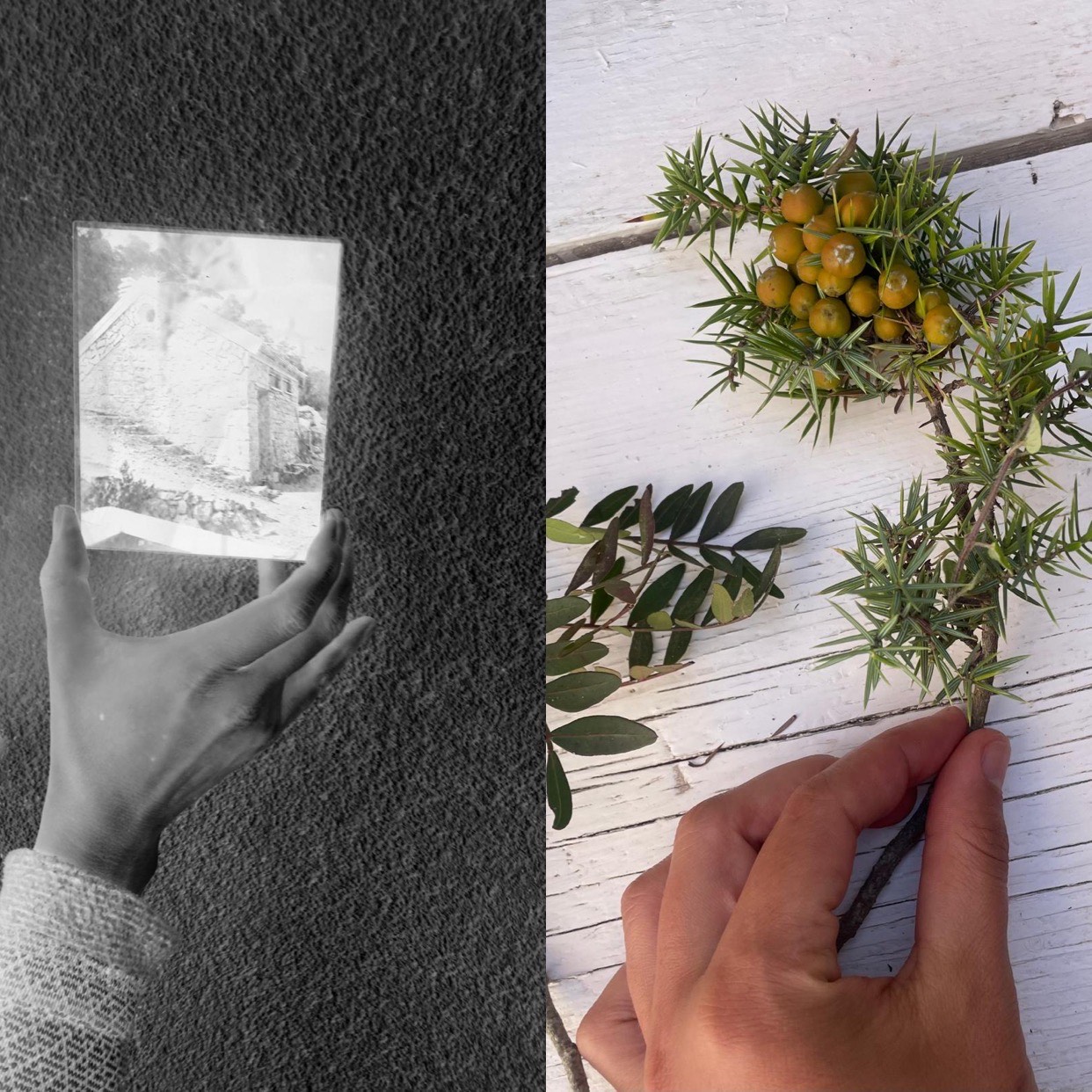
Collaboration with Dora Đurkesac/Isabelle Goossens/Nadja Tobias from Plantango collective and Elvis Halilović from ONDU: Exploring the island through chromatography, wet plate photography, sunprint techniques, botanical toning, and herbal developers
This hands-on workshop invites participants to explore traditional artistic techniques:
19.-21. Sep 2025
SLOW PHOTOGRAPHY WORKSHOP
Collaboration with Dora Đurkesac/Isabelle Goossens/Nadja Tobias from Plantango collective and Elvis Halilović from ONDU: Exploring the island through chromatography, wet plate photography, sunprint techniques, botanical toning, and herbal developers
This hands-on workshop invites participants to explore traditional artistic techniques:
Glass plate photography using large format cameras and pinhole photography with Elvis Halilović, founder of ONDU, a family of creators making photographic instruments from premium natural materials at their workshop on the sunny side of the Alps, Slovenia.
Making miniprints with a camera obscura and herbal developer
Cyanotype printing, a sun-powered process rooted in the 19th century
Botanical toning, following the techniques of Anette Golaz, using plants sourced directly from the island
Soil and plant-based chromatography, a visual technique that separates and reveals the hidden pigments and chemical compounds in natural materials, creating unique patterns that reflect the biochemical makeup of plants and earth
These 3-day workshops invite you to reconnect with nature through hands-on exploration of historical photographic techniques, using local plants and soils as both subjects and materials. By engaging directly with the landscape of Vis, participants develop a deeper awareness of the natural world’s subtle systems and resilience. In a time of climate change, ecological collapse, migration, and conflict, this practice becomes an act of resistance—reclaiming slowness, care, and attention as tools for healing and support. Through creative experimentation, we learn from nature and honor it not just as inspiration, but as a companion in restoring balance.
Working with paper, glass, and fabric as mediums, you’ll create photographic collages by combining traditional techniques with natural materials. Using plants and soil collected from the island, you’ll experiment with toning and chromatography and produce unique visuals.
The workshop pays tribute to Anna Atkins, considered the first female photographer, who pioneered cyanotype for botanical illustration. Participants will also learn about the rich local flora — its medicinal uses, cultural significance, and its role in everyday life on Vis.
All materials are provided; no prior experience with alternative photography is required, and the workshop is open to all ages, starting from 5 years old. The children between 5 and 10 will be under close adult supervision.
Max 20 participants. To register for the workshop, please contact us at this email:
issa@issa-school.org
More details about location, schedule, and further guidelines will follow up soon.
We invite you to create, experiment, and explore with us. Pomalo.
Workshop Structure
19./20.09.
Introduction & Inspiration
Overview of the cyanotype process and its historical context, highlighting the work of Anna Atkins
Introduction to the workshop goals, working with pinhole cameras and large-format cameras, materials (paper, fabric, and glass), and techniques for developing film with plant-based developers, chromatography, and toning cyanotypes with botanicals.
Preparing the Materials
Step-by-step guidance on mixing and handling chromatography chemicals
Preparing the soil and plants
Creating Chromatography
Hands-on session creating chromatography with plant elements and soil
Preparing the Materials
Step-by-step guidance on mixing and handling cyanotype chemicals
Preparing surfaces for printing: treating paper and fabric
Creating Cyanotypes
Hands-on session creating cyanotypes with plant elements and glass plate photographs
Exposure using sunlight and arranging compositions
Experimentation with different materials and collage techniques
Botanical Toning
Presentation of botanical toning and the work of Anette Golaz
Introduction to plant-based toning using local flora
Guided experimentation with toning techniques to transform your prints
21.09.
Pinhole and large format ONDU cameras’ photography and developing film with plant-based developers
Presentation of Elvis Halilović and ONDU handcrafted cameras
Introduction and work with a pinhole and a large format camera
Hands-on session developing photographic paper/glass plates with plant-based developers
Review & Reflection
Group review of participants’ work with discussion on technique, results, and variations
Tips on how to adapt the process at home using accessible materials
Closing
Final reflections on learning and creative outcomes
Suggestions for continuing cyanotype and alternative photography practices independently
19. – 21. rujna 2025.
Radionica spore fotografije
Suradnja s Dorom Đurkesac, Isabelle Goossens i Nadjom Tobias iz kolektiva Plantango te Elvisom Halilovićem iz ONDU-a: Istraživanje otoka kroz kromatografiju, fotografiju na mokrim pločama, cijanotipiju, biljno toniranje i biljne razvijače
Ova praktična radionica poziva sudionike da istraže tradicionalne umjetničke tehnike:
Fotografija na staklenim pločama uz korištenje kamere velikog formata i fotografije s camerom obscurom (prethodnica fotoaparata) s Elvisom Halilovićem, osnivačem ONDU-a, obitelji stvaratelja koji u svojoj radionici na sunčanoj strani Alpa u Sloveniji izrađuju fotografske instrumente od vrhunskih prirodnih materijala
Izrada minijaturnih otisaka s camerom obscurom i razvijanje u biljnom razvijaču
Cijanotipija, fotografski proces koji koristi sunčevu svijetlost, razvijen u 19. stoljeću
Biljno toniranje prema tehnikama Anette Golaz koristeći biljke prikupljene izravno na otoku
Kromatografija temeljena na tlu i biljkama, vizualna tehnika koja razdvaja i otkriva skrivene pigmente i kemijske spojeve u prirodnim materijalima, stvarajući jedinstvene uzorke koji odražavaju biokemijski sastav biljaka i tla
Ova trodnevna radionica poziva vas na ponovno povezivanje s prirodom kroz praktično istraživanje povijesnih fotografskih tehnika koristeći lokalne biljke i tlo kao temu i materijal. Kroz izravan kontakt s krajolikom Visa, sudionici razvijaju dublju svijest o suptilnim sustavima i otpornosti prirodnog svijeta. U vremenu klimatskih promjena, ekološkog kolapsa, migracija i sukoba, ova praksa postaje čin otpora – povratak usporenosti, njege i pažnje kao alata za iscjeljenje i podršku. Kroz kreativno eksperimentiranje učimo od prirode i poštujemo je ne samo kao inspiraciju, već i kao suputnicu u obnavljanju ravnoteže.
Radom na papiru, staklu i tkanini kao medijima, stvarat ćete fotografske kolaže kombinirajući tradicionalne tehnike s prirodnim materijalima. Koristeći biljke i tlo prikupljene na otoku, eksperimentirat ćete s toniranjem i kromatografijom te stvarati jedinstvene vizualne zapise.
Radionica odaje počast Anni Atkins, prvoj fotografkinji koja je pionirski koristila cijanotipiju za botaničke ilustracije. Sudionici će također upoznati bogatu lokalnu floru – njezina ljekovita svojstva, kulturni značaj i ulogu u svakodnevnom životu na Visu.
Svi su materijali osigurani; prethodno iskustvo s alternativnom fotografijom nije potrebno, a radionica je otvorena za sve uzraste, s najmanje 5 godina. Djeca između 5 i 10 godina moraju biti pod stalnim nadzorom odraslih.
Maksimalno 20 sudionika. Za prijavu na radionicu molimo kontaktirajte nas putem ove e-mail adrese: issa@issa-school.org
Detalji o lokaciji, rasporedu i daljnje upute slijede uskoro.
Pozivamo vas da stvarate, eksperimentirate i istražujete s nama. Pomalo.
Struktura radionice
19./20. rujna
Uvod i inspiracija
Pregled procesa cijanotipije i njegova povijesnog konteksta, s naglaskom na rad Anne Atkins
Uvod u ciljeve radionice, rad s camerom obscurom i kamerom velikog formata, upoznavanje s materijalima (papir, tkanina, staklo) i tehnikama razvijanja filmova biljnim razvijačima, kromatografijom i toniranjem cijanotipije pomoću biljaka
Priprema materijala
Detaljne upute za miješanje i rukovanje kemikalijama za kromatografiju
Priprema tla i biljaka
Izrada kromatografije
Praktična radionica izrade kromatografije s biljnim elementima i zemljom
Priprema materijala za cijanotipiju
Upute za miješanje i rukovanje kemikalijama za cijanotipski otisak
Obrada papira i tkanine za ispis
Izrada cijanotipija
Praktična radionica izrade cijanotipija s biljnim elementima i fotografijama na staklenim pločama
Ekspozicija na suncu i aranžiranje kompozicija
Eksperimentiranje s različitim materijalima i tehnikama kolažiranja
Biljno toniranje
Prezentacija biljnog toniranja i rada Anette Golaz
Uvod u toniranje biljnom osnovom koristeći lokalnu floru
Vođena radionica toniranja i transformacije cijanotipskih otisaka
21. rujna
Fotografija s cameron obscurom i ONDU kamerama velikog formata + razvijanje pomoću biljnih razvijača
Predstavljanje Elvisa Halilovića i ručno rađenih kamera ONDU
Uvod u rad s camerom obscurom i kamerom velikog formata
Praktična radionica razvijanja fotografskog papira i staklenih mokrih ploča pomoću biljnih razvijača
Pregled i refleksija
Grupna analiza radova sudionika s raspravom o tehnikama, rezultatima i varijacijama
Savjeti za nastavak rada kod kuće s dostupnim materijalima
Zatvaranje
Završna razmišljanja o naučenom i kreativnim ishodima
Prijedlozi za nastavak cijanotipije i alternativnih fotografskih praksi
On the 7th and 8th of June the Island School of Social Autonomy (ISSA) lands to Vienna with RADIO FRIDA
In a world ravaged by endless war, climate collapse and the rise of fascism, what if the radio is not a relic but a tool of revolution for the future? At the site of the former ‘Reichssender Wien’, a workshop with ISSA (the Island School of Social Autonomy) creates Radio Frida– a name that recalls the German word for peace, ‘Frieden’, as well as the title of a famous post-Yugoslav pop song. ISSA is an international school on the Croatian island of Vis that tries out and cultivates forms of exchanging knowledge and autonomy as political strategy. This is its first guest visit to Vienna. The two-day workshop entails both practical and theoretical experiments with pirate radio technology. Setting out from previous emancipatory uses of radio, we revive the practices of urban pirate radio, rethink and implement them. It is time to use the radio waves for a global wave of resistance – for a world that rests on justice, equality and love.
With representatives of ISSA – Island School for Social Autonomy (Bitnik Media Group, Gordan Savičić, Selena Savić, Saša Savanović, Marko Pogačar, Srećko Horvat and others)
Program started with a day-long work action uphill and ended with a movie screening (with activities in Komiža as well!).
CC 4.0 by ISSA School / BONK productions
Day Two
Featured three unique workshops, several lectures and discussions, and even an alternative tour through Komiža, all leading up to the main performance dedicated to Palestine.
CC 4.0 by ISSA School / BONK productions
Day Three
Day three took us back uphill, combining more work actions, presenting Naan-aligned cooking, and building and presenting the fog-collection project.
CC 4.0 by ISSA School / BONK productions
Day four
Day four was a whirlwind of guests, lectures, readings, and workshops.
CC 4.0 by ISSA School / BONK productions
Day five
Day five, the final program-packed day, was filled with activities, creative sessions, and engaging discussions, and it all wrapped up with a party.
CC 4.0 by ISSA School / BONK productions
Day six
Day six, the pomalo day, was indeed pomalo — relaxed and slow-paced.
Island School of Social Autonomy on Vis, Year Second
Article by Mira Oklobdžija
Classical schools are spaces with heavy, often locked, doors. When the school day ends, crowds of pupils eagerly rush towards the exit in the belief that the real life happens ‘somewhere out’. Their tired teachers follow, also believing that life is elsewhere. Only alternative schools can bring together people who are truly sad when the day’s work is complete.
Attending ISSA school with a child. CC 4.0 by ISSA school / BONK production
Still today, the philosophical concept of praxis remainsan important worldview and political orientation rooted in the most positive elements that Marxism could offer. In the 1960s, the Korčula summer school was a meeting point of the people who wanted to keep this concept alive. In the 1980s gatherings in Komiža followed, but with a significant detour in the direction of the concrete actions shaped in a specific time and space – the final years of Yugoslavia. Today, Island School of Social Autonomy (ISSA) goes a step further, pursuing other goals, without forgetting the legacies from the past, that have also grown on these two Adriatic islands.
ARHIV JUGOSLAVIJE
An island is a tract of land surrounded by water, but not large enough to be called a continent. The boundaries of this geographical definition are short and clear. Metaphors make it more complicated, associated with isolation and remoteness from the common and known, a sense of adventure, the excitement in challenging the familiar and embracing the unfamiliar, a conscious urge to educate and enlighten in some experimental way. In many famous examples from literature, islands are crossroads and bridges between what there is and what can be imagined and created instead. Islands are places of opportunities and openings to the new beginnings.
CC 4.0 by ISSA School / BONK productions
ISSA is an attempt at crossing borders and bringing together personal, geographical and metaphorical islands, creating archipelagos. In the words of its founders: “We’re starting a School on an island in the middle of the Adriatic Sea because we believe that the future lies in the archipelagos of autonomy… Our school is not merely a space for contemplation but a place of action. Its role is to explore and address the significant challenges ahead through the process of teaching and learning, while also practising social autonomy in the present moment… our aim is to cultivate ways of living, learning, and teaching together. We seek to explore autonomy as a political strategy and a model for social organization. Additionally, we adopt a hands-on approach to design, experimentation, and the implementation of processes, goods, and services. We collaboratively engage in discussions, physical labour, and the development of joint projects and programs, working with individuals and collectives. Throughout our endeavours, we remain guided by our motto: ‘We build the school, the school builds us’.” [1]
Inaugural event, CC 4.0 by ISSA School / BONK productions
In the year following the inaugural event held in September 2023 [2], a number of activities have been accomplished, often offered to the local community. At the end of October 2023, Vanda Franičević gave a lecture in a local gallery entitled “Art colony on the offshore islands of the Vis archipelago and the revitalization of the ‘Đuro Tiljak’ collection”. The focus was an important artistic colony, formed in the summer of 1930 on the islands of Vis and Svetac, which can be interpreted as joint work between artists and workers, mostly fishermen, of the island. In another attempt of connecting ‘the real island’ and the school on the hill, Srećko Horvat organised a philosophy workshop for school-aged children aimed at introducing participants to the history of philosophy through the hypothetical story of Plato on the island of Vis. At the Kalanko children’s festival in May 2024 film and acting workshops were aimed to reveal unknown stories about Komiža from the perspective of her children, and at the same time guiding them into the secrets of acting and filmmaking. The children had the opportunity to learn and imagine together with film director Zvonimir Jurić and actors Goran Bogdan and Jovana Stojiljković. Parallel to this, some of the ISSA members took part in the event in Mokrin and Kikinda, organised by the sisterly initiative MOKRIN HOUSE OF IDEAS in Serbia[3]. There they joined avant-garde music group Laibach from Slovenia, film director Želimir Žilnik and local activists in several film screenings, concerts and debates on new models of working and living in the world of today. Various international contacts are growing.
Goran Bogdan and Jovana with kids in circleDry Stone Walling, CC 4.0 by Mira Oklobdžija
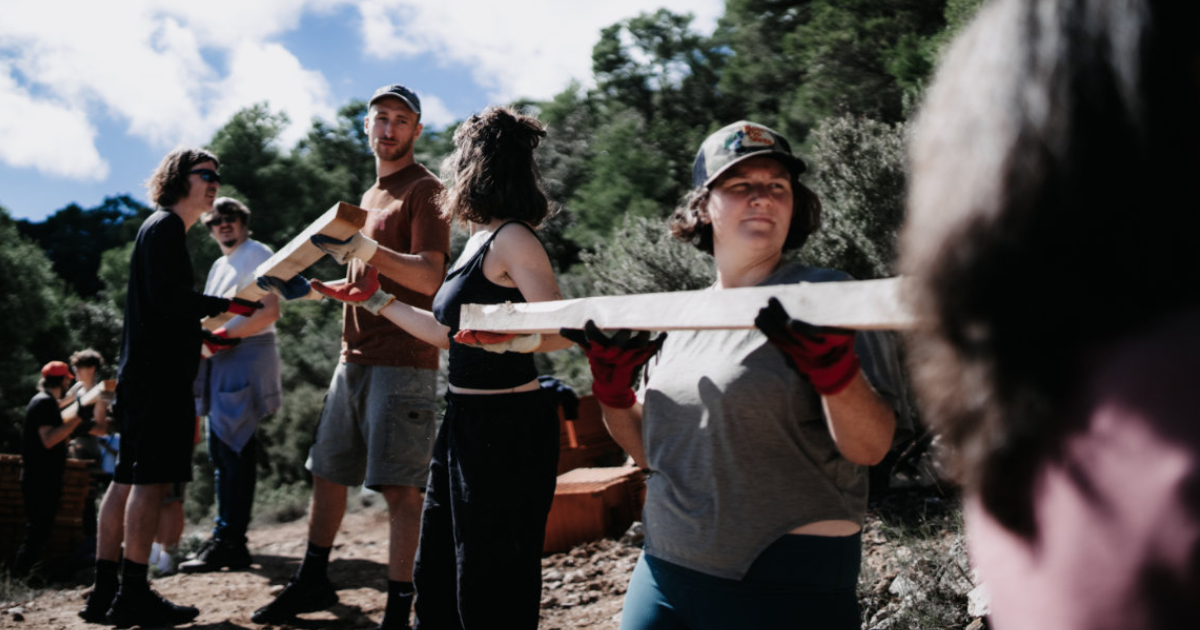
Back on the island of Vis, construction of the stone house on the hill continued whenever possible, often with a help of local and international volunteers and guests. Goran Bogdan, one of the co-founders, said in an interview: “There is something Sisyphean, because it is on a hill and you have to go through the forest uphill for more than a kilometre, there is something crazy and futile about it, there is also something healing about it, because the whole world is in some aggression and fascism for some purpose and that something has to be for something, we push ourselves, the world pushes us, and that kind of futility is interesting.” One guest, Conner Habib, describes ISSA as a space and inspiration for a new way of learning together by encounter, by meeting others, by paying attention to new impulses, through teachers that radiate wisdom through being[4]. Involving environmental and more physically demanding activities, a workshop on dry stone walling and sustainable development on the island of Vis took place in spring 2024. It was organised in collaboration with the NGOs “Pomalo” and “Domino”. The workshop on restoring old dry-stone walls was led by civil engineer Igor Mataić who tirelessly reconstructs and builds new dry-stone walls on the island, and Tonči Darlić, a Komiža-based constructor specialized in stonework. Guided by them, some 40 artists, producers, and curators from 10 countries helped building a new dry-stone wall in front of the School. And that is far from all. Other initiatives are in progress. One, together with ZMAG (Green network of activist groups), is focused on combining traditional methods of collecting water (like old Mediterranean systems of “gustirna” which use natural terrain and bedrock to direct and preserve rainwater) with new techniques like cloud/fog collectors to ensure regular supply of water for the ISSA school and gardens. Another one is establishing a community-based seed bank on Vis to preserve the diversity of native seeds and crops for future generations while also experimenting with cultivation of new cultures adaptable to the ongoing climate crisis. ISSA garden project plans to restore some 3 hectares of desolate land and revive the part of the island which until now has been largely abandoned. It is to become the first Mediterranean forest garden. And with time, the School will have well- equipped library, archive, publishing activities, pirate radio, amphitheatre, residencies, and annual symposium. The development of all these plans will demand years of devoted work, but the willingness and energy of participants is in abundant.
CC 4.0 by ISSA School / BONK productions
This year’s second gathering under the title “To live together” (from 4-9 October), lasted longer and welcomed some 200 participants, compared to the last year’s 100, from more than 20 countries, and included more actions, workshops and discussions than the first one[5]. It is fair to say that this social experiment is gaining momentum, firmly focused on the concepts of cooperation, compassion, solidarity, forms of self-government and learning about it all and many other topics. One of the permanent goals remains expanding the network of connections with similar initiatives, wherever they are located. Up on the hill concrete working actions took place, starting with carrying a load of material up the hill along a narrow footpath, proceeding with the continuation of building more dry-stone walls, familiarizing participants with circular water system as convivial tool, working on the solar panels, preparing wood for construction of the space in front of the ISSA small stone headquarters. Cooking, cleaning and assisting in various tasks was performed in the spirit of autonomous and relaxed cooperation, with a lot of sweat, laughter and background music. It is worth mentioning that majority of the workers on the site were people not particularly used to heavy manual work but, with a concrete goal in mind, they adapted willingly and fast. And the general feeling was not one of the exclusive group of like-minded people separated from the outside world and its reality. As James Bridle, one of the participants, stated: “When we go to the mountain we are not going ‘out’, we are going ‘in’”.
James Bridle talk, CC 4.0 by ISSA School / BONK productions
The backbone of any progressive form of education is building capacity to learn, encouraging people to experiment, cherishing autonomy and personal choice, stimulating critical thinking and the aversion to conformism. Pupils of any age should mistrust imposed authorities, know when and how to take a chance or a risk, perform direct action when needed, have courage, look around with their own eyes. Following this guidelines, ISSA organised a number of well-attended activities which took place in three locations at Komiža[6]. Workshops included “I have my voice”, “Memory of the World”, “IssaFix -print, repair, reuse”, “Your own private pirate radio station”, “Naan-aligned cooking”, “For a global mutiny against an empire of negligence”, “Esperanto – the subversive utopia of talking together”. Lectures, discussions and conversations covered subjects as “Re-existing together? Towards relational, experimental onto-epistemic mutuality”, “Making friends with chaos”, “60th anniversary of Praxis”, on-line conversation with Silvia Federici, “Computer says no! Practices of Tracking, Control, and Resistance” and “Islands of the future”. Two reading sessions focused on subjects such as the difference between ‘house’ and ‘home’, identity, patriotism, belonging and elusiveness of the concept of ‘nation’. Other sisterly initiatives presented their experiences (‘Cho Delat’, ‘Forest University’, ‘Aventura’). Screenings of the films “The man who could not remain silent” and “The tempest of Neptun” as well as the performance “Speedrun to nowhere land” took place in the memorial centre. This year again, Srećko Horvat led a tour through the revolutionary history of Vis and the event “Together with the people of Palestine” was attended in equal numbers by the School’s participants and locals. On the closing night, the rain didn’t interrupt “Dancing together” and the day after, the ones who could stay for a few more days headed back for the house on the hill to continue with work. The plans for future actions are well under way.
60th anniversary of Praxis, CC 4.0 by ISSA School / BONK productions
There are two islands in the Adriatic Sea that cradle an island on the waters within them. Košljun, on the Island of Krk, is still a home to the Franciscan friars in St Mary’s Monastery. The Isle of St Mary in the middle of Veliko jezero (the Big Lake) on the island of Mljet hosted Benedictines for a long time but is now a secular space. Geographically speaking, Vis doesn’t have a lake that could have an island on it, but ISSA is becoming its metaphorical one that doesn’t hesitate to reach out to its surrounding. In his recent essay “The ‘Dream Valley’ Conspiracy”[7] Srećko Horvat, speaking about islands and archipelagos, states: “… we are not ashamed to be called naive, romantic, or even crazy for trying to bring to life the utopian desire of our future islands… What we are learning once again is how to breathe together – how, through cooperation and the pure joy of community building, we can create something bigger than ourselves, both in terms of the individuals involved and temporality behind and in front of us… we are opening our sails towards archipelagos of permanent autonomous zones. These zones already exist in many places of the world, as a consequence of conspiracy, a deliberate, mutual, somatic, and gratuitous gift to each other. We are not the first, and hopefully not the last.”
CC 4.0 by ISSA School / BONK productions
Albert Camus has said „The struggle itself towards the hights is enough to fill a man’s heart. One must imagine Sisyphus happy”. Some aspect of the struggle towards the hights is always a sort of rebellion. The one that this School is embracing is, as Goran Bogdan put it after the projection of the film “The man who could not remain silent”, rebellion against the silence. Silence is the modus vivendi of the ones who can imagine only unhappy Sisyphus and do nothing to help him. And something can and has to be done, at least ‘pomalo’.
The island of Vis, and Komiža in particular, has served not only as a backdrop, but also as an inspiration and protagonist in legendary films such as Roko and Cicibela (1978) and Childhood and the Sea (1974). In May 2024, Komiža and her children once again played the leading role in the film and acting workshop at the Kalanko Children’s Festival from 2 to 5 May. The aim was to provide the participants with basic knowledge and skills in narration, acting and creating a common story in front of the camera.
The film and acting workshop reveals unknown stories about Komiža from the perspective of her children, while at the same time introducing them to the secrets of acting and film craft. The children had the opportunity to learn and fantasise with award-winning actors Goran Bogdan and Jovana Stojiljković, both of whom have extensive experience in film, theatre and working with children.