Tag: co-founders

  • Gael García Bernal on Survival

    Gael García Bernal on Survival

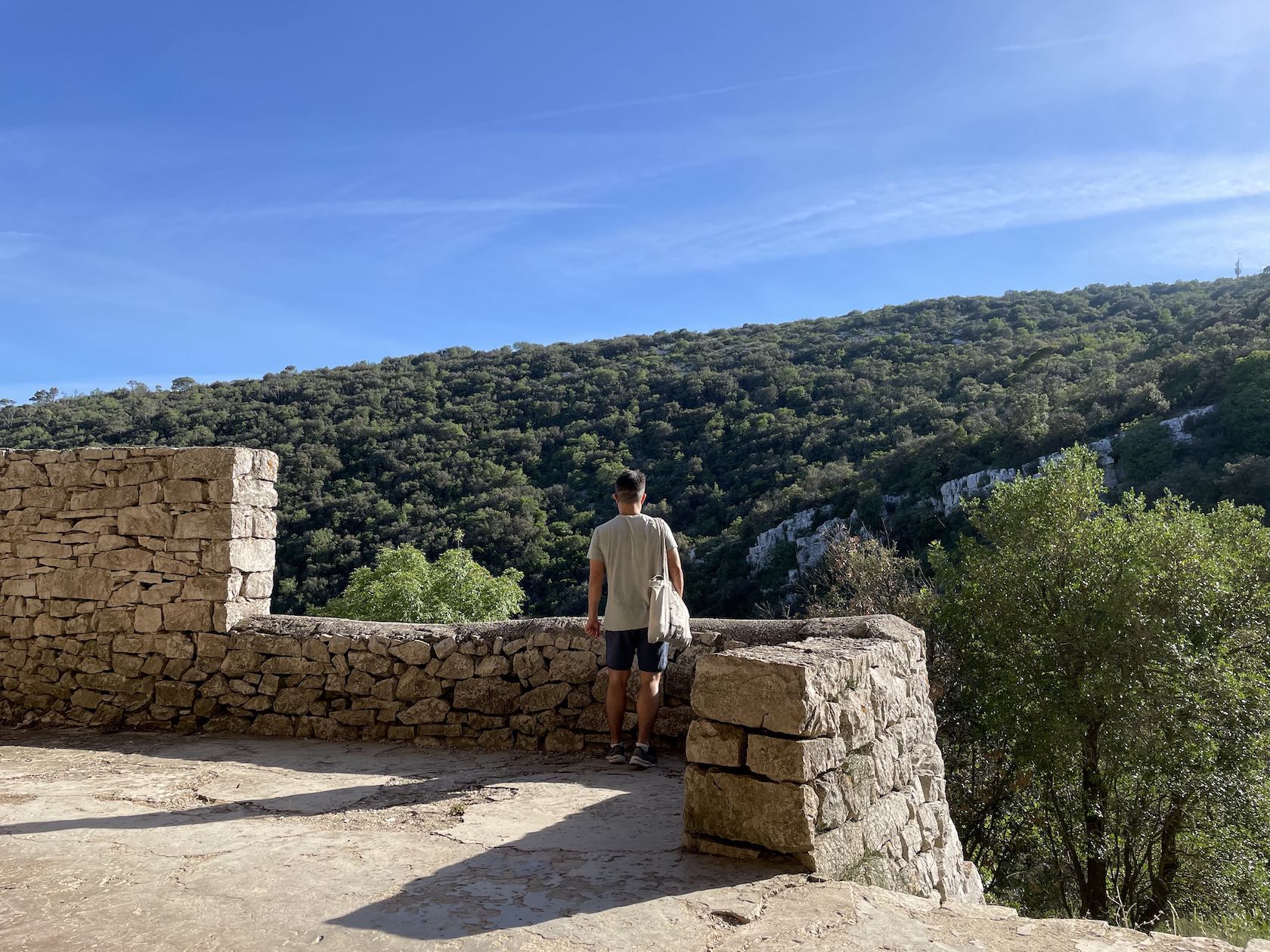
    Gael García Bernal at Tito’s cave on island Vis in June 2022

    I’ve spent a long time thinking about the first sentence of this column. The beginning has changed as it has been affected by moods and sorrows, which together with age, make this beginning an arborescent chaos. I have to let go to recognize what I want to say. I must find that mythological prickly pear cactus in backlight to draw the different figures that appear on its branches. I had to let go in order to understand and thus constantly create myself. Eventually, I had to accept that there are many beginnings.

    This chaos will only make sense once the consequences of patience float back to the earth from which they emerged. Choosing one of them at random: the birth of my first son, Lázaro. Happiness emerged from this in the form of a light that illuminated the path ahead. In addition to feeling the sense of fear that those of us who have children experience, I embraced an idealistic attitude, throwing myself into the act of being a supportive partner and caring for my offspring. I wanted to make the friendliest, most expansive team of all: my family. Luckily — perhaps because I had prepared myself for whatever fate wanted to throw at me — the idealistic side trumped the fearful one.

    This position is not free of fear at all. Idealism, on the verge of turning 30, appeared as an echo of how powerful youth is, and how even more powerful it is to know how wrong we are in some of our conclusions throughout life. But that beginning, that commandment that makes us see the future as the only possible reality, encouraged me to keep asking the everlasting question, framed and contextualized in the present: will the earth be habitable for my son when he grows up?

    This question — which more and more people seem to be asking — was followed by other related queries: how drastic is climate change? What can I do, individually and collectively, to reverse the damage we have caused? Who is responsible for the majority of pollution? Are other people asking these same questions? Does anyone have the answers?

    Many questions emerged over long hours of conversation and pondering while my son slept in that very short time when babies sleep most of the day, rather than at night.

    Little is understood about true exhaustion and sleep deprivation until you become a parent. You’re completely exhausted, yet you know that this is the best possible form of insomnia. It is also a luck, a privilege, a way of communicating acidly with the cosmos to say that one is alive. And on those errands, while going to buy the milk that was not needed because nobody drinks cow’s milk in my house, memories came to me of my own moments of courage in life.

    “I haven’t drunk Coca Cola since I was 15,” I thought aloud once, as I looked at a picture of a cow on a container of milk. I had made the decision when visiting a town in the Huichol mountains between Nayarit and Jalisco, in Mexico, where there was no drinking water, but there were many bottles of Coca Cola for sale. It was a minor rebellious act — almost insignificant — but it required a lot of discipline. I didn’t mention it to anyone, so as not to have to explain the political reasoning and find myself with a condescending response about the null consequences of my personal boycott. Even back then, I noticed the thin smiles of people who were tired of fighting.

    I would read the financial section in the newspaper, to see if the shares of that soft drink company had gone down — any drop in stock price brought me the same satisfaction that one feels when seeing a hated sports soundly beaten. I remembered this as I stared down at the picture of a cow that seemed to laugh at me and follow my gaze, like the Mona Lisa.

    I was tired and happy in my first months of fatherhood. All the songs and drawings had a new meaning. All the questions took flight and stayed with me all night, like a tropical storm. Sometimes, I managed to get up to write down these concerns, to see if the calm of the next day could be accompanied by some lucidity that would help me find an answer. But with every answer came 10 more questions. Perhaps that is why the term that began in the Western cultural hemisphere as “ecology” has now become “the climate crisis.”

    Every question faces the great glass wall that Gunther Anders described as the supraliminal: in short, it is that which is real but is so big to understand that it sails over words like the atomic bomb or like a great tsunami. It would get to the point where all I wanted was to hear an expert give some optimistic clue about the future. But that clue never came, much less from the experts, who are acting as lookouts for the tragic horizon.

    And so, the nights and days passed, merging with each other. Could it be that becoming a parent naturally generates all this questioning? Could it be that now we’re not only wondering about the future of our children, but about the future of humanity as a whole? I feel that, today, we’re asking ourselves terrible questions in response to a call that connects us to the Earth and to everything we perceive.

    In a column written in 2014, Eliane Brum gave a name to the modern anguish and anxiety that we human beings feel, and which I am sure are suffered by all living beings as well, now and everywhere. This “21st-century disease” is the alarm that summons us to pay attention to the destruction of all the things that keep us alive. It’s a silent scream — it’s an art to be able to hear it.

    Taking care of the Earth and trying to understand the climate crisis has changed my life. It has given me direction, combined with that beautiful and liberating feeling that comes from being a father, when you finally realize that there is someone more important than yourself. Of course, there are many ways to grow up and realize this — I don’t mean to say that being a parent is the only way to achieve such a leap of maturity. But that’s how it happened to me. Or at least, that was a trigger for these concerns that I already held, but which I had never faced.

    I close with a phrase that the Hungarian writer Sándor Márai has a character say in his novel, The Last Encounter: “In the end, at the end of everything, one answers all the questions with the facts of one’s life. The questions that the world has asked him over and over again are these: ‘Who are you? What do you really want? What have you really known? What have you been faithful or unfaithful to? With what and with whom have you shared yourself, with courage and cowardice?’ These are the questions. One responds however one can, either by telling the truth or lying: that doesn’t matter. What is certain is that, in the end, one responds with his whole life.”

    This essay was originally published by El Pais on 8th of May 2023 here.
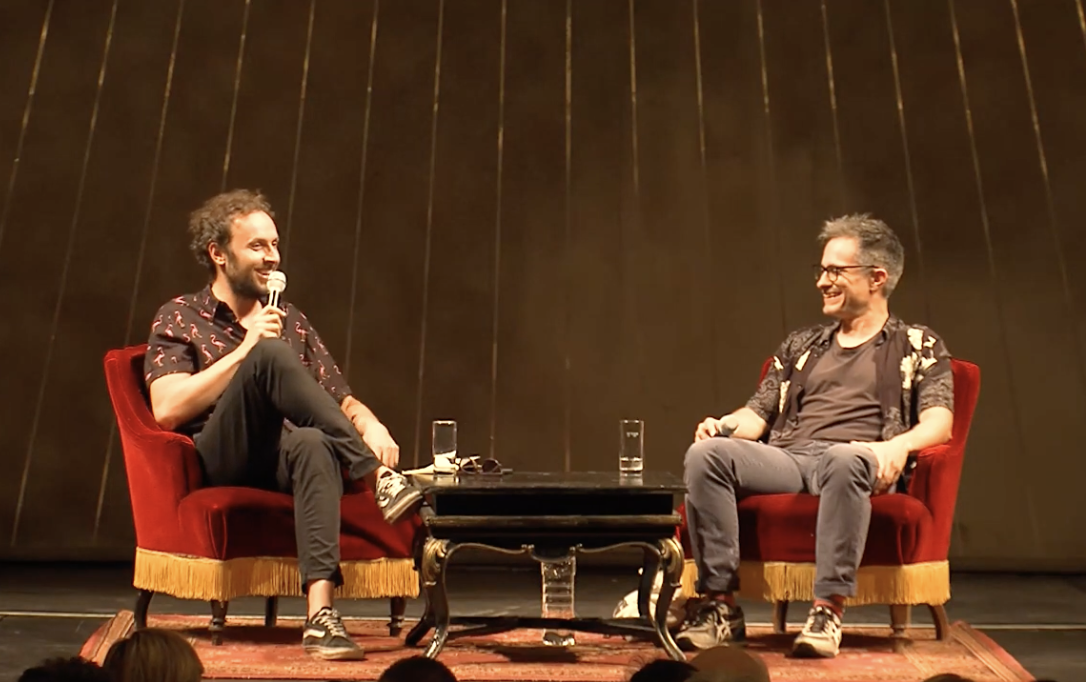
  • Gael García Bernal & Srećko Horvat

    Gael García Bernal & Srećko Horvat

    After a visit to ISSA, Gael and Srećko talked at the Croatian National Theater as part of the Philosophical Theatre.

  • Conversation with Hito Steyerl

    Conversation with Hito Steyerl

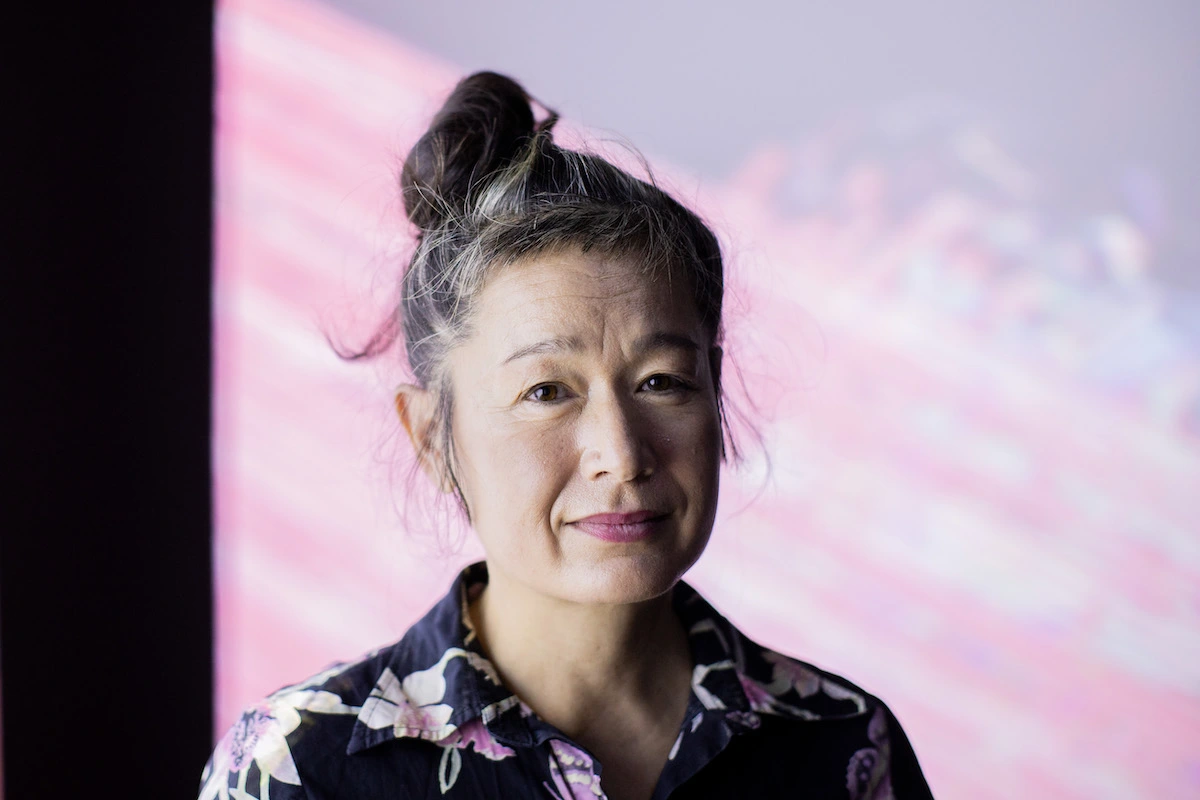
    Hito Steyerl is a German filmmaker, moving image artist and innovator whose practice engages with the evolving role of technology in the systems of globalisation, surveillance and migration.
    Steyerl is one of the co-founders of ISSA and currently teaches New Media Art at the Berlin University of the Arts.
    The following conversation was conducted by David Adler for “The Internationalist” published by the Progressive International in December 2022.

    Hito Steyerl

    David: I would love to know what’s occupying you right now, Hito. What are you working on? What is motivating you?

    Hito: In recent years, I have tried to explore technology and the politics associated with it. I’m still trying to think about the consequences of Blockchain technologies, artificial intelligence, and platform capitalism — plus their interactions with one another.

    David: How would you say that the relationship between technology and politics is evolving?

    Hito: Obviously technology has been extremely relevant to politics because, over the past (at least) two decades, digital platforms have privatised public discourse to a large degree, with known consequences.

    Since public discourse and data have become private property owned by monopolist corporations, they have polarised public opinion by monetizing toxicity. Moreover, this has pushed aside other attempts to use technology for communication such as earlier P2P networks. In recent months, I have been exploring these themes and extending them to account for how Web3 is colonising digital space in similar ways to the earlier Web2.

    David: Can you explain a bit more about this concept of colonising digital space? What do we mean when we refer to that process? Is it what you had said before about the privatisation of public infrastructures, or is it something more geographically specific?

    Hito: Both aspects are true. There is a sort of colonisation or privatisation or appropriation of virtual space, by different blockchain standards which, for now, are still competing with one another.

    But also there are geopolitical aspects to it. My collaborators and I have been exploring, for example, the geopolitics of Bitcoin mining or crypto mining in Eastern Europe and also in Central Asia. To say it very simply, political conflict drives destabilisation — including in relation to electrical power and the grid. Cryptocolonialism feeds on extracting power and thus it is a subsection of larger debates around extractivism.

    These circumstances are then being exploited to facilitate large-scale crypto mining, which is not only harmful to the environment but is also happening on the back of political conflict and destabilisation. This concerns, for example, the border region between Serbia and Kosovo, or between Georgia and Abkhazia. This also concerns several regions of Kazakhstan, for example.

    David: So, in some ways, you could say that these technologies are new, but the geographies of extraction are very familiar?

    Hito: Yes, the power source that’s being tapped or exploited is conflict. Cryptocolonialism is a term that had been coined before blockchain and the invention of Bitcoin, by Michael Herzfeld. But it is more relevant now than ever, also to account for other non-standard, indirect situations of colonisation.

    David: The concept of ‘crypto colonialism’ captures both the novelty of the ‘crypto’ side and the more classic dynamics of colonialism it follows. What is, in your view, genuinely novel about this concept of crypto colonialism?

    Hito: Cryptoeconomies feed on power imbalances, they exploit precarity and the momentum of instability. Even though they proclaim decentralisation they converge towards centralisation in terms of decision-making power and assets. This also comes with a neocolonial philosophical front called Effective Altruism, a fork of utilitarianism that purports to optimize doing ‘good’ using whack math. But what is it? It’s a financialised calculation of the most effective way to do philanthropy. The donor is imagined as an ultra-rich person from the West, and the imagined beneficiary is mostly a poor person from the Global South who is supposed to get, for example, a bednet to protect them from malaria without asking for it. The whole relationship is imagined as a data-driven depoliticised top-down consumer choice for oligarchs — this is the crypto version of internationalism.

    There was this excellent suggestion by my colleague Paul Feigelfeld on Mastodon liberating the wasted energy stuck in NFT´s (Non-Fungible Tokens) and meme coins to solve the energy crisis. Until recently one needed a lot of power/electricity to mint these crypto ‘assets’. I would love to perform an act of negative entropy and magically transfer the power stuck in NFT´s and shitcoins to Kobane or Qamishlo or Kharkiv or Kyiv, where autocrats are waging war on infrastructure, heating, electricity etc. If you look at these power/energy relations, questions of data and the internet, platform extractivism is a subcategory of questions of extractivism proper — fossil extractivism, extraction of labour and attention — those are linked with questions of power, emissions, energy wars and related issues like the climate crisis.

    David: A case study suggests that technology mirrors politics, rather than driving it. We’ve had centuries of colonialism, extraction, of outsourcing to vulnerable populations; today, these new technologies come in with that promise of liberation but end up reproducing those same dynamics.

    Is that inevitable? Is there a way in which these technologies are bound to reproduce existing power dynamics and asymmetries? Was there radical promise to the internet at one point? Or was that always an empty promise because it was always bound to be co-opted and captured by these existing dynamics? Or should we still try to grapple with a more egalitarian digital proletarian vision? What does the internationalist vision look like?

    Hito: The internationalist vision is simple: to expropriate corporations and whales and establish data platforms as cooperative structures. Period. It is the opposite of Effective Altruism and other whack optimization cults. Internationalism today means wholesale deoptimisation.

    If you look at these power and energy relations, questions of data and the internet, platform extractivism is a subcategory of questions of extractivism proper – fossil extractivism, extraction of labour and attention – those are linked with questions of power, emissions, energy wars and related issues like the climate crisis.

    David: Speaking about the Web3 project in particular: Would you say that it is already going to fall victim to the same dynamics of privatisation and colonial capture and extraction? Do you still see this project of Web3 as having some progressive potential?

    Hito: Web3 is marketed as a decentralised technology. And the advantage of decentralised technology is that there is no central power, and no one is able to pull the strings. Well, what’s happened is that within Web3, powers have been centralised to a substantial degree already. The collapse of the FTX exchange is just one example.

    Another example: power in crypto ventures is measured in possession of tokens. You get some say in the governance of these projects if you are a shareholder and own coins or other shares in a certain project. If you own something, then you’re able to participate in the discourse; you’re not able to participate in decision-making just by the fact of your existence. It’s an almost pre-revolutionary concept, harking back to before the French Revolution. And ownership in cryptocurrencies is more and more shrinking to fewer big owners, who actually control the prices. These are all factors that make it difficult to think of Web3 as something that is going to evolve in a progressive manner. Of course, nothing is ever excluded and there have been some collateral benefits.

    David: Give us an example of how we might understand the concept of collateral benefits.

    Hito: A small example is redistributing benefits in NFTs. There has been, for decades, this idea of some kind of resale clause for artists which could be implemented via smart contracts. This is very specialised. This is why I say collateral benefits because it’s not really essential. Discussions around DAOs (Decentralized Autonomous Organisations) and governance protocols were a collateral benefit but drowned out by megawatts of casino propaganda, North Korean raids on gaming platforms, creepy Madonna avatars and the overall gamification of austerity.

    David: Do you have a sense of where it’s all heading? Do you have a sense of whether these speculative projects are just going to flame out and we’ll be left with more basic infrastructural questions?

    Hito: Right now we are in the middle of a major crash. Crypto winter will be probably over at some point, with some semblance of so-called regulation installed but in the meantime there will be further centralisation. What’s more interesting to me is in relation to an internationalist left. Can one overcome the tendencies of identitarian fragmentation that keeps people from being in solidarity with one another? How can this be done? I mainly speak of technology so I am dealing with these questions from this angle. But if you want to abstract them, and ask yourself, what are going to be the important questions in the next five years, both on- and offline? It’s going to be the questions of power structures, fair remuneration, economic inequality and other forms of oppression, the lack of a public sphere and self-governance. It’s these same issues, whether we see them from a tech angle or not.

    David: There’s certainly one school of thought that is very concerned about polarisation. That school suggests that polarisation is a vector of profit-making by certain corporations – the engagement, the clicks, the rage. But there’s another school of thought that says polarisation is the essence of politics – and when we have low degrees of polarisation, that’s the era of fake consensus. That second school argues we must rip the band-aid off to see a more honest portrait of our society and its composition. What is class conflict but polarisation realised? Which school of thought are you?

    Hito: Sadly, the second school fails to recognize that today’s polarisation is not ‘progressive’ but just mining intensity for profit. Polarisation is happening in terms of an ethnic, nationalist, or otherwise identity-related horizontal axis. This does not help create solidarity. This type of polarisation is the one that drives clickbait and is profitable for big platforms. Other forms of polarisation that would account for economic inequality on a vertical axe are less profitable.

    Basically, this type of polarisation happens when people are forced or nudged by technology to identify as products and as very specialised products, with a lot of different attributes so they can be targeted by targeted advertisements, and so on.

    David: So in the end, we are still the product. We’re becoming easier and easier to sell to in this new technological landscape.

    Hito: Well, let’s just say that our precise location on the shelves of the shop is defined every day in a much more granular way.

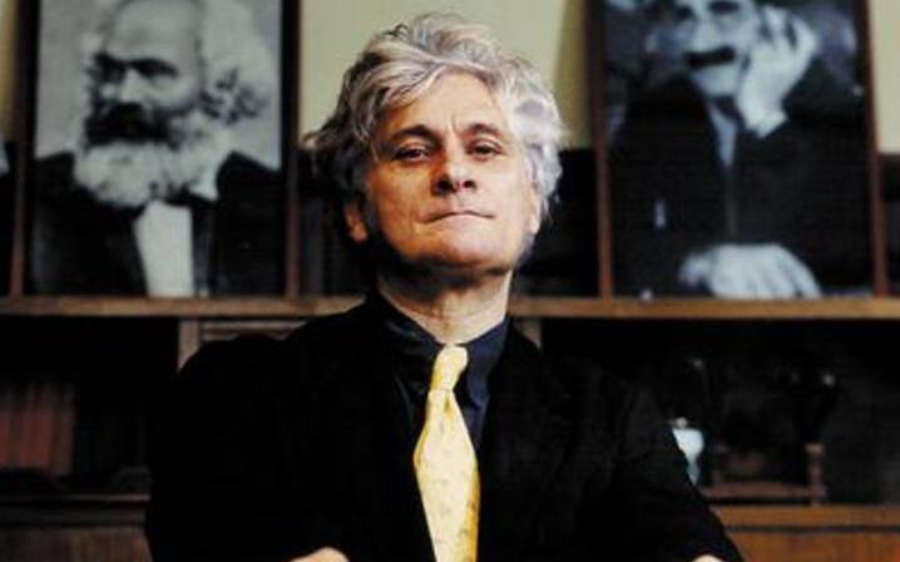
  • Bifo: Why Start a School, Today?

    Bifo: Why Start a School, Today?

    The Whys:

    • Why start a school, today?
    • What is the context in which we are going to open a school?
    • What is the goal of the school?
    • And finally: what should be studied in a school that is starting today?

    Let’s have a look at the landscape before replying to these questions.

    The Earth is rebelling against the World. The Earth is taking revenge against the history of men. No way out. No way back.

    Fire, water, air – the basic elements unchained against the animal that has dissipated resources, polluted the atmosphere the oceans and the soil.

    This is provoking a cascade of catastrophic effects at every level of social life: huge migrations are expected from Pakistan – a country of 224 million people, as the floods have destroyed crops and cattle, and one third of the population have lost their home.

    Nationalist aggressiveness is therefore destined to grow everywhere. Wars are going to multiply.

    Climate change is out of control. The plans for reducing the effects of global warming are totally ineffective: the green economy is useless as long that the economic growth stays an unquestionable myth. Because of the war, energy is extremely expensive, so the economic growth needs more carbon, and nuclear plants everywhere. And time is running out out out.

    Let’s be frank: the social civilisation that the Westerners have experienced in the last Century is doomed.

    The final apocalypse of the human civilisation has started already, and no political action will reverse the irreversible.

    This is the context in which we are starting the school of ISSA (Island School for Social Autonomy).

    What’s our goal? We are not willing to prepare the cadres for the government of the future. There will be no government in the society of the future, because human will is and will be more and more unable to understand and govern the complexity of Chaos unchained.

    We’ll create a school amid spreading Chaos, and our goal will be to listen to the rhythm of chaos, to interpret the meaning of chaotic flows, to strike a friendly deal with Chaos, and to thrive in Chaos.

    We are planning a school for the communities that are preparing the Great Desertion. Communities of people who desert war, spreading everywhere. Communities of people who desert work consumption and political participation.

    Those people will be survivors of the ongoing Apocalypse.

    All around we’ll witness spreading dementia, aggressive psychoses, mass murders, despair.

    We’ll try to create islands of survival, islands of happy life and human understanding.

    What do we need for this? What should we study for making possible a new age of autonomous life, during the long-lasting process of dismantling of the social civilisation?

    We’ll need knowledge for survival, for therapy, and for meditation.

    We’ll need to study the history of the past, particularly of the last Century.

    We’ll try to answer the question: how could the humankind destroy and dissipate the legacy of social solidarity, and of science?

    But our school will be first a school of imagination.

    Imagination will be the core of our teaching: we must imagine human life in non-human environments.

    We’ll study the history of the Twentieth Century from the point of view of the present.

    We’ll dedicate a special attention to environmental studies.

    And finally, we’ll research together about technologies for practical survival in apocalyptic environments: agronomy, nutritional sciences, medicine, pharmacology, and housing.

    The first task that we are facing nowadays, and we’ll develop during the coming year is the creation of an Autonomous Survival Syllabus.

    We are now going to elaborate a consistent program of activities and of contents.