Category: Journal

  • Reconstruction of the Old Stone House

    Reconstruction of the Old Stone House

    The Material Arrives

    With a clear vision in our minds, we spent the last summer carrying bags of sand and cement uphill, but that was not the end of our own little “Fitzcarraldo” episode. As the spring of 2023 approached, we continued with our “happy Sisyphus” work: the construction material for the restoration of the old stone house arrived, and we rolled up our sleeves.

    Up and Down and Back Again

    The construction site is remote and far from the road – even further if your load is heavy, but much shorter in good company. Some of us came from far away to help, some local friends volunteered; and some were hired due to the amount of the material that had to be transported manually. We were a colorful group: from local winemakers to writers, actors, musicians, and the youngest in our merry bunch – a baby – all part of the project. Nowadays, it seems like you must be a bit crazy to start rebuilding in a place like this. We had our doubts, but in the end, it made more sense with the peace and quiet this place offers.

    Another Day…

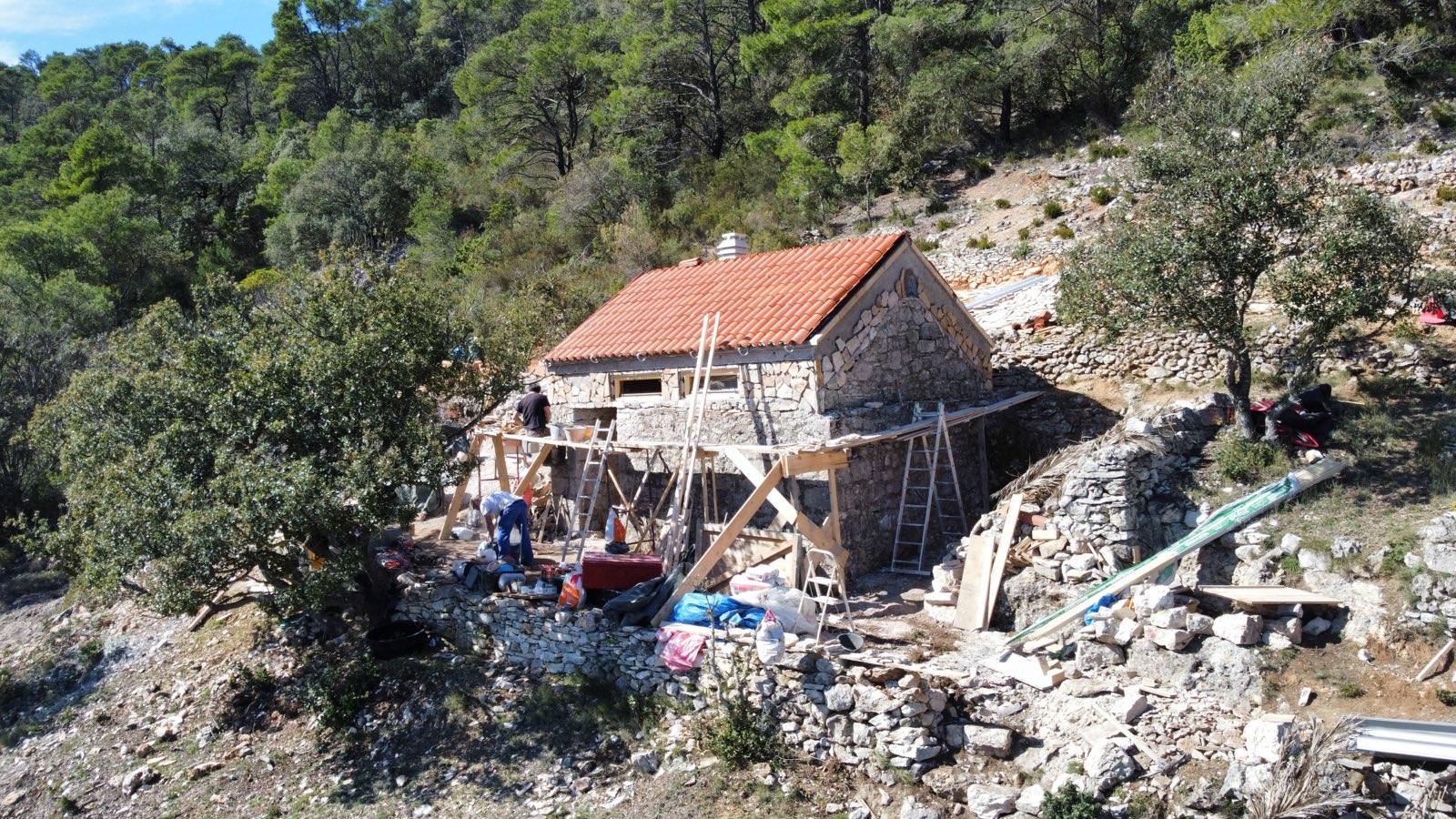
    The roof is almost finished, and charming details are on the way, like these round boat windows. The builders we found by recommendation were amazing and professional. Building on an island is never simple; however, that didn’t impact their work or demeanor, and they taught us a lot as well. We loved their unconventional, well-thought-out worldviews.

    No Friend But the Mountains

    The school finally has a roof. Now we can start working on bookshelves and all the next steps. Everyone is excited about the progress; it was (and still is a bit) hard to believe the roof is finally done and the little house will soon be able to house our books.

    Almost There

    The interior work is underway, with stonework and painting to follow. This was a big first phase, or was it the second, maybe even third. Difficult to say. A lot has been done in this time. Parallel to the school website, the physical site is being built. If you look at it now, or from one point of view, it was all just a lot of fun. But it wasn’t easy. Even more so when we look at the dry-stone walls around us here on Vis. This at least helped us understand it better.

    Painting

    While previous participants had moved on to other places, others came to continue the work. They left, but their hearts and minds stayed with ISSA. Those who had been following the updates from afar, now came to put a few strawberries on the cake by painting the doors and windows green, as it is customary on this island. While on the Greek islands it’s common to paint in light blue, here it’s white and green. Since we are surrounded by evergreen Mediterranean forest, the choice was natural.

    For more check out our projects page and consider helping out however you can, we guarantee good work, fun and new friendships. See also how we started.


    We are building the school – the school is building us.
  • Happy Sisyphus

    Happy Sisyphus

    The struggle itself […] is enough to fill a man’s heart. One must imagine Sisyphus happy.”

    ― Albert Camus

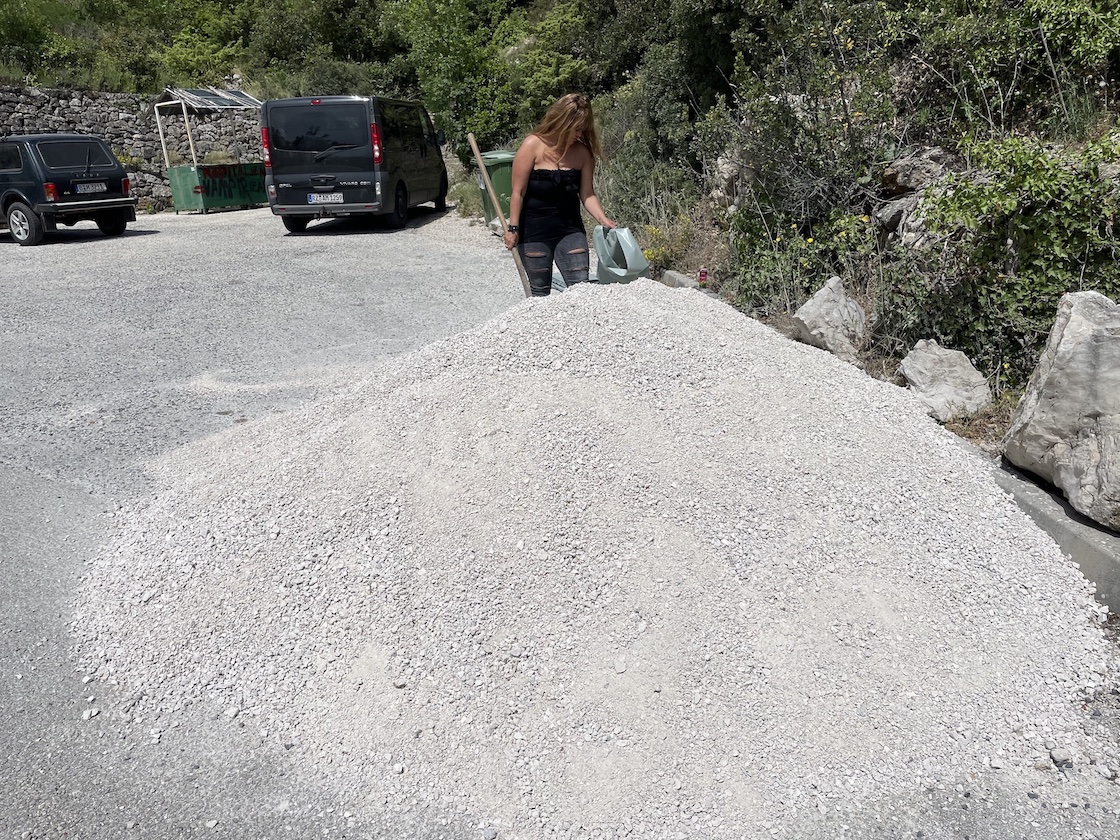
    We never quite fully understood Camus’ famous quote from the end of his philosophical essay The Myth of Sisyphus until we began this crazy radna akcija (“work action”) that lasted from May to September 2022. It took us around three months, plenty of work actions during the summer, and numerous friends and volunteers to carry around 8 tonnes of material uphill – around 400 bags of sand and 45 bags of cement – that will be used for the renovation of the old stone house.

    During these three months, at least 50 people helped in one way or another, while 10–15 were the most persistent and sometimes even fanatical (not wanting to stop working). One of them spent the entire day carrying sand bags uphill (each bag weighing approximately 20-30 kg). Some did less, but in the end, what counts is the collective spirit and determination to continue even when the whole mission looked like a never-ending Mediterranean version of “Fitzcarraldo.”

    Take a look at our gallery and our tired and happy faces:

  • ISSA Garden: Hibiscus and Cypress

    ISSA Garden: Hibiscus and Cypress

    A big part of our school is our ISSA Garden. The garden, like the rest of our plans for the school, awaits our learning, experimenting, and exploring, while dealing with the climate crisis – lack of rain, prolonged droughts, and stronger storms. This is a long-term project, but also one that by its nature never stops, and we are eager to start learning about all the various cultures and seedlings, the different methods (from permaculture to forest gardens), and the different ways of water collection and redistribution.

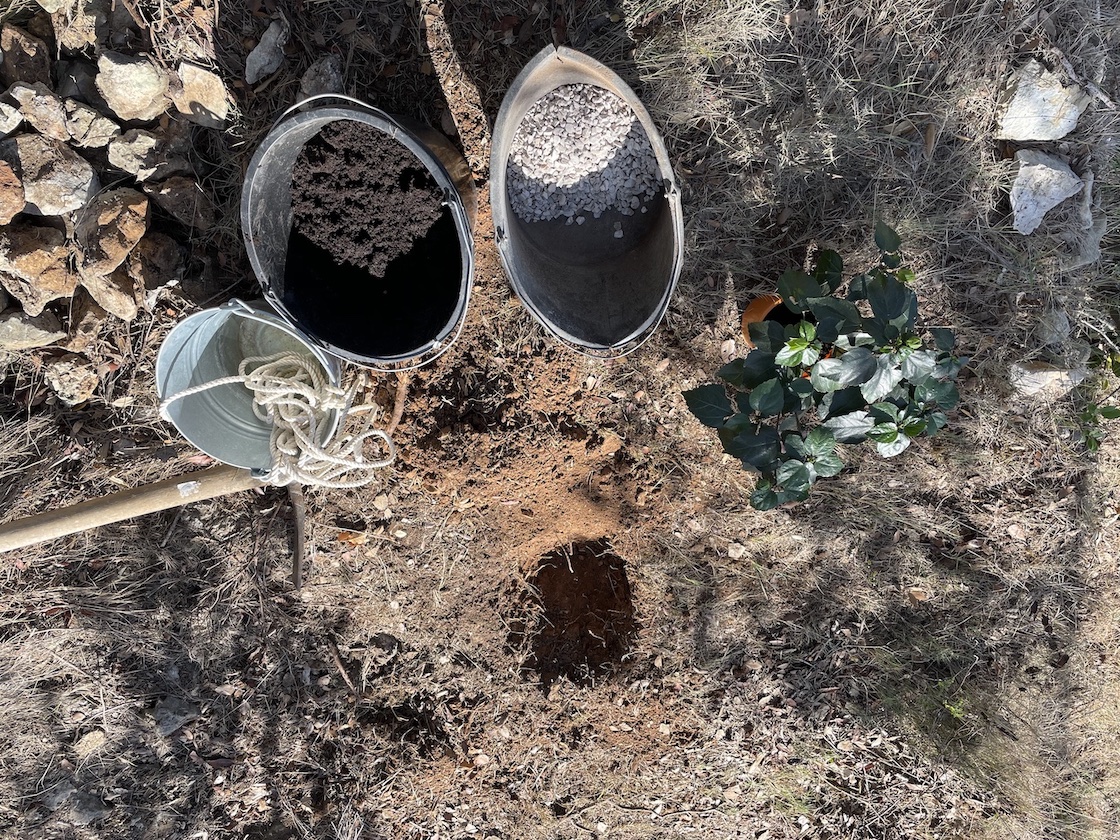
    So instead of drowning in post-apocalyptic melancholy and climate anxiety, we decided not to lose another autumn without planting anything around the school, on its terraces.

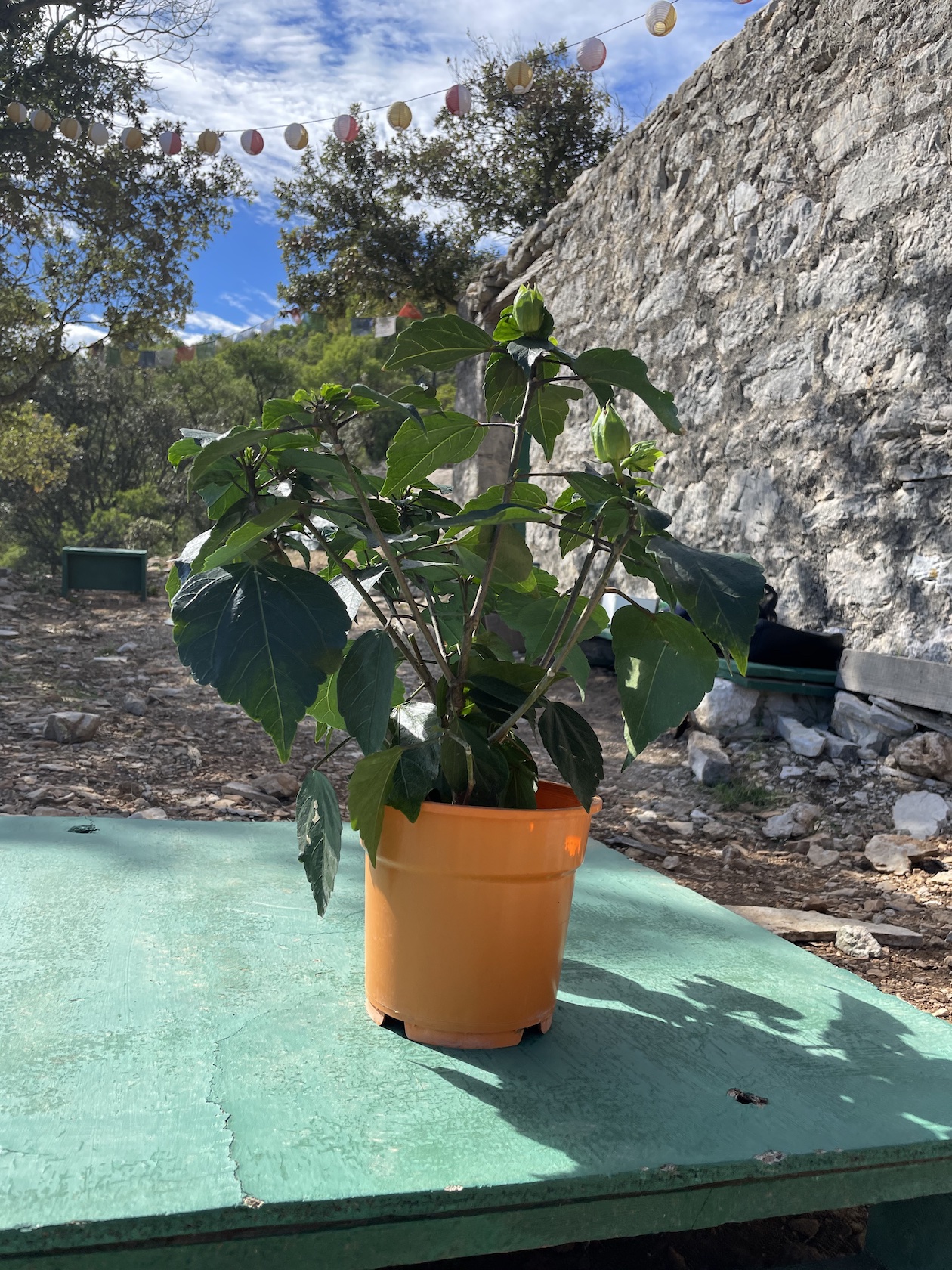
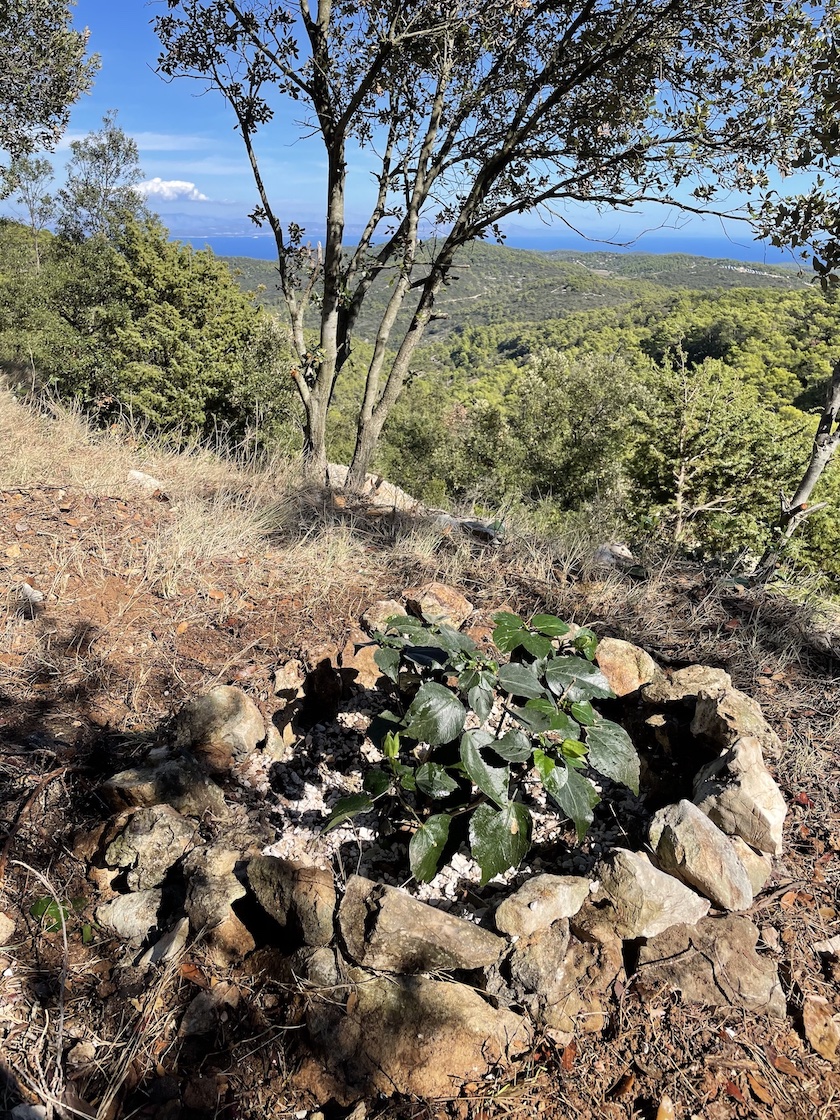
    We started with a hibiscus seedling, a plant that arrived in Europe during the 16th century, although the ancestors of modern hibiscus hybrids were scattered all around the globe, following the equator from one warm, tropical land to another. The eight hibiscus species considered to be the ancestors of the modern exotic hibiscus originated in Mauritius, Madagascar, Fiji, Hawaii, and either China or India.

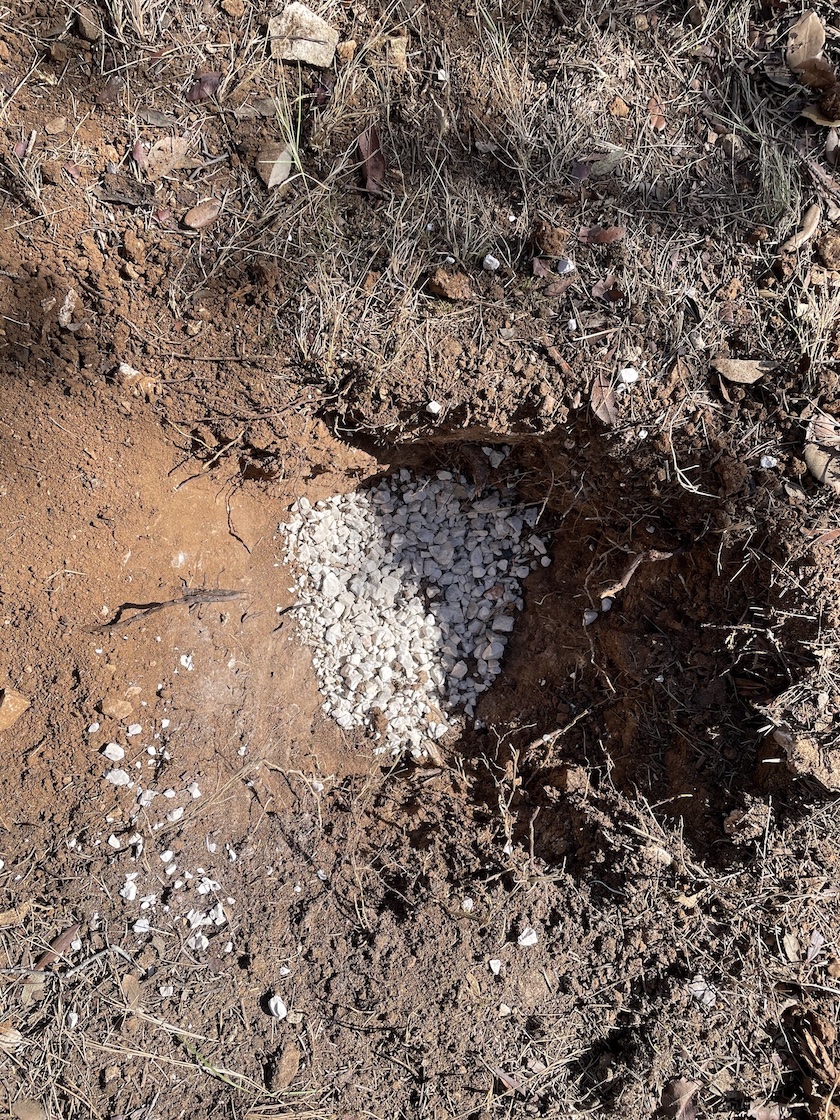
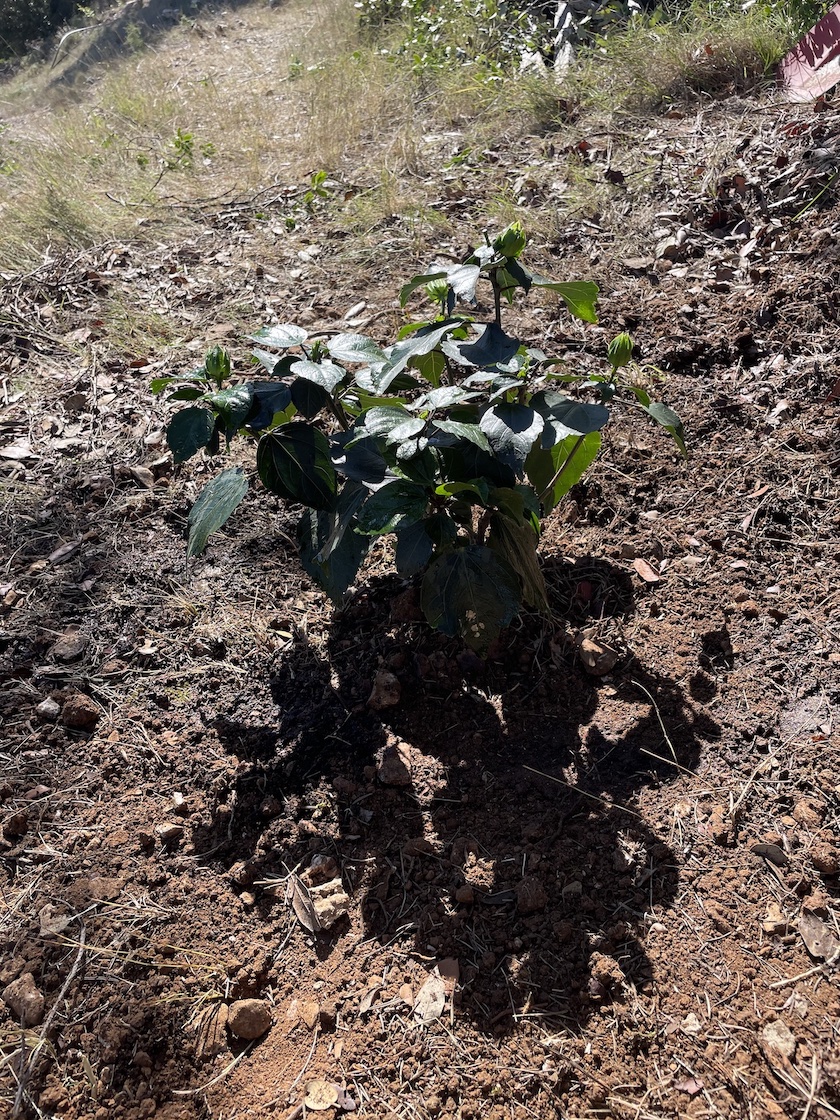
    We had to seize the opportunity and plant our first hibiscus.

    Hibiscus is also known as “flower of an hour”, because some believe that when someone gives you a hibiscus, they are telling you to enjoy every moment of life, that is, to seize the opportunity, because the hibiscus flower only lasts for one day and is replaced the next day by others, and so on until autumn.

    We planted a young cypress tree from the Island of Vis after planting our first hibiscus in hopes that it will take advantage of the sun uphill and its roots will join the existing underground roots network.

    Cypress is usually an extremely long-lived tree; specimens have been recorded that have reached the age of a few thousand years, although the cypress usually lives a few centuries. It originated in northern Iran and spread throughout Asia Minor, Crete, and Cyprus, as well as the entire Mediterranean.

    Many ancient peoples planted it around temples and considered it a sacred tree. The Phoenicians and Egyptians valued it as an ancient tree that does not rot but instead hardens in water. That is why they used it to build sarcophagi, ships, temple doors, and statues of deities.

    In Greek and Roman tradition, it is associated with the deities of the underworld (Hades and Pluto) and the renewal of life, because its evergreen leaves and incorruptible wood evoke immortality. That is why it is still commonly found today in the cemeteries of the Mediterranean.

    We will keep you updated about the evolution of these two beautiful beings, our first hibiscus tree and our first cypress tree. This is just a modest and hopeful beginning.

  • Water Tank Reconstruction

    Water Tank Reconstruction

    Reconstructing the “gustirna” (water tank) of ISSA

    People have been creating reservoirs for thousands of years. Some 5,000 years ago, craters of extinct volcanoes in Arabia were used as reservoirs by farmers for their irrigation water. Climate conditions also forced the ancient Greeks to develop advanced hydraulic technology to capture, store and convey water already in the times of the Early Minoan period (ca. 3500-2150 B.C.). How happy must have the Greek settlers from Syracuse been some 2,000 later when they arrived to what is today known as the island of Vis only to realize that the island has its own groundwater sources?

    The reconstructed “gustirna” of ISSA

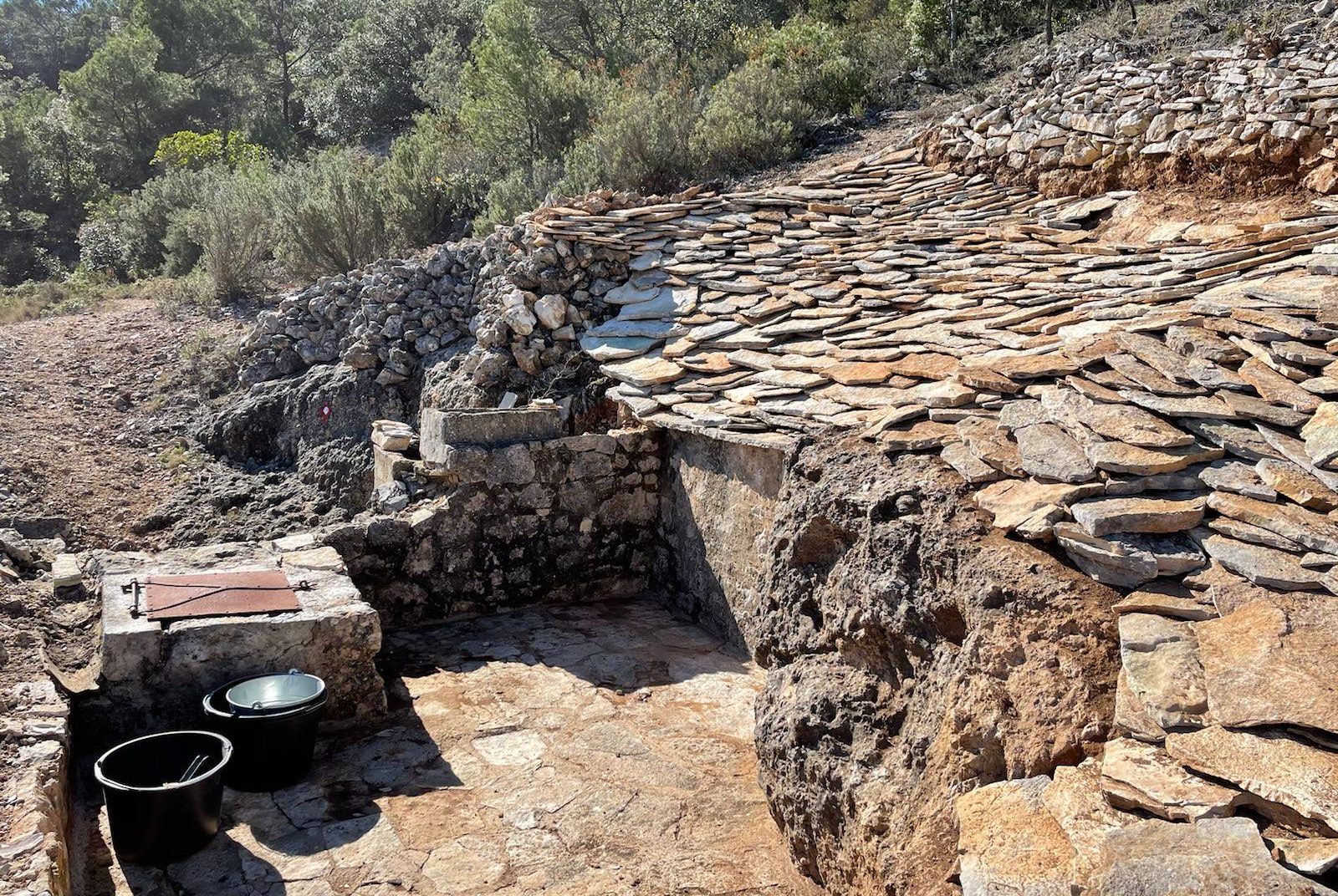
    In this part of the Mediterranean, in the region of Dalmatia and its islands, we call the water reservoir gustirna. It’s a traditional water-collecting system which directs rainwater through a drainage basin into a water collection tank. Surface laid above gustirna, tiled stones called pjover, direct rainwater from the hill or house roof and into the underground tank. Those tanks are usually huge, as big as rooms. Before drinking it, the water must be tested – it is usually used for gardening or dish-washing, but if treated it can also be used as drinking water. In places like with the lack of ground water, and especially on islands, you depend on various ways of gathering water. This one is widely spread and quite effective – if the rain comes. At the same time, this method of building and water preservation shows how precious traditional knowledge and traditional ways of building are precisely in our today’s times of climate crisis and the future of water scarcity.

    Our “gustirna” before the reconstruction

    One of the first things we did once we arrived at ISSA, was to start to reconstructing our gustirna, that was completely overgrown by bushes while the roots were spreading into the water tank itself, through the stones, so that no water was being collected.

    Before reconstruction:

    After reconstruction:

    And here it is, the fully reconstructed “gustirna” ready for the first rains:

  • ISSA – Bird’s Eye View

    ISSA – Bird’s Eye View

    ISSA in late summer 2021

    When we saw ISSA for the first time from a bird’s-eye view, we were at the same time overwhelmed with a sense of excitement and we felt a sort of a “Fitzcarraldo” moment.

    That excitement about the progress we have made in only a few months – cleaning the terraces and above the house seems like a micro-step, but for us it could be described as a “Fitzcarraldo” moment – well, you know that epic adventure movie by Werner Herzog with Klaus Kinski transporting a steamship over a hill with a dream of building an opera house in the Peruvian Amazon.

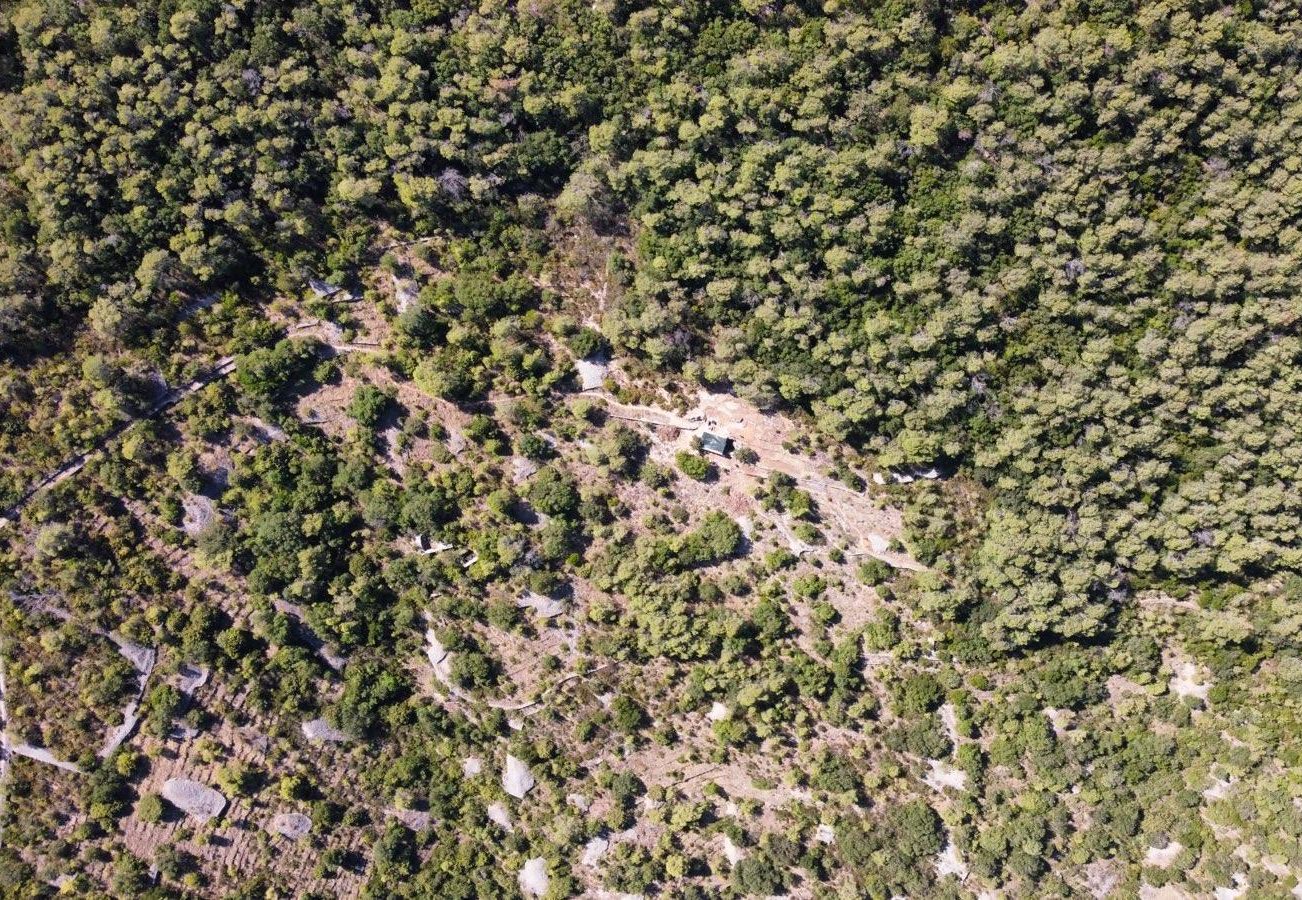
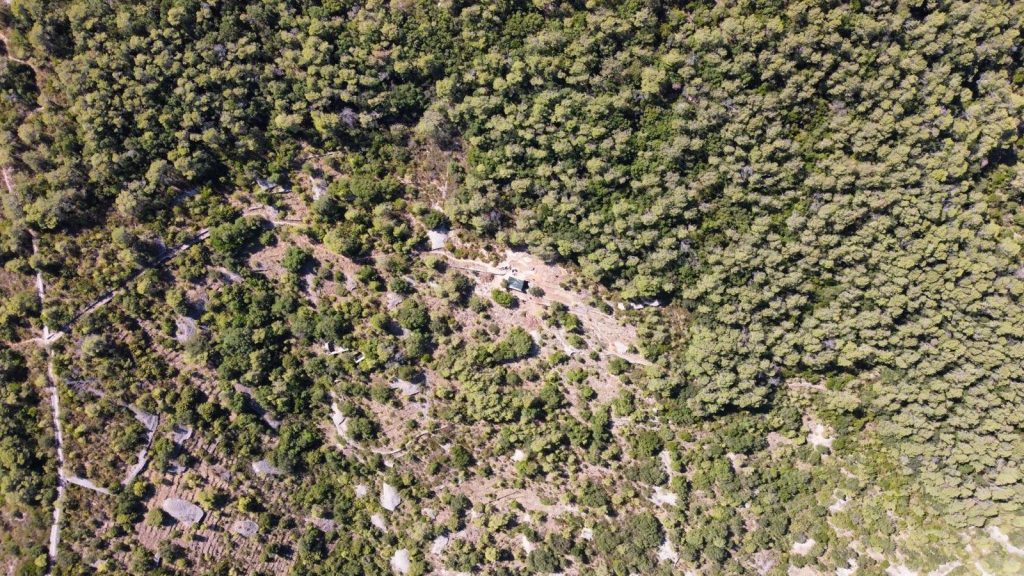
    From a bird’s-eye perspective, the proportions of our endeavour became even clearer:

    ISSA in September of 2021

    What you can see beneath the house is the so-called “Sinov Dolac” or “Snova Dolca”,  in translation “Son’s Valley” or even “Dream Valley,”  but there are also other interpretations that point towards the meaning of the ancient Greek word “xenos” (guest), linked to the concept of hospitality.

    We have been exploring the area, breaking through thickets of plants, and collapsed dry stone walls, losing ourselves in nature that, in the absence of humans and human activity, once again took over the hill and valley where future ISSA is being born.

    But as much as you wander around – and it takes a lot of time and resourcefulness, both of which we have plenty of – you can’t really get the whole picture. You can, of course, smell and find various sorts of plants, touch different trees, and lose any conception of time. You can figure out where dry stone is leading and what the functions of the overall composition of this traditional Mediterranean architecture are, but you are still in the midst of a jungle without having an overview of the terrain.

    You can slowly decipher this hundreds-of-years-old composition if you look at it from a bird’s-eye perspective. What you can see now is not only the old stone house, our future library, and social centre; suddenly there is a whole village emerging, with the dry stone walls serving both as boundaries between terrains, protection from winds, and as pathways through which various houses were connected.

    ISSA in September of 2021

    According to the islanders, those who worked in “Sinov Dolac” as children, this entire area was once covered in fertile vineyards that were last cultivated 60-70 years ago. Each stone wall tells a story of human persistence and determination in realizing the dream of turning this inaccessible part of the island into a fertile land that will feed generations.

    This connection, as well as the history of this land, seem appropriate to us. Our dream as well, even if it takes decades, is not short of this ambition.

  • No Friends but the Mountains

    No Friends but the Mountains

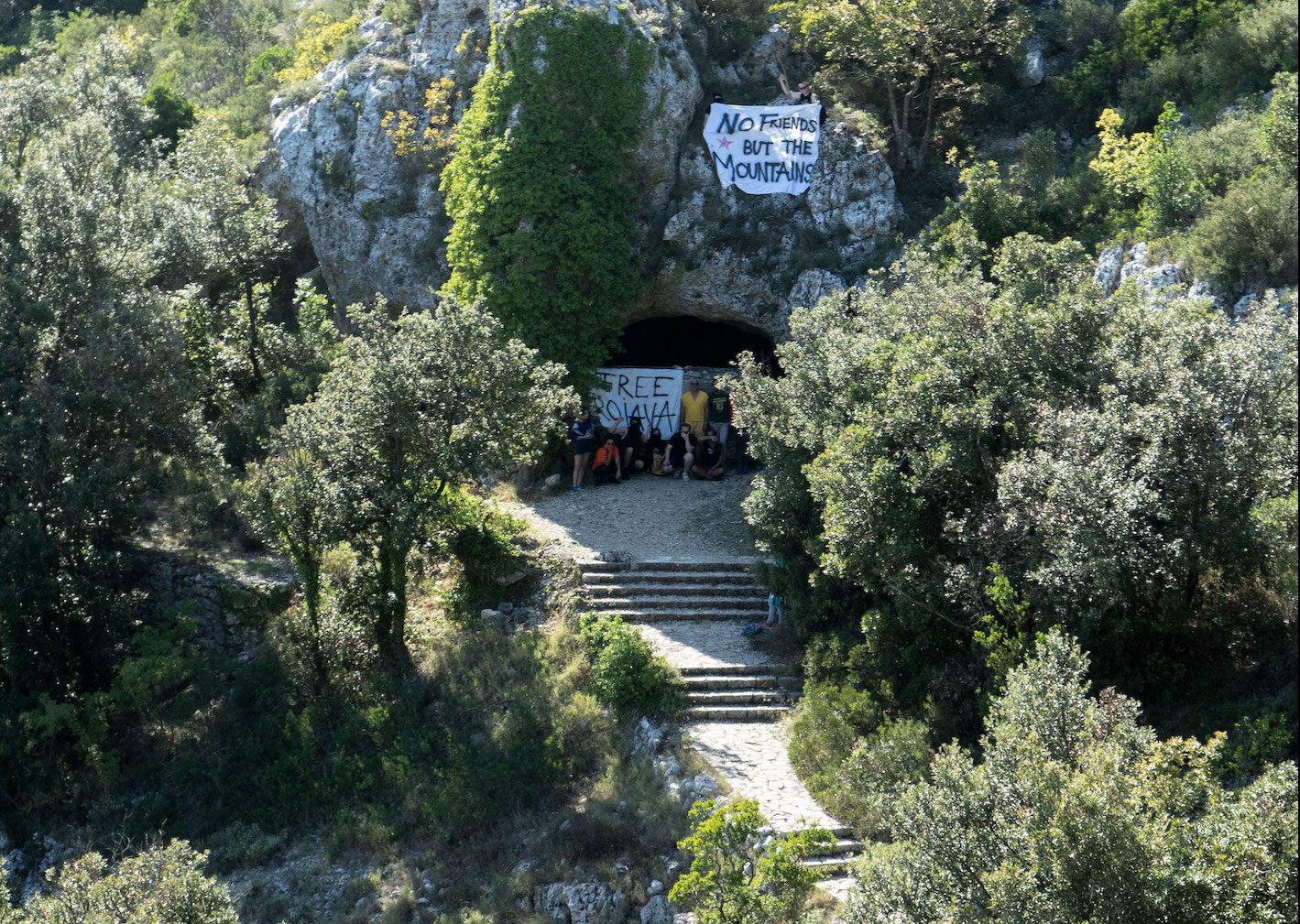
    Even before ISSA was founded – interestingly enough, the School is now located nearby – we have been visiting Tito’s Cave.

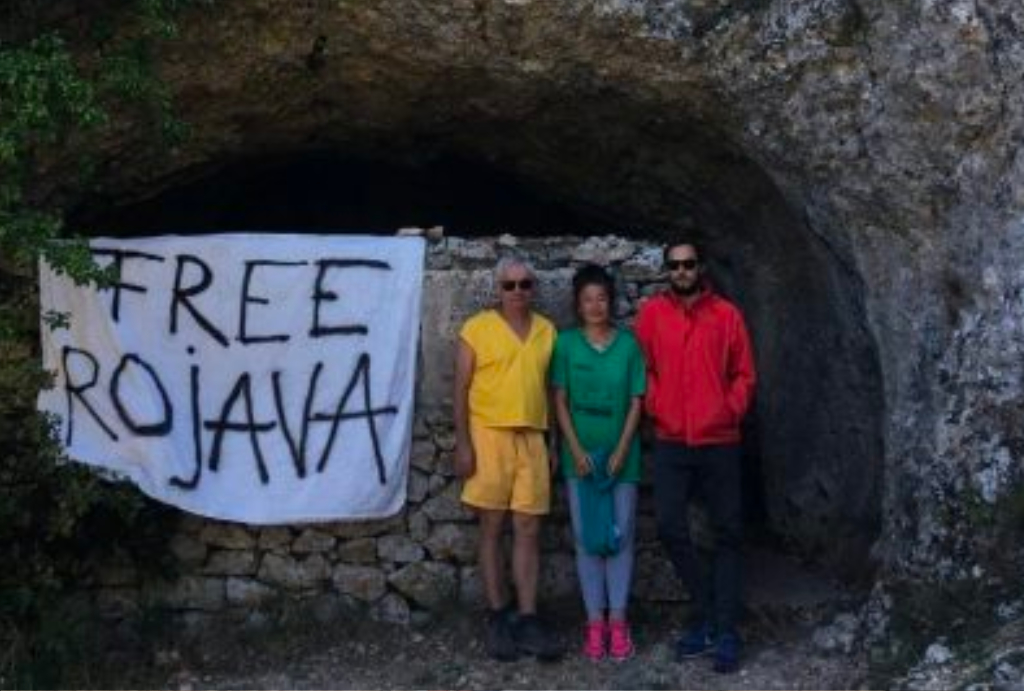
    There is a famous Kurdish proverb saying “NO FRIENDS BUT THE MOUNTAINS” that has also reverberated in the hills of Vis.
    Back in October 2019, on the Global Day of Action against Turkey’s occupation of Rojava, filmmaker and artist Hito Steyerl, the first woman to have been listed as the “most influential personality in the international art world”, was joined by philosophers Boris Buden and Srećko Horvat for an action of solidarity.
    The two caves, hidden far from the mainland in the hills of the island of Vis, carry historic significance. Not only is it the place from which the partisan resistance movement managed to defeat a seemingly much more powerful enemy during World War II, but it is also the place from which they, so to speak, broke out of the mountains, liberated the territory of Yugoslavia from occupation, and finally established a new state.

    A rare BBC recording from 1944, when the Partisans were using Vis as their headquarters, describes this resistance: 

    “Across the Adriatic Sea, throughout the once carefree hunting grounds for rich yachts along the Dalmatian coast and in the wild picturesque heights of Yugoslavia, one of the most heroic battles of this war is in progress today . . . These people know what they are fighting for. They have absolute faith that they are right and in their ultimate fate. And it is a great and unique experience in this world of cynicism and divided loyalty to be among them and to be able to help them.”