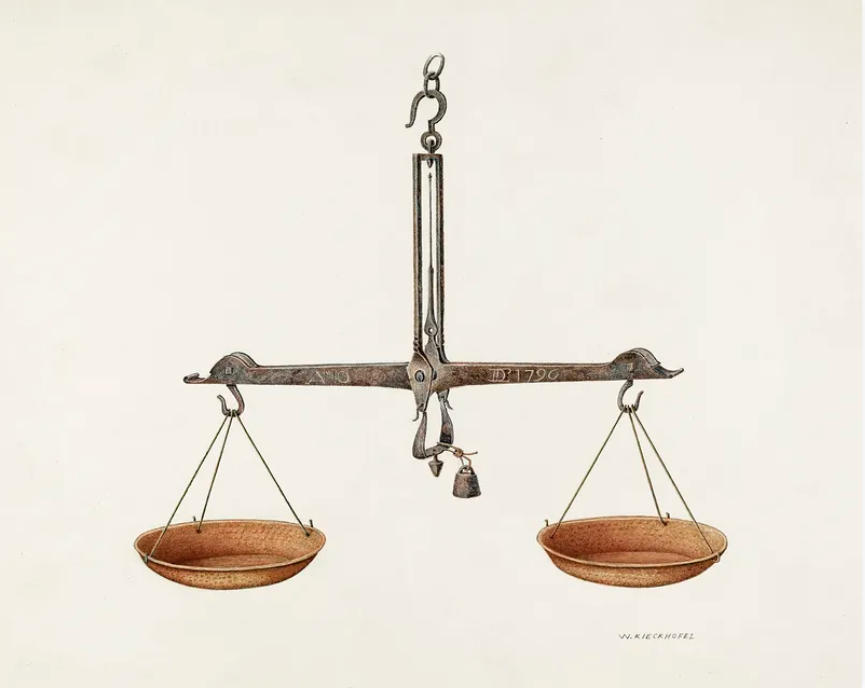
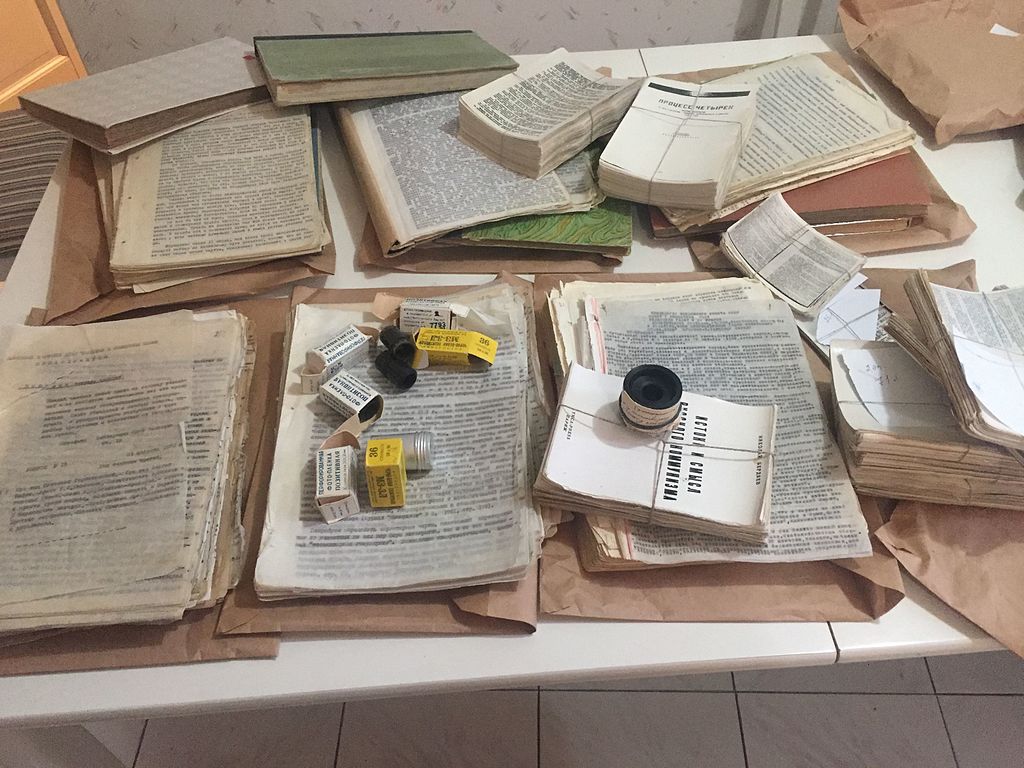
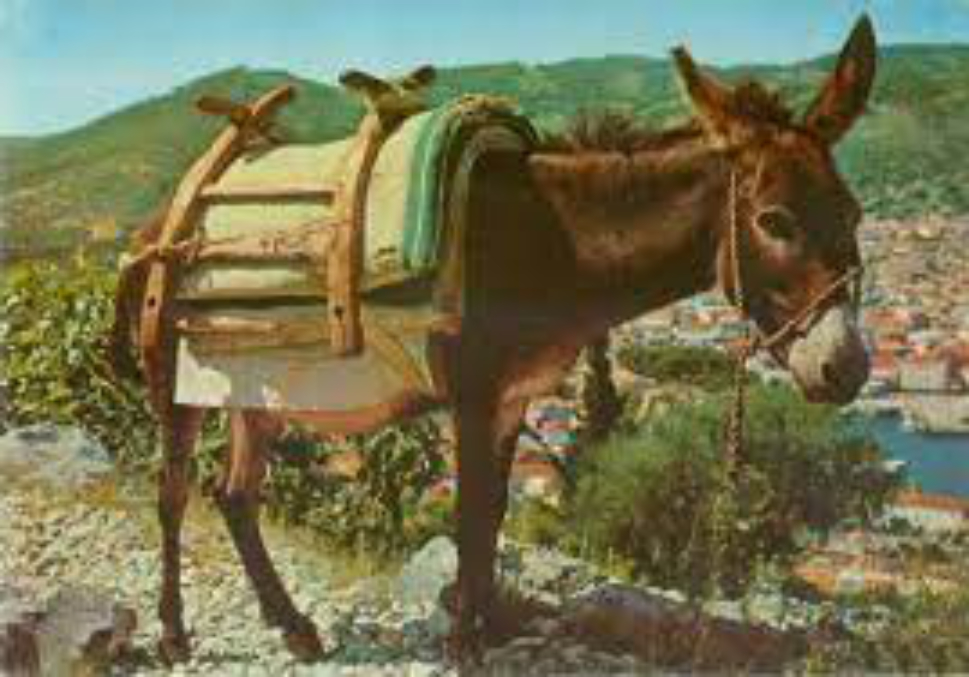
A group of people here and now, in a “classroom” under an olive tree, is a perfect example of the impact of orality. The drawbacks are obvious: it is small-scale and limited in scope. But everyone can respond; everyone can answer. Without pressure and with a common goal, the learning experience is not an exchange of information; it creates bonds and prepares for action.
Let us examine the drawbacks of orality. Walter J. Ong, an authority on orality and literacy, listed a number of features. In an oral culture, memorizing is helped by formulaic forms, redundancy, and a rather conservative approach. For what I have in mind, other items on his list are more pertinent: closeness to the world and empathy; and best of all, oral communication allows for unmediated participation. We live in a literate environment, so there is no danger that our talks will be more aggregative than analytical because of the difficulties of fixing and revising possible conclusions.
All this might seem like a redundant way of advocating live teaching as opposed to all the digital possibilities we have. These allow us to be connected all over the globe and are increasingly participatory. Still, they do not offer us the sensual enjoyment of thinking together or the enhancement of motivation because we feel a bond and breathe the same air.
We need spaces and places for a special kind of togetherness.
(or the strange story of the time-thieves and the child who brought the stolen time back to the people)
Calendars and clocks exist to measure time, but that signifies little because we all know that an hour can seem as eternity or pass in a flash, according to how we spend it.
― Michael Ende, Momo
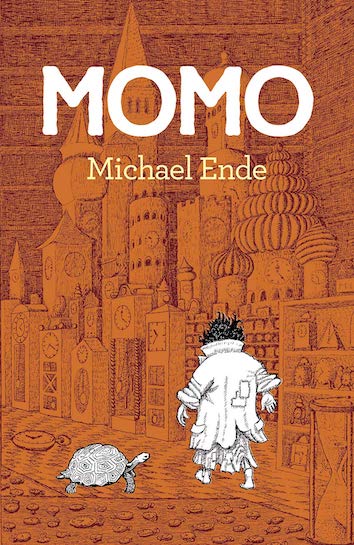
Michael Ende, the German fantasy and fiction writer best known for his novel Neverending Story wrote a less well-known but equally beautiful children’s book called Momo a few years earlier, in 1973. Chances are you came across and read it as a kid, and if not, we would recommend it wholeheartedly.
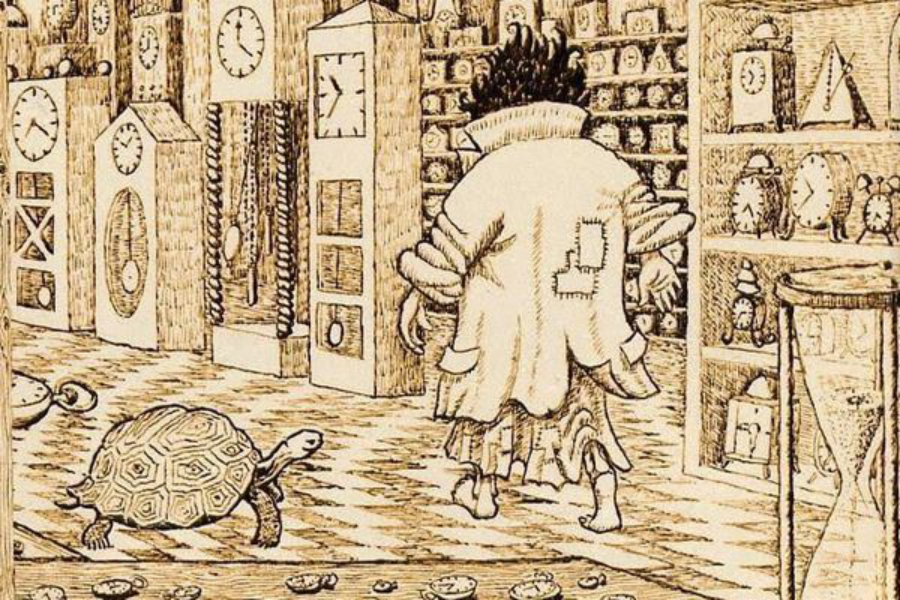
This story is about a special little girl with a remarkable skill: she listens, really listens, and by doing that, she is able to help people. Everyone in her neighbourhood recognizes her and rushes to her, an illiterate and parentless girl in a shabby coat. Her world changes when the strange Men in Grey arrive, convincing everyone to start saving time in their Timesavings Bank. Soon the world turns as grey as they are, and it is left to Momo to save it.
This reminds us all of something—that’s right, the Dalmatian philosophy of pómalo. As one of the book’s characters, a sweeper named Beppo, says:
“It’s like this. Sometimes, when you’ve a very long street ahead of you, you think how terribly long it is and feel sure you’ll never get it swept.
He gazed silently into space before continuing. ‘And then you start to hurry,’ he went on. ‘You work faster and faster, and every time you look up there seems to be just as much left to sweep as before, and you try even harder, and you panic, and in the end you’re out of breath and have to stop – and still the street stretches away in front of you. That’s not the way to do it.’
He pondered a while. Then he said, ‘You must never think of the whole street at once, understand? You must only concentrate on the next step, the next breath, the next stroke of the broom, and the next, and the next. Nothing else.’
Again he paused for thought before adding, ‘That way you enjoy your work, which is important, because then you make a good job of it. And that’s how it ought to be.’
There was another long silence. At last he went on, ‘And all at once, before you know it, you find you’ve swept the whole street clean, bit by bit. What’s more, you aren’t out of breath.’ He nodded to himself. ‘That’s important, too,’ he concluded.”
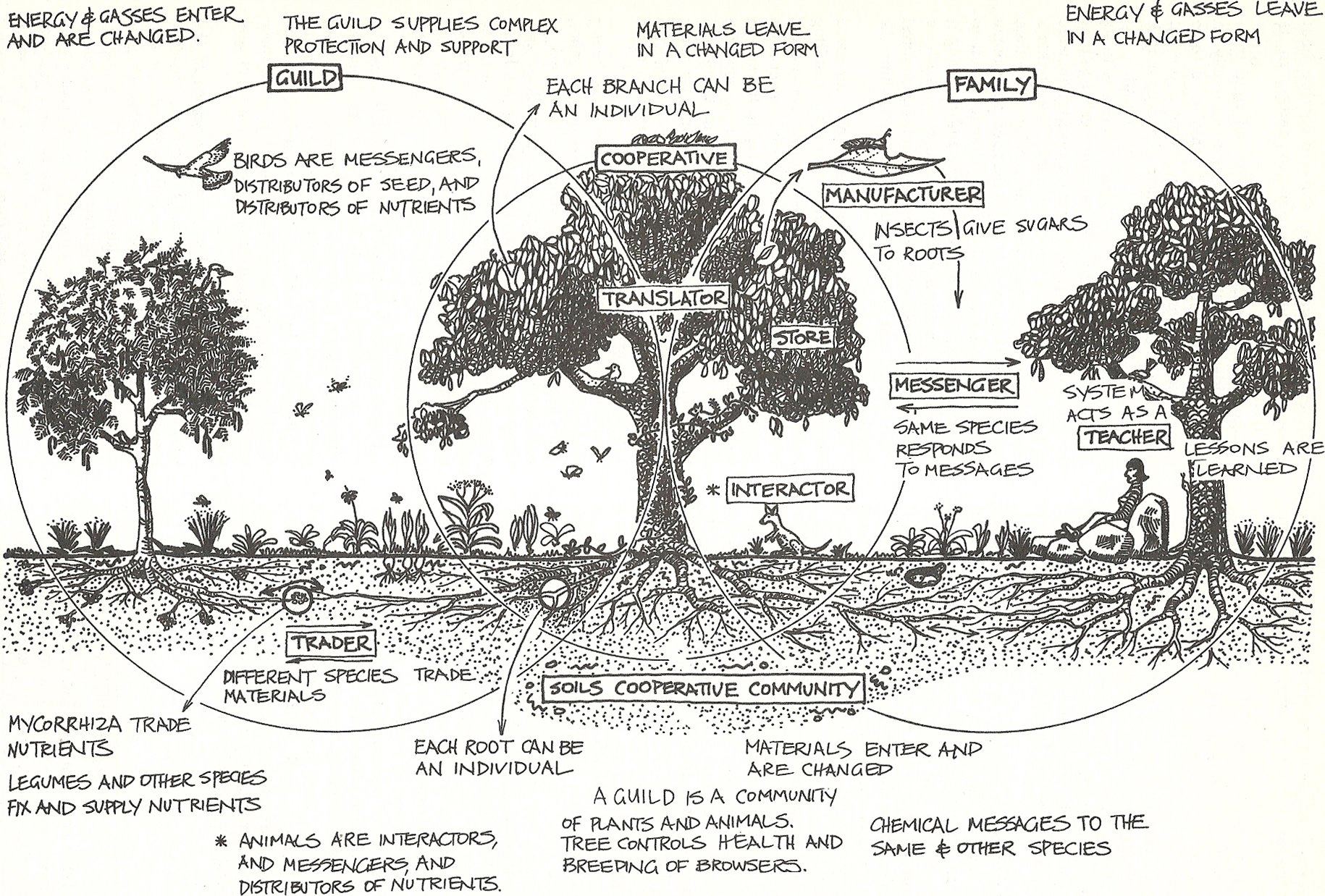
ISSA aims to be a place for exploration of sustainable living, as we would love to distance ourselves as far as possible from unsustainable, extractive, and pollutive methods that are endangering life on our planet.
As the blurb for Terry Leah’s Politics of Permaculture states:
“Permaculture is an environmental movement that makes us reevaluate what it means to be sustainable. Through innovative agriculture and settlement design, the movement creates new communities that are harmonious with nature. It has grown from humble origins on a farm in 1970s Australia and flourished into a worldwide movement that confronts industrial capitalism. (…) Leahy explains the ways permaculture is understood and practiced in different contexts. In the face of extreme environmental degradation and catastrophic climate change, we urgently need a new way of living.”
In his ground-breaking work, published in English only in 2017 under the title Isonomia and the Origins of Philosophy, the Japanese philosopher Kojin Karatani convincingly shows that taking Athenian democracy as a model will never allow us to solve the problems modern democracy is facing. Being the composite of liberalism plus democracy, it is not able to resolve its basic contradiction, one between equality and freedom: “If one aims for freedom, inequalities arise. If one aims for equality, freedom is compromised. Liberal democracy cannot transcend this contradiction.” .[1]
So instead of making constant references to Athenian democracy as the desired model of democracy in the 21st century, it is more important to recognize in Athens the very prototype of these problems.
While Athenian democracy sought to equalize people via the redistribution of wealth, it was at the same time rooted in the homogeneity of its members. Not only did it exclude heterogeneity, but it was realized by relying on the internal exploitation (of slaves and resident foreigners, the so called metic) and external exploitation of others (the colonization and subjugation of other poleis). At the same time, Athenian democracy was already inseparable from the sort of nationalism that resembles Benedict Anderson’s famous definition of the modern nation as “imagined community”.[2]
In order to fully understand the spectre of “illiberal democracy”, instead of turning to Athenian democracy, perhaps we should look to Ionianisonomia (ἰσονομία “equality of political rights, from the Greek isos, “equal”, and nomos, “law”), and to the philosophy of the so-called Pre-Socratic philosophers, who are still usually dismissed as those who were dealing only with “natural philosophy”. It is assumed that ethical and political questions were not something they were seriously thinking through and dealing with – a phase that, according to the traditional history of philosophy, only emerged with Socrates.
This however, according to Karatani, is a mistake. The origin of Greek political philosophy (and “democracy” with it) rather has to be seen from Ionia. And Socrates, by the way, wasn’t the first one to deal with ethical questions. His thought is rather to be seen as a “transition” from Pre-Socratic to Athenian philosophy, owing many of its ideas and values to the Ionian philosophers themselves.
But why was the political system of Ionia (called isonomia) a more equal and free system than the Athenian democracy? First of all, the Ionians did not place great importance on ties with their place of origin, which led to a culture free from deep attachment to the traditions of a tribal society that characterized the mainland. Instead of just belonging to the polis, the Ionians considered themselves as belonging to the cosmopolis. And it is precisely this kind of political philosophy that is already to be found in the Pre-Socratic Ionian philosophers. For instance, already for Democritus, true ethics cannot come from within the polis but rather only from the cosmopolis.
The cities of Ionia were formed by colonists, who did not bring with them the tradition of the clans. The settlers were freed from the bonds and restraints of kinship. As a result, what was restored in the poleis of Ionia was the nomadic existence that preceded tribal societies, that now took the form of foreign trade and manufacturing, but not only as a matter of exchanging goods but equally of knowledge and culture.
For instance, Thales, who is considered the first philosopher, worked as a civil engineer in Egypt, and many other philosophers of the so-called Pre-Socratic era were influenced either by Asia or Africa (Babylonian astronomy, mathematics and so on).
Unlike the Ionian isonomia, the greek polis was based on social strata that ascended from the household (oikos) to the clan (genos), from the brotherhood or kinship (phratry) to that of the tribe (phylai). Athens was no longer a clan society, but the tribal traditions were still alive and well. Even with the transformation of the people into a demos, this didn’t prompt the formation of the kind of polis which would be based on autonomous social contracts between individuals. On the contrary, even in the age of Pericles, often regarded as the zenith of Athens, citizenship was determined by kinship, and foreigners (people from the other poleis) were excluded. Moreover, Athenian direct democracy was directly dependent upon the ruling and plundering of the other poleis. It was precisely this imperialistic expansion that was the precondition for Athenian democracy which was also closely tied to the development of the slave system. At the same time, civil society in Athens was driven by a deep class conflict, namely, the majority of citizens were poor.
[1] Kojin Karatani, Isonomia and the Origins of Philosophy, Duke University Press, 2017
[2] See Benedict Anderson, Imagined Communities: Reflections on the Origin and Spread of Nationalism, Verso, 2006.
The system has always had its gatekeepers. Especially efficient—quiet, tame, and decently seated in tweed jackets with elbow patches—were the ones operating in the realm of the ideological apparatus of the state, mass media, and the vast, vastly ideologized cultural field. What were we taught in our schools and universities, what was served for us to read in the papers and listen to on TV news, which books were printed by major publishers, and why those? All of the above, as well as many more, were and still are active and always inviting fields for the exploration and demonstration of various forms of censorship. Official or unofficial, between the lines or explicit, harsh, or mild, imposed by the state, capital, private interests, religious structures, or the legion of akin.
There were always, of course, ways to bypass the gatekeepers. From alternative education and university takeovers to hand-printed and distributed fanzines and pirate radio stations, to the vast possibilities of the internet, to self-publishing: whether in historical forms like anarchist and partisan literature or samizdat, or as independent publishing groups, collectives, and coops.
The hardcore-punk scene of the 1990s and its self-publishing methods—from fanzines and music to books and films—played a critical role in the parallel education of an entire generation of future activists and social practitioners who would otherwise have been stuck in the mud of post-war Yugoslavia’s hyper-nationalist and belligerent public discourse. Alternative media, such as the anti-war action magazine Arkzin, carried the torch on a very respectable level throughout the decade, alongside the legendary Feral Tribune and strongholds of alternative culture, such as the biweekly Zarez. The origins of ISSA know-how, at least in its Balkan base, can be traced back to these or similar practices. We’re dedicated to exploring and practising them further—in then-hardly foreseen conditions, technologies, methods, directions, fields, and reach-out situations—but with the very same ethos. We strive to bypass the gatekeepers and head towards the allegedly impossible.
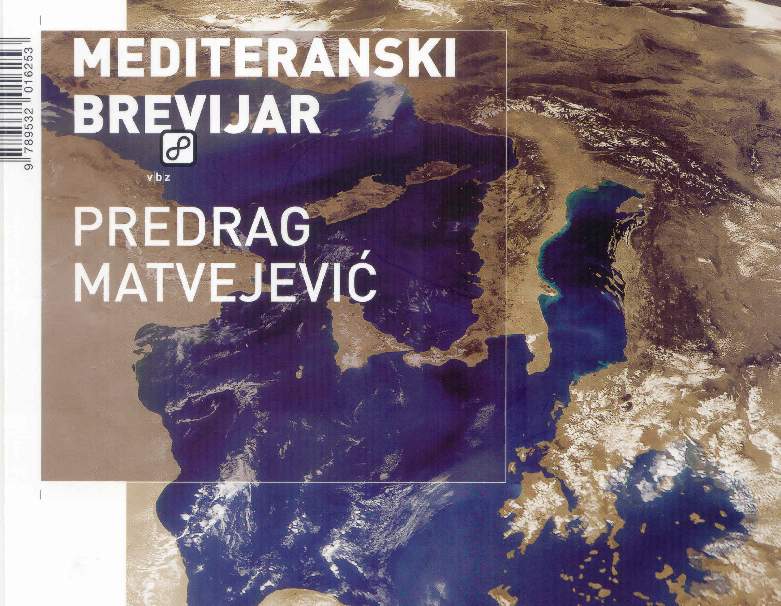
The Mediterranean is no less than thousands of things together. Not merely single sceneries, but countless ones. Not a single sea, but a succession of seas. Not a mere civilization, but heaps of civilizations piling on top of each other. The Mediterranean is a historically old crossroad: for several millennia, everything centered around it, muddling, yet enriching its history. Although much has been said and retold about the ‘Mare Nostrum’, it is fortunate that there is always something new to add about its unity, divisions, transparencies and obscurities. We have known for long that it is neither ‘a given reality’ nor a ‘constant’, for the Mediterranean is composed of several subsets that defy or refute several ideas received.
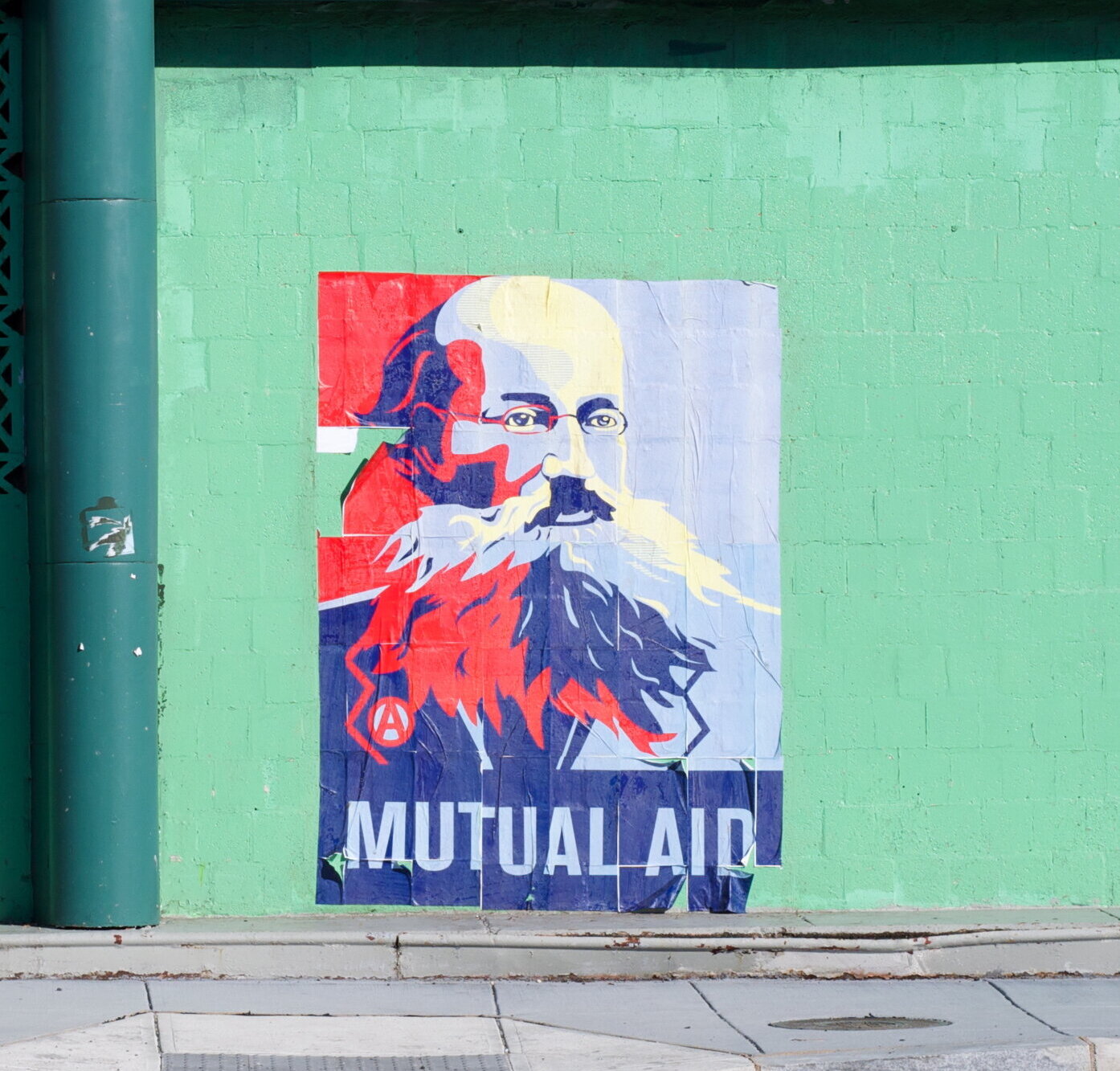
Peter Kropotkin, a staunch critic of the Hobbes’ doctrine on the state of nature where “each man lives for himself” or where homo homini lupus est, but also a skilled zoologist and geographer, who was observing kinds of cooperation existing in nature long before today’s climate movement took shape, developed his own views on what is “natural” between animals, and by extension, humans. Against both social Darwinism that emphasized competition, and the romantic depiction of “the noble savage” by Jean-Jacques Rousseau, he posited Mutual Aid as a crucial factor in the evolution itself. He wasn’t naive to ignore the really-existing competition or harsh struggles for survival as factors of evolution, but argued that their cooperative counterpart had an even higher importance: “Sociability is as much a law of nature as mutual struggle.” [1]
According to Kropotkin, if we were to ask Nature, “Who are the fittest: those who are continually at war with each other, or those who support one another?” We would get the answer: “Those animals that acquire habits of mutual aid are undoubtedly the fittest.” It is precisely these animals that attain the highest development of intelligence and bodily organization; it is also these animals that have the highest chances for survival. There are numerous examples, ranging from ants to bees, that demonstrate the existence of a society, even among animals.
One among many beautiful examples from Kropotkin’s Mutual Aid is the migration of birds:
“As soon as spring comes back to the temperate zone, myriads and myriads of birds that are scattered over the warmer regions of the south come together in numberless bands and, full of vigour and joy, hasten northward to rear their offspring. Each of our hedges, each grove, each ocean cliff, and each of the lakes and ponds with which Northern America, Northern Europe, and Northern Asia are dotted tell us at that time of the year the tale of what mutual aid means for the birds; what force, energy, and protection it confers to every living being, however feeble and defenceless it otherwise might be.”
It is the poetry of Mutual Aid that we need today more than ever. If birds that have lived in small bands scattered across a large territory for months can gather in thousands and travel thousands of miles in peril, why is it so difficult for humans to put on a similar massive display of mutual aid in times of pandemic and climate crisis? Some birds usually fly in preparation for the long journey every afternoon, and once they start in a well-chosen direction – “a fruit of accumulated collective experience,” as Kropotkin calls it – the strongest fly at the front of the band, relieving one another in that difficult task. But each bird, big and small, has an important role in the flight towards the future. Together, in a cooperative undertaking of gigantic proportions, they form the poetry of the future that can still be seen in our skies.
Another extraordinary example comes from the lives of parrots that have come to such a stage of mutual attachment that when a parrot is killed by a hunter, the others fly over to the corpse of their comrade and themselves become the victims of their friendship. From the perspective of the hunter, this might seem stupid, but aren’t humans doing the same when they gallop into the biggest danger in order to save their friends? If, out of two captive parrots, even though they belong to two different species, one of them accidentally dies, it is usually followed by the death from grief and sorrow of the other friend. And, again, why are humans so arrogant to think that only they can feel empathy, create social bonds, and end up in mourning or literally die of sadness? It’s a sad irony that parrots hardly have any enemies besides humans. Only man, as Kropotkin says, “owing to his still more superior intelligence and weapons also derived from association, succeeds in partially destroying them.” “Their very longevity would thus appear as a result of their social life.”
In short, the war of each against all is not the law of nature. Mutual aid is as much a natural law as mutual struggle, or, to put it another way, Margaret Thatcher, there is such a thing as a society, and we are rebuilding it.
[1] Peter Kropotkin, Mutual Aid. A Factor of Evolution, https://theanarchistlibrary.org/library/petr-kropotkin-mutual-aid-a-factor-of-evolution
I went to the woods because I wished to live deliberately, to front only the essential facts of life, and see if I could not learn what it had to teach, and not, when I came to die, discover that I had not lived. I did not wish to live what was not life, living is so dear; nor did I wish to practice resignation, unless it was quite necessary. I wanted to live deep and suck out all the marrow of life, to live so sturdily and Spartan-like as to put to rout all that was not life, to cut a broad swath and shave close, to drive life into a corner, and reduce it to its lowest terms, and, if it proved to be mean, why then to get the whole and genuine meanness of it, and publish its meanness to the world; or if it were sublime, to know it by experience, and be able to give a true account of it in my next excursion.
Henry David Thoreau, Walden, 1854
Similarly to how Thoreau built his cabin near Walden Pond in 1845 from recycled and hand-cut materials, we’re starting from scratch to build the school in the woods of Vis. Arriving at Harvard as a 16-year-old, he encountered a system that he called “superficial scholarship” as opposed to real knowledge. After Thoreau graduated from Harvard, he and his brother John set up their own school. They surveyed the school grounds and planted crops with the students, who learned basic mathematics and science along the way. And they took numerous journeys to outdoor sites — hence the term “field trips” — where the students found out about local history and gained access to local knowledge. Thoreau understood education not simply as a means of preparation for something (a job or a career), but as something that is intrinsically valuable. Through his writings and his “experiments” in nature, Thoreau made real progress in unlearning and relearning what we thought we knew. His concept of learning, besides being critical of authority and state structures, involves an intense observation of the natural world and the inner self that is also one of the missions of ISSA.
In honor to the great thinker and doer, one day we will build a replica of Thoreau’s cabin at the School of ISSA and offer it as a residency for writers.
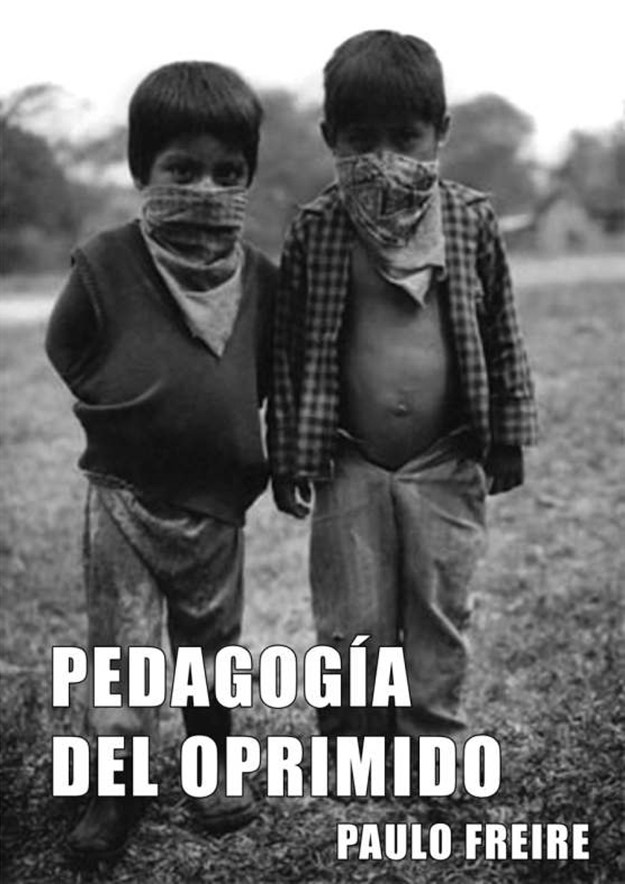
In his seminal work “Pedagogy of the Oppressed”, Brazilian educator Paulo Freire argues for a pedagogy that treats the learner as a co-creator of knowledge. He dismisses traditional pedagogy as the “banking model of education” which approaches the student as an empty vessel to be filled with knowledge, and instead proposes a problem-posing model wherein the processes of education is necessarily dialogical. As one of the foundational texts of critical pedagogy, Freire’s lessons resonate strongly with our praxis.
“Education either functions as an instrument which is used to facilitate integration of the younger generation into the logic of the present system and bring about conformity or it becomes the practice of freedom, the means by which men and women deal critically and creatively with reality and discover how to participate in the transformation of their world.”
“For apart from inquiry, apart from the praxis, individuals cannot be truly human. Knowledge emerges only through invention and re-invention, through the restless, impatient, continuing, hopeful inquiry human beings pursue in the world, with the world, and with each other.”
“Through dialogue, the teacher-of-the-students and the students-of-the-teacher cease to exist and a new term emerges: teacher-student with students-teachers. The teacher is no longer merely the-one-who-teaches, but one who is himself taught in dialogue with the students, who in turn while being taught also teach. They become jointly responsible for a process in which all grow. In this process, arguments based on “authority” are no longer valid; in order to function, authority must be on the side of freedom, not against it. Here, no one teaches another, nor is anyone self-taught.”
“There’s no such thing as neutral education. Education either functions as an instrument to bring about conformity or freedom.”
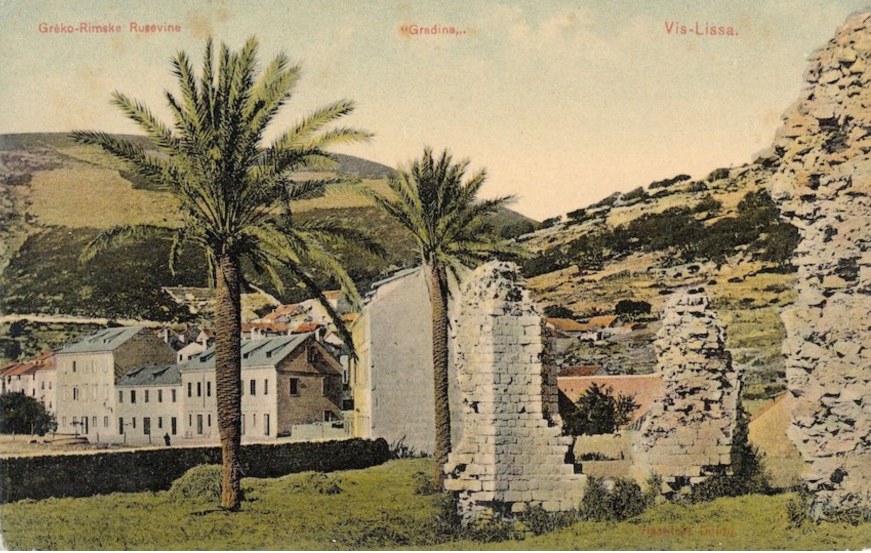
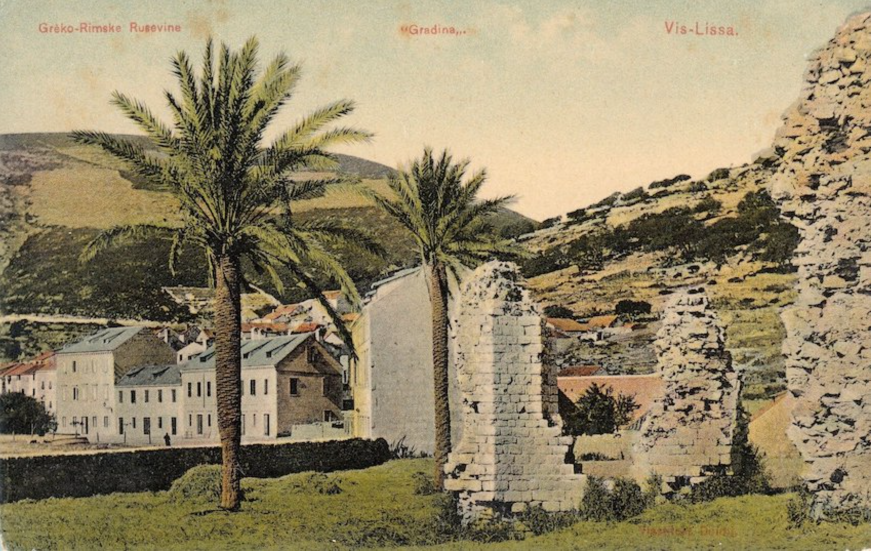
Ancient Greek-Roman ruins on island Vis, remains of Issa
As crazy as it sounds, it is possible – and, indeed, likely – that the ancient Greek philosopher Plato visited Vis. Unfortunately, there are no traces of his possible stay yet: even though Issa represented the most important polis in this part of the Mediterranean, not even 10 % of the 120,000 m2 of the ancient city has been excavated until today.
Vis has been inhabited since the Neolithic period. It was in 397 BC that the Greek tyrant of Syracuse, Dionysius the Elder, founded the colony of Issa on the island that would later become an autonomous and independent polis and establish its own colonies – the most notable of which is today’s Split. Dionysius the Elder, a tyrant of the worst kind who would later appear in Dante’s Inferno, was known for transforming Syracuse into the most powerful city in the Greek world, with an empire extending from Sicily to Italy and the Adriatic island of Issa, from which the name Vis derives.
He was also known for inviting the philosopher Plato, around 40 years old at the time, to visit his court in Sicily in 388 BC. Plato, who was dreaming of philosopher-kings and wanted to integrate politics and philosophy to create the perfect society, was of course chuffed by the invitation, and soon he befriended Dion, the tyrant’s brother-in-law, who accepted his ideas with enthusiasm. However, the tyrant didn’t like Plato’s philosophy at all. First, he wanted to kill him, and only after Dion’s intervention, Plato’s life spared and he was instead sold as a slave. He was recognized at a slave market in Aegina (Greece), where he was redeemed by Anikeris, who didn’t want to take the money that Plato’s pupils collected to free their teacher.
This ransom money was instead used to buy a plot of land in the grove of Hekadem, surrounded by olive trees, where the school of philosophy called Akademia was founded. In other words, the creation of Plato’s School in 387 BC – ten years after the foundation of Issa – could perhaps be understood as a consequence of his first failed voyage through the Mediterranean Sea to Syracuse. As we know, the most famous student would soon become Aristotle, who after studying at the Academy for almost twenty years went on to tutor Alexander the Great and later founded his own school at the Lyceum, which would later turn into the Peripatetic School of Philosophy due to Aristotle’s tendency to walk while teaching.
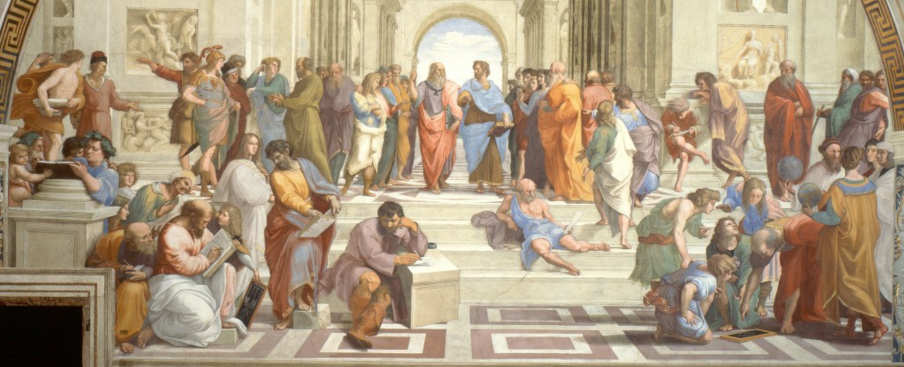
The School of Athens by Raphael, with Plato & Aristotle at the center
In 367 BC, exactly thirty years after the foundation of Issa, Dyonisous the Elder died and was succeeded by his son Dionysus II. He was young and a tyrant as well, but Dion succeeded in convincing him to invite Plato to Syracuse again. After his initial hesitation (who wouldn’t hesitate after already being almost killed and sold into slavery?), Plato accepted the invitation and visited Sicily for a second time. But again, the new tyrant didn’t like his ideas, suspecting they would undermine his own position, so Plato was detained. He was eventually set free and returned to Greece, where he would continue teaching at his Academy. Now it already sounds like Plato’s “Groundhog Day,” but in 360 BC, despite all the awful experiences he had already encountered, he accepted the third and final invitation to Syracuse. He would again end up disappointed. Around that time, the tyrant’s empire was already collapsing, and Issa wasn’t a colony of Syracuse anymore; it turned into an independent polis that started to build its own empire in this part of the Adriatic Sea and the Adriatic coast of modern-day Croatia.
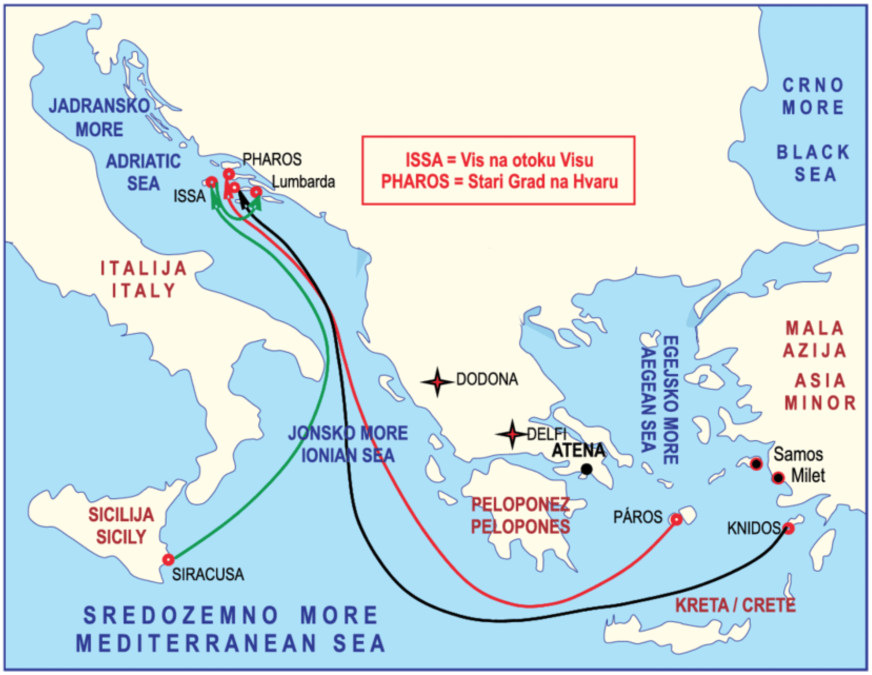
Recent and older archaeological, historical, and seafaring evidence suggests that the route Plato may have travelled to Syracuse was one of the most important ancient seafaring routes used by the Greeks at that time. It followed the string of islands that stretched from the coast of present-day Split via Hvar (Pharos) and Vis (Issa). The historical and archaeological evidence from these colonies and later poleis, including the numerous caves found on both the islands of Hvar and Vis, evoke important elements of Plato’s Republic, such as land division or polis public institutions, and possibly even the famous Allegory of the Cave.
According to Harald Haamann’s recent book Plato’s Philosophy: Reaching Beyond the Limits of Reason, “Plato could have joined the various groups of founding colonists and tried to persuade them to implement his vision of an “ideal state.”In theory, Plato could have also visited Issa and maybe he contributed to the foundation of the new polis.
Greek colonies in the Adriatic Sea – Issa, Pharos – and its routes from Syrcause, Paros and Knidos
Whether Plato visited Issa or not, we may never find out, but Plato’s comparison of philosophy to a second navigation, the one that starts when favorable winds stop blowing and the ship remains immobile, is even more pertinent today. The role of philosophy is precisely to navigate when sailing has become impossible. The philosopher is a navigator who gazes at the stars and sky and understands the seasons and winds, including the play of shadows in the cave. What if, instead of sailing to Syracuse, Plato simply decided to stay on Issa? And what if, unlike Plato’s desire, we do not need philosopher-kings anymore but a simple and modest community of navigators?